Seamless
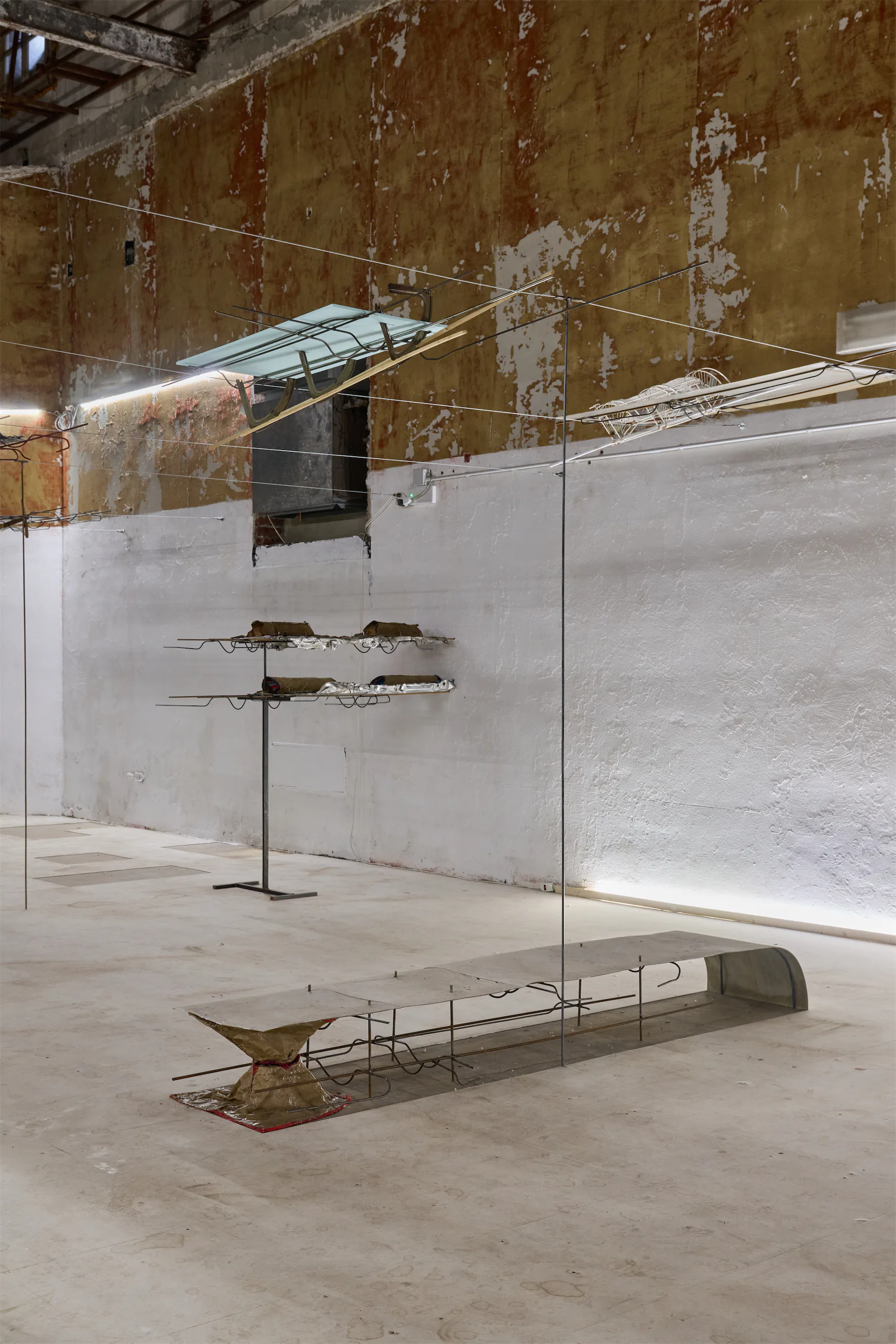
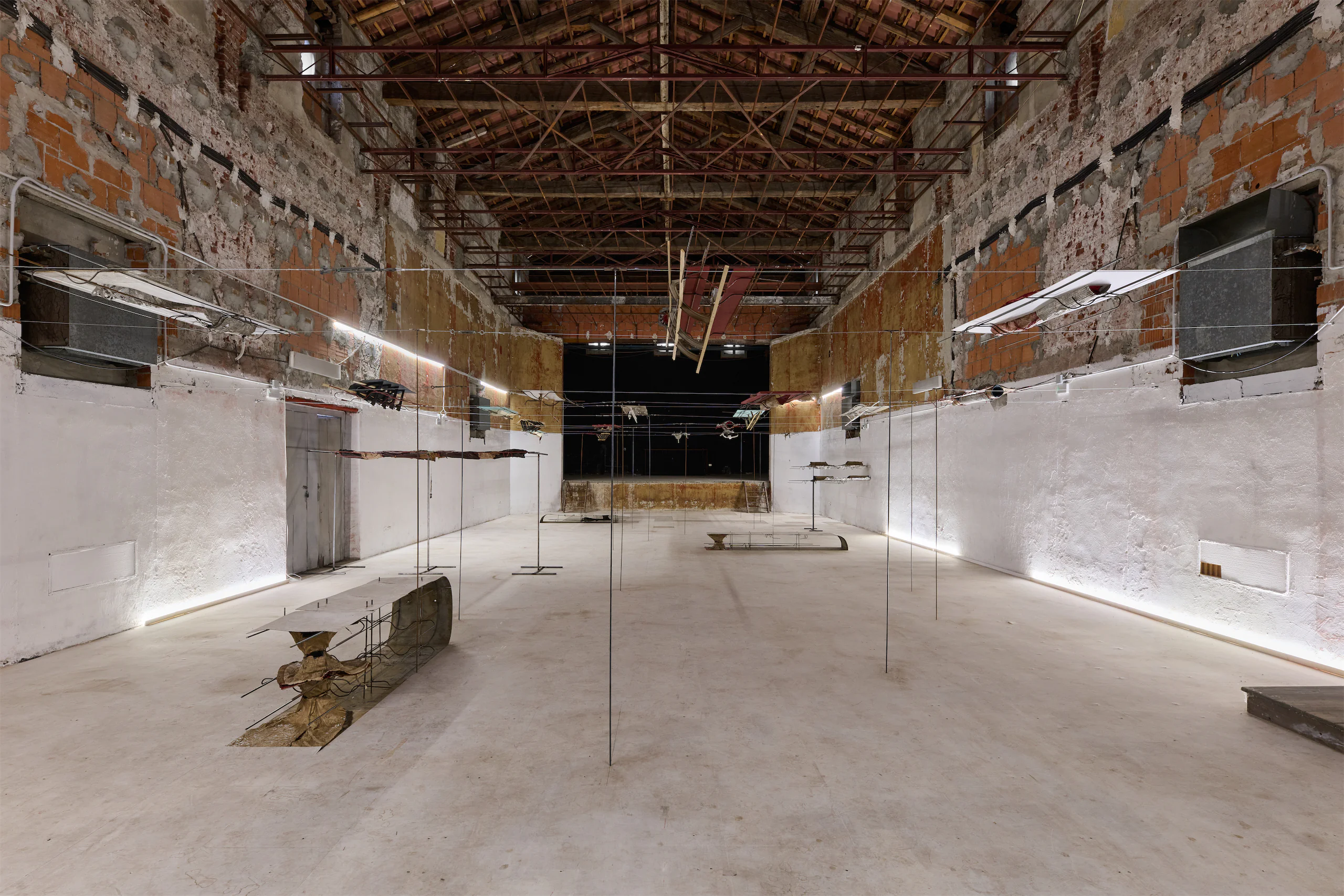
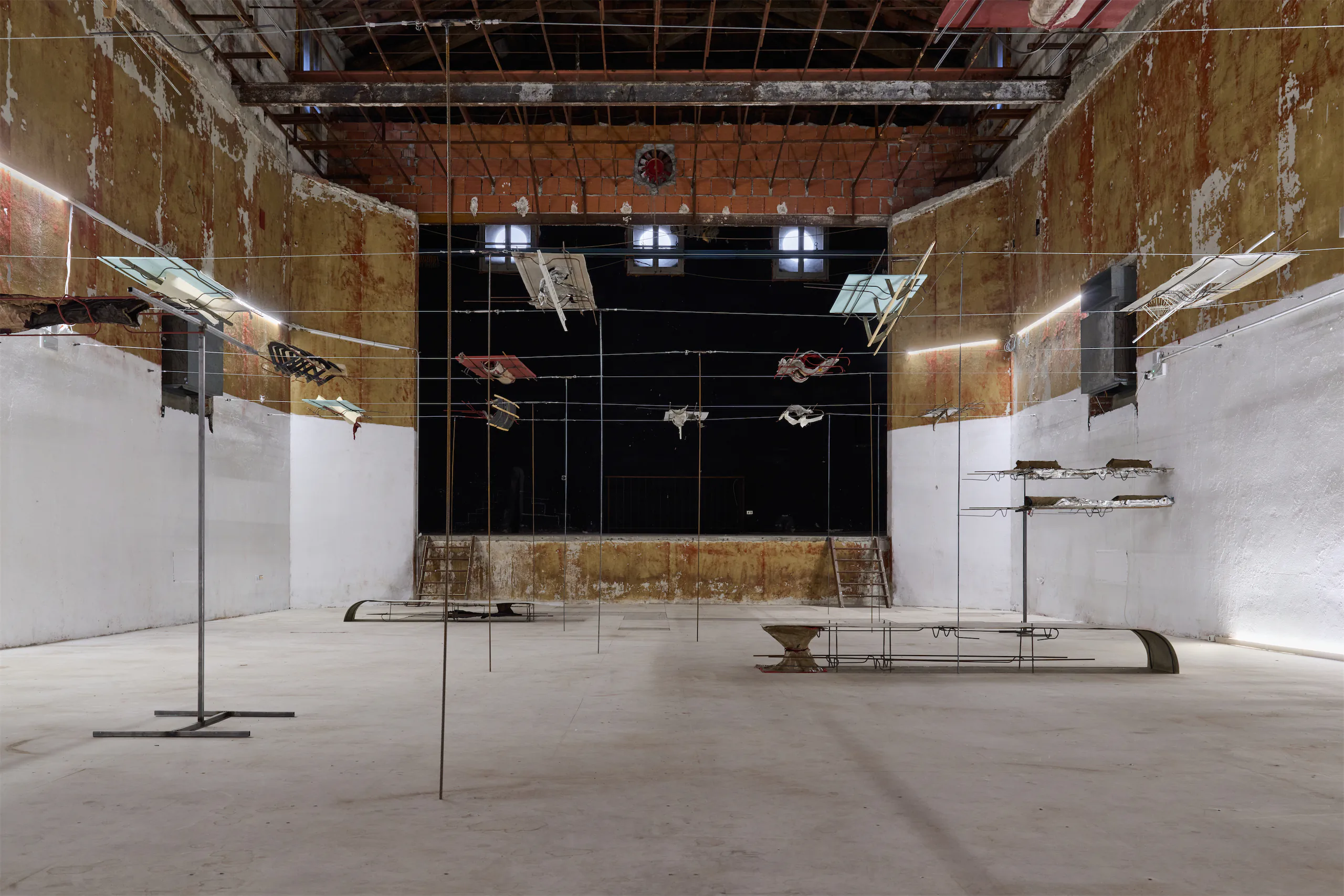
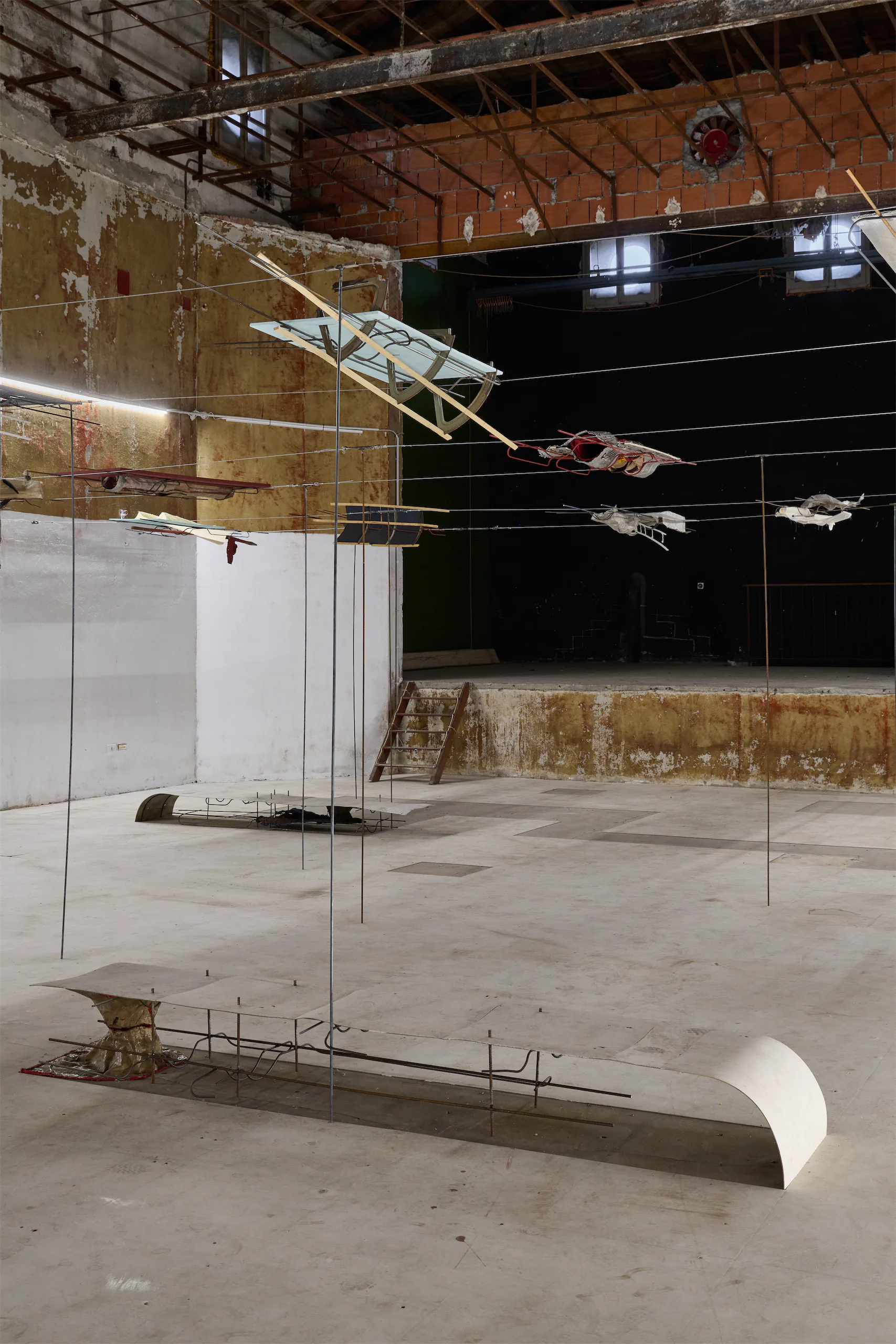
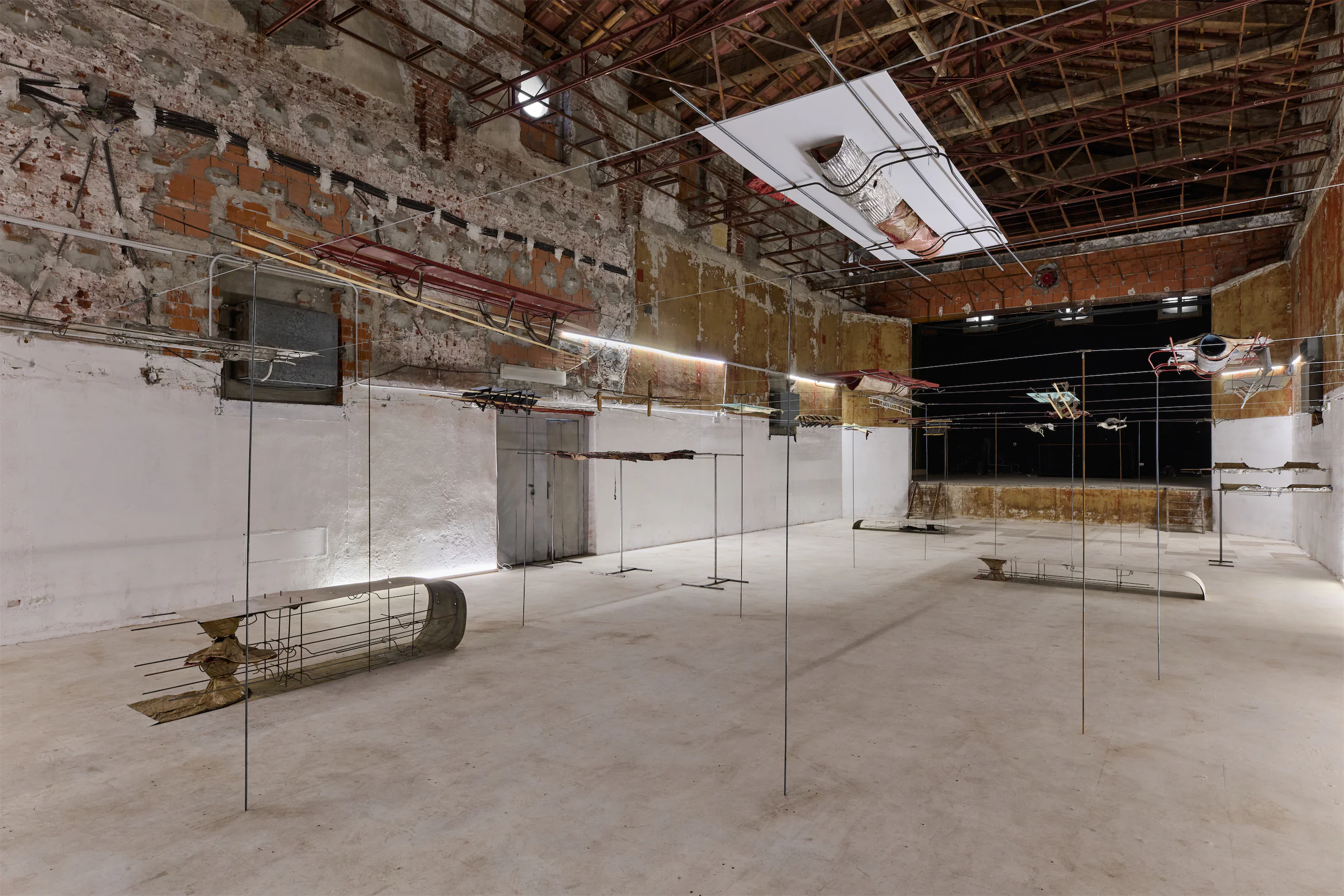
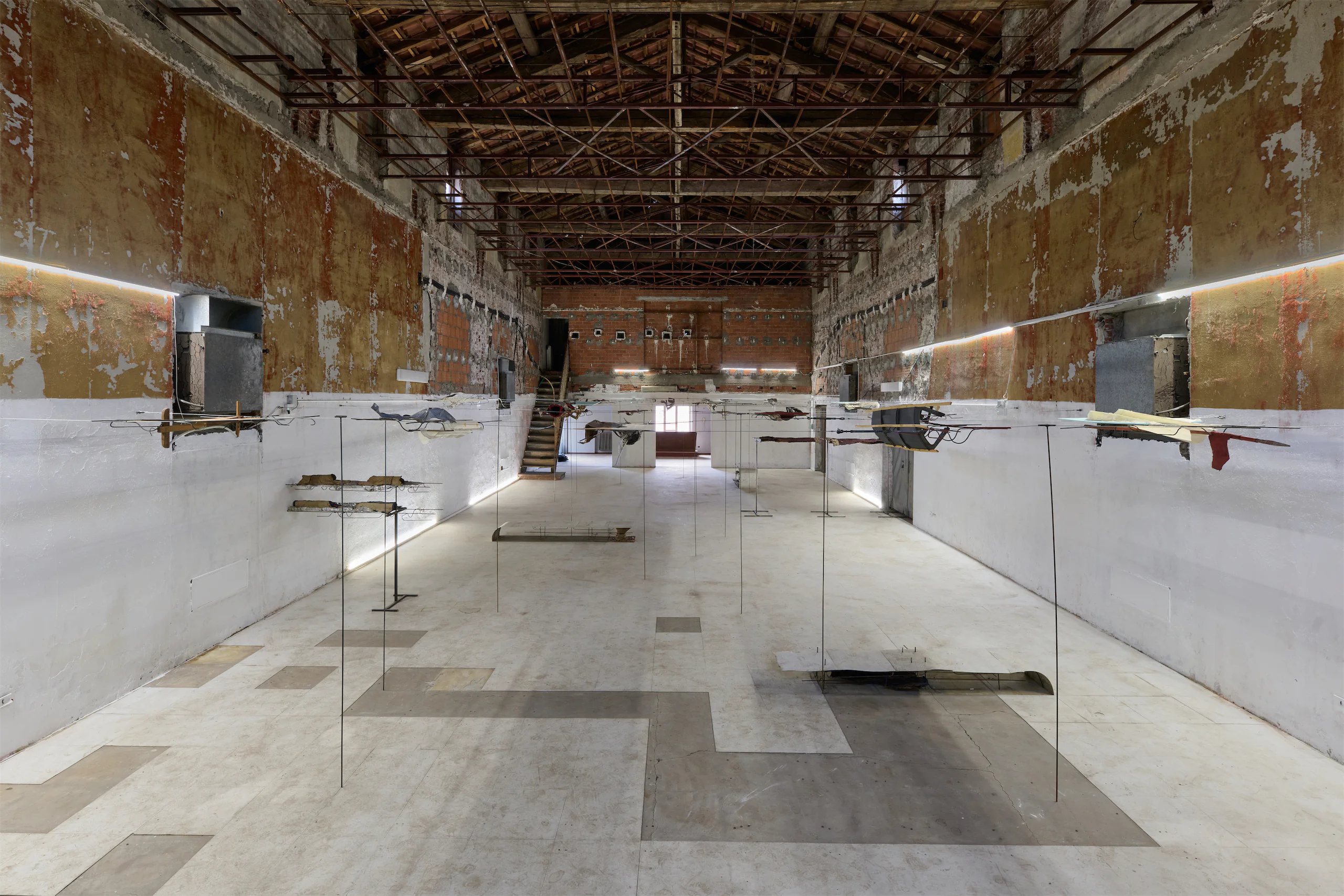
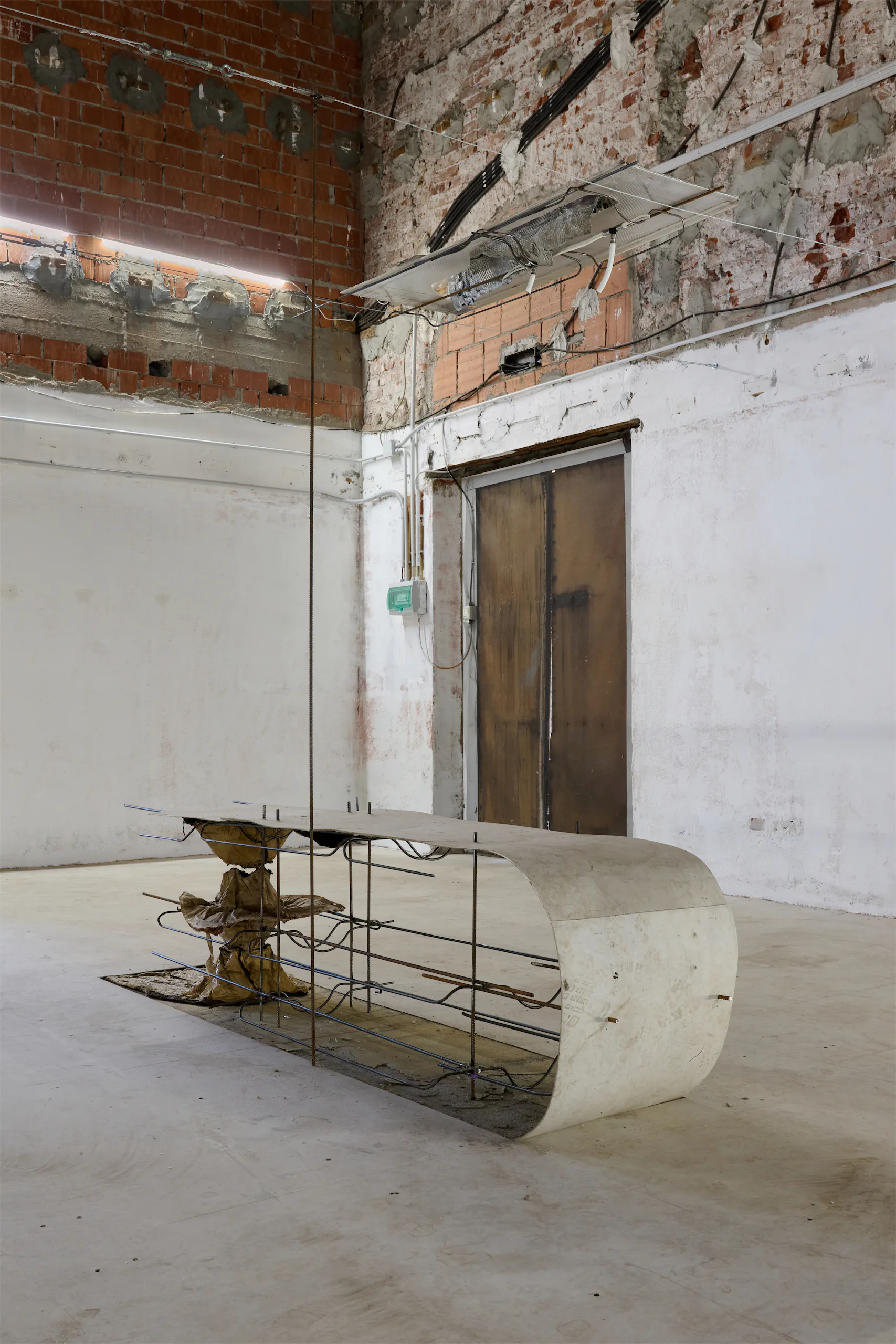
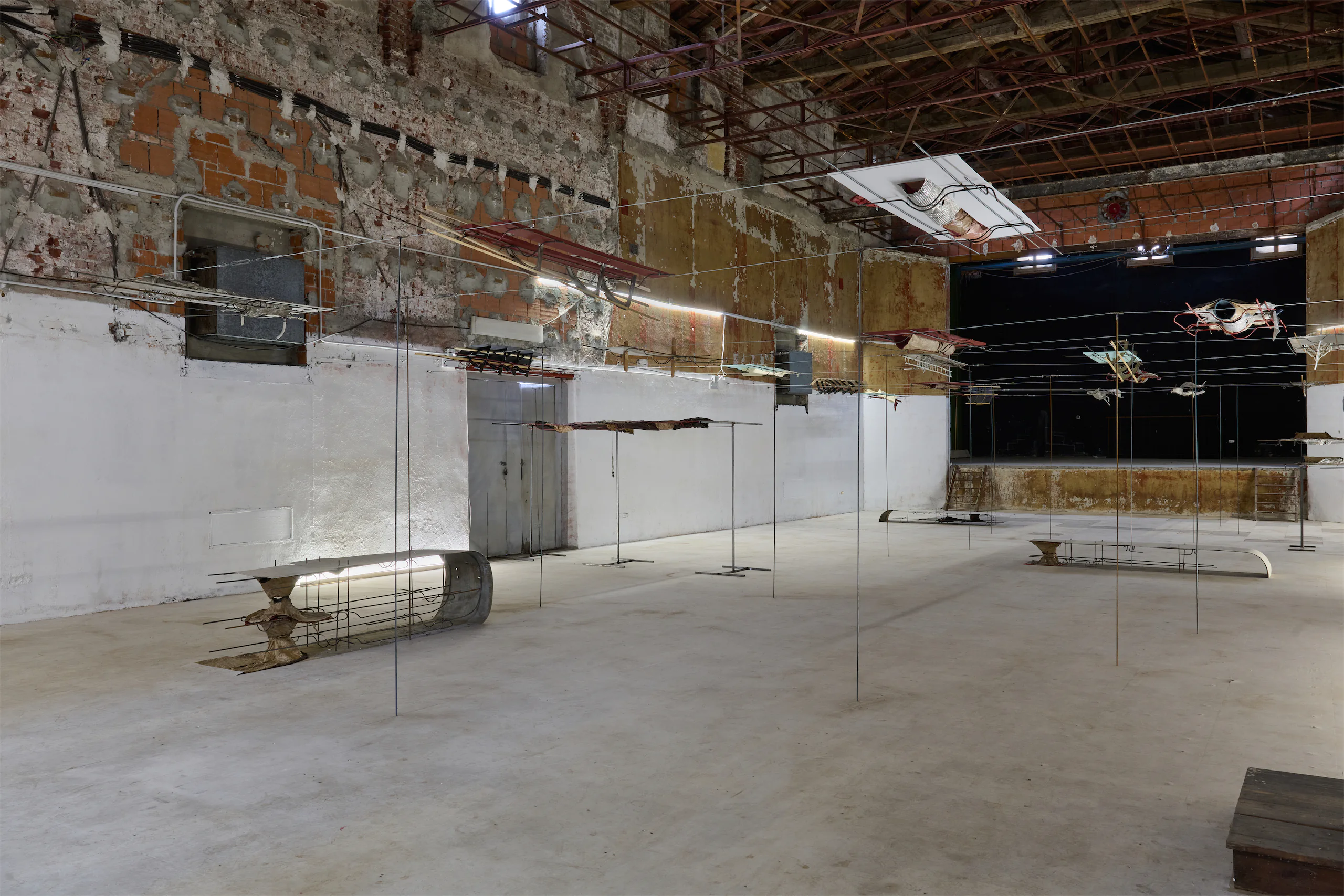
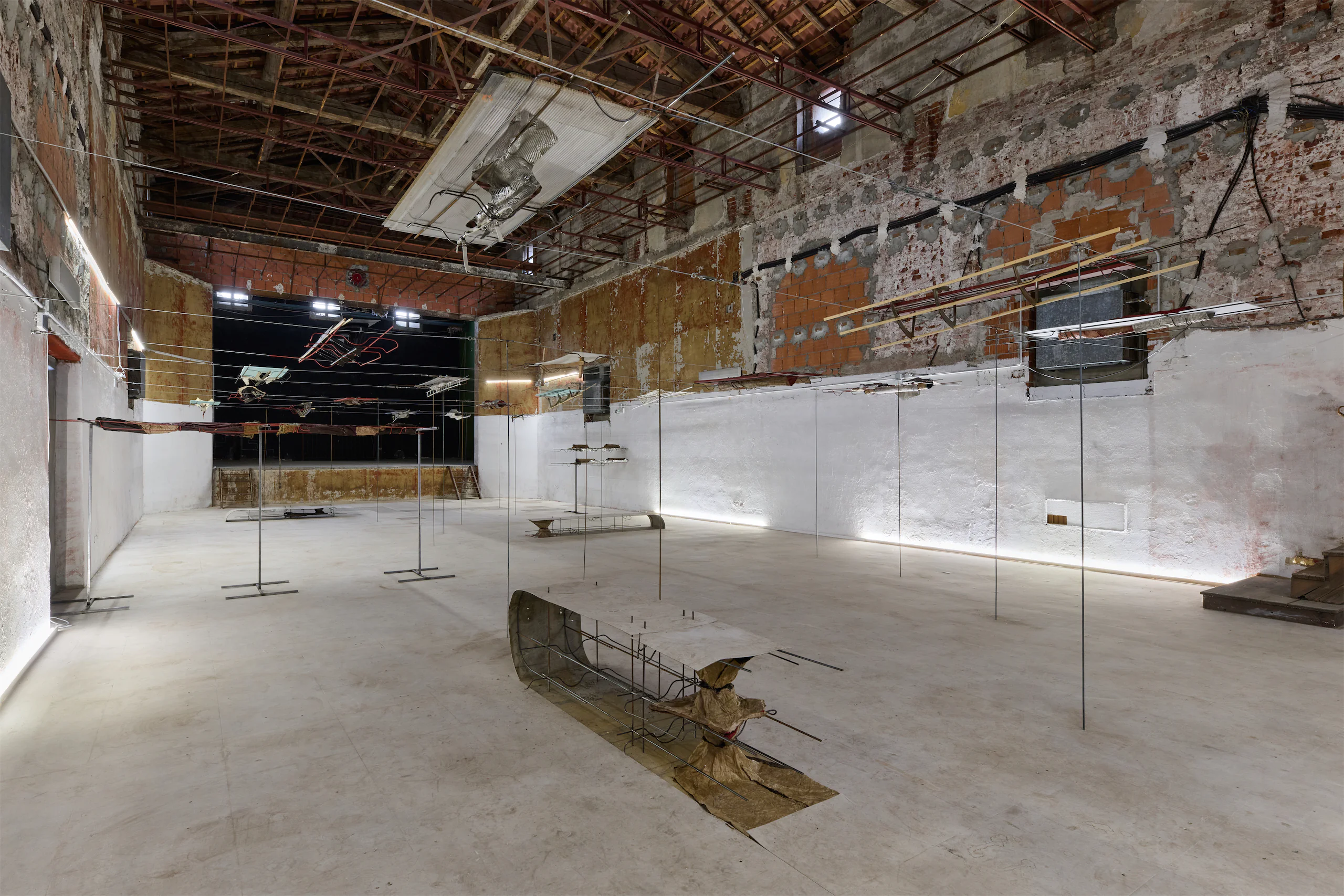
Seamless
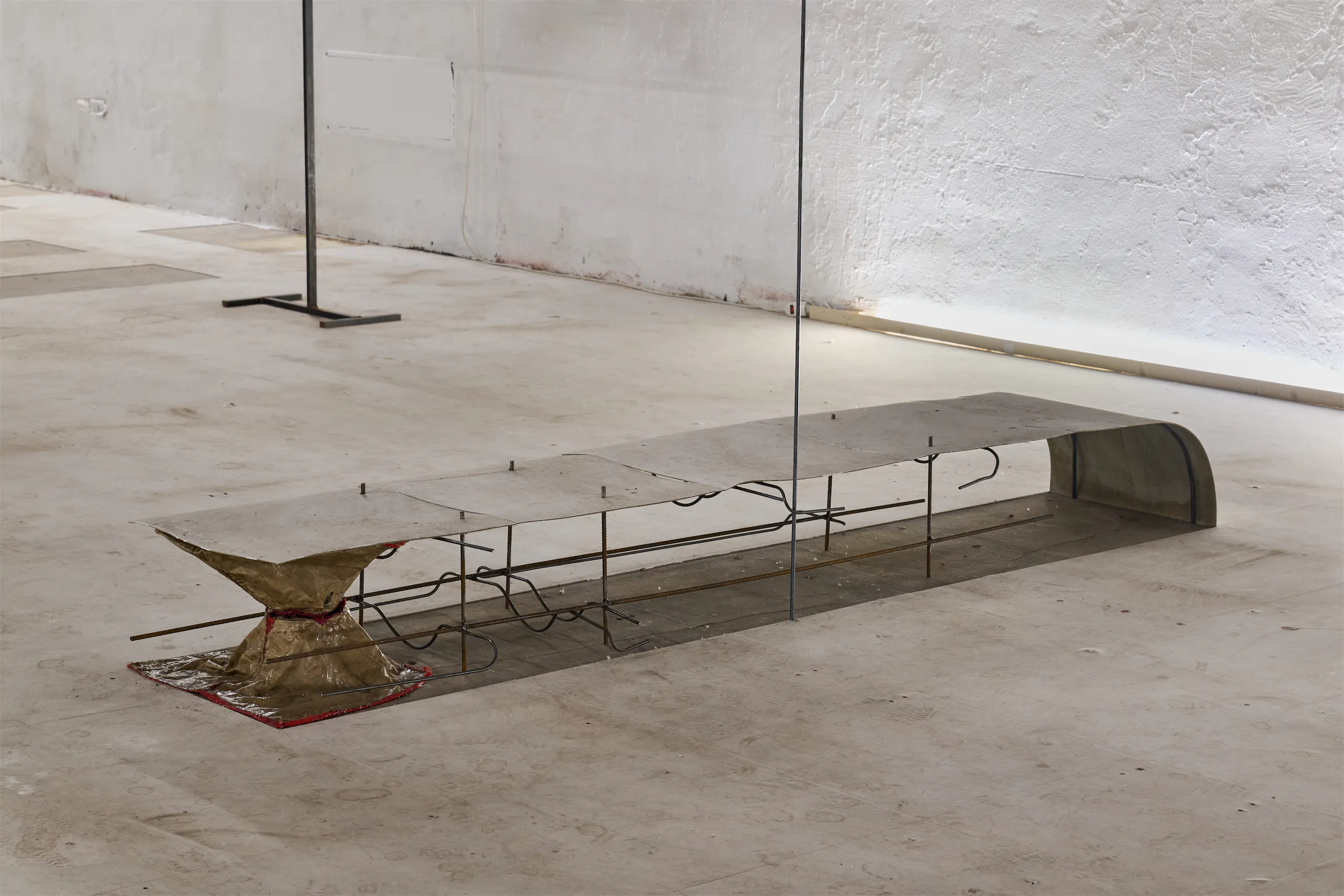
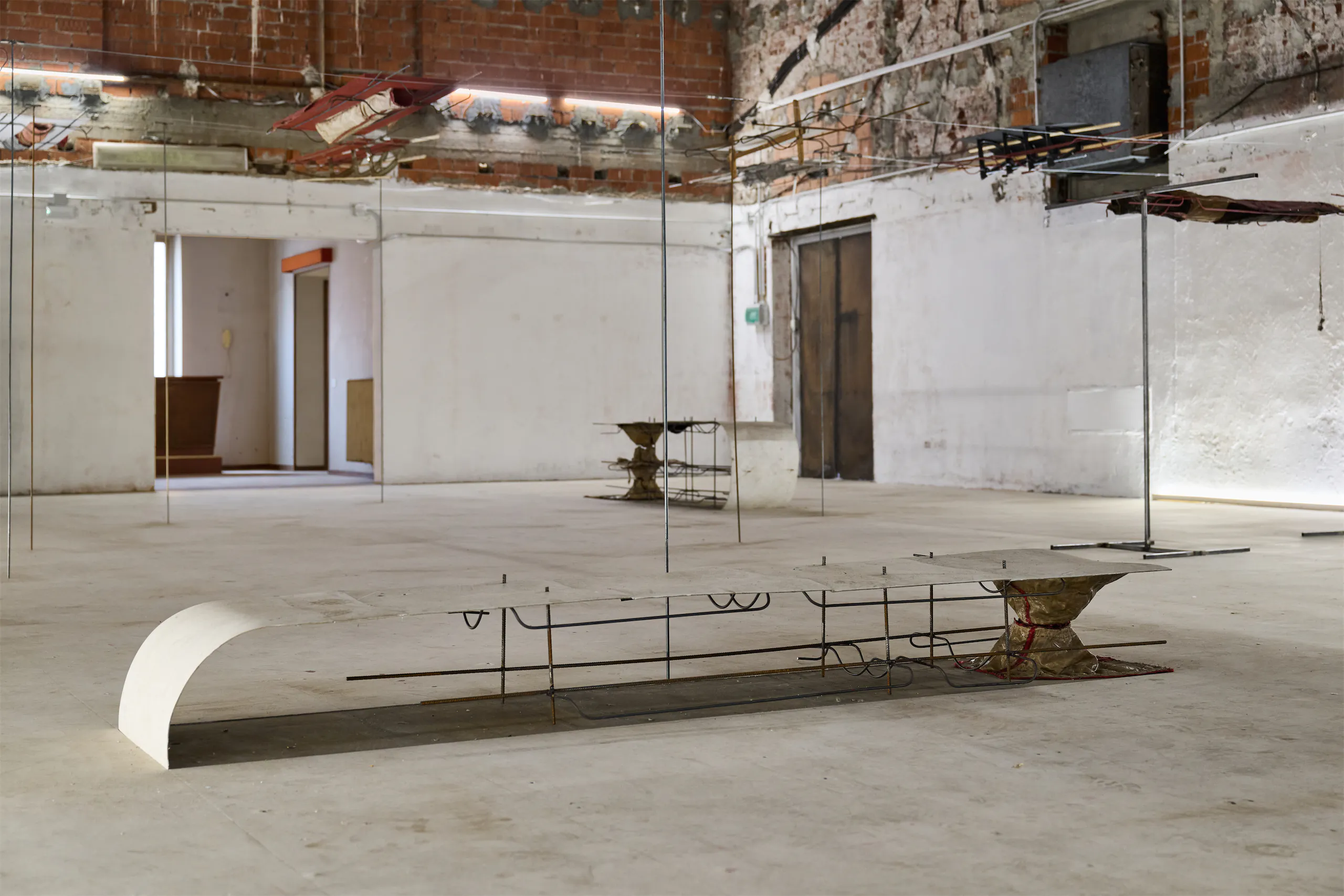
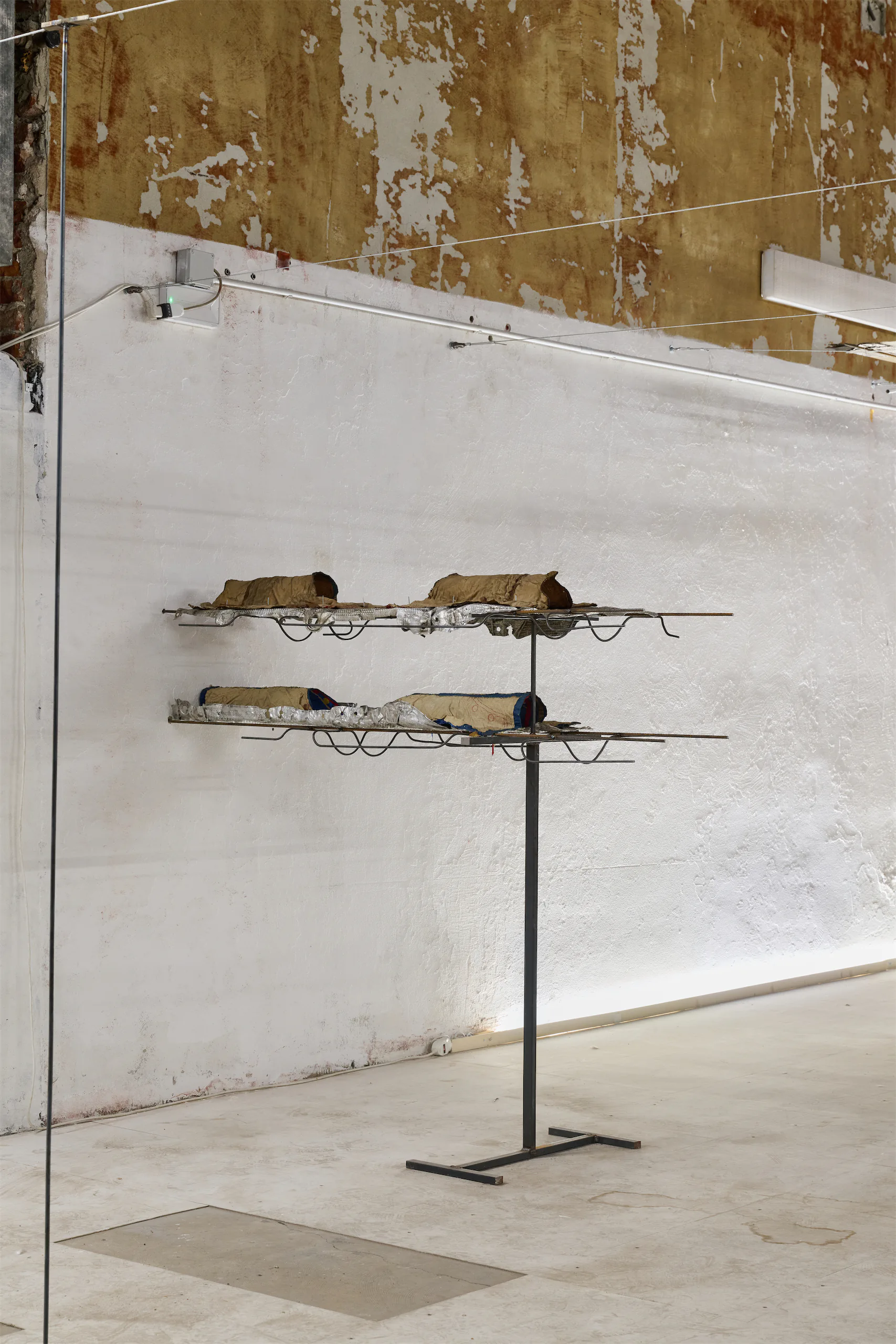
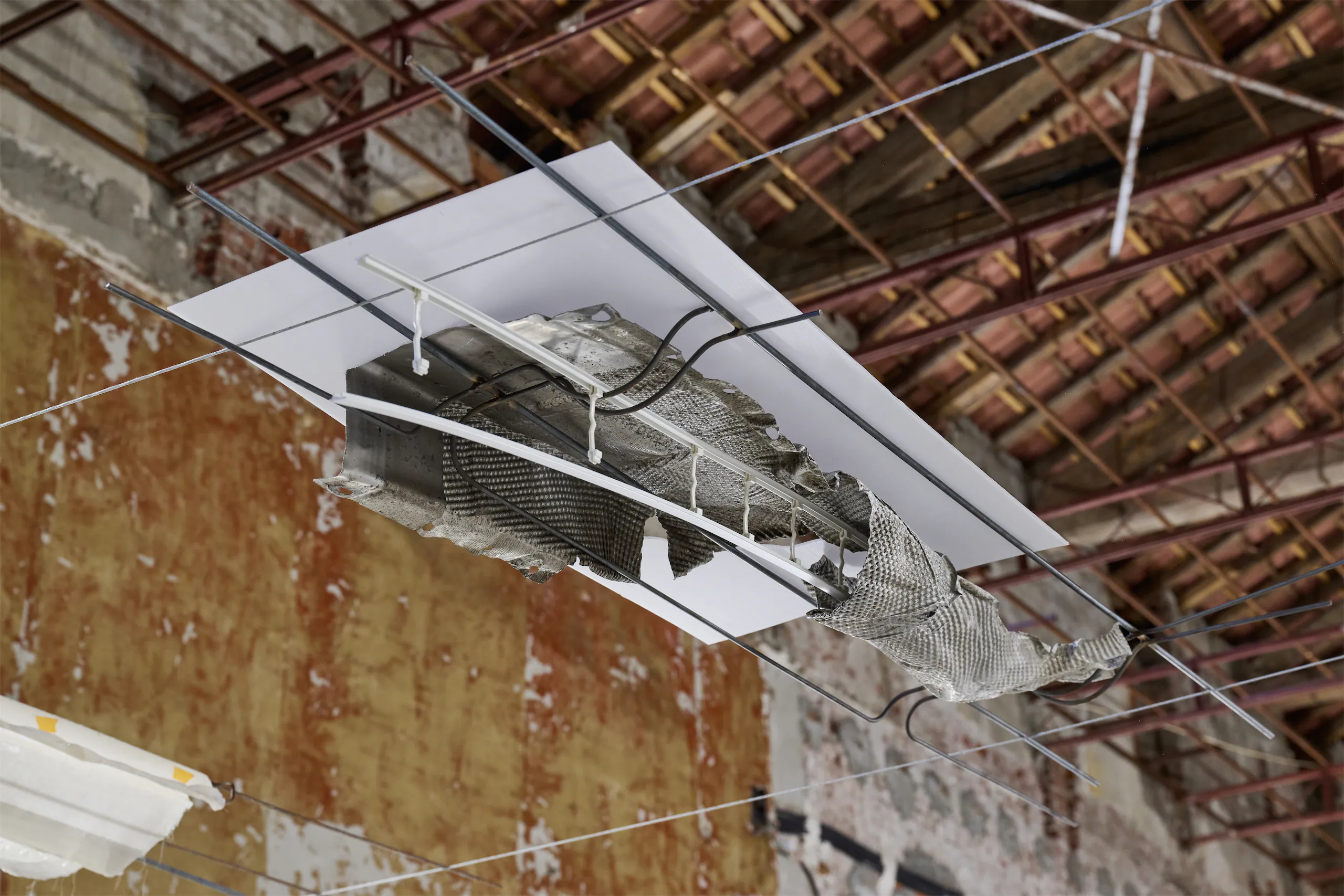
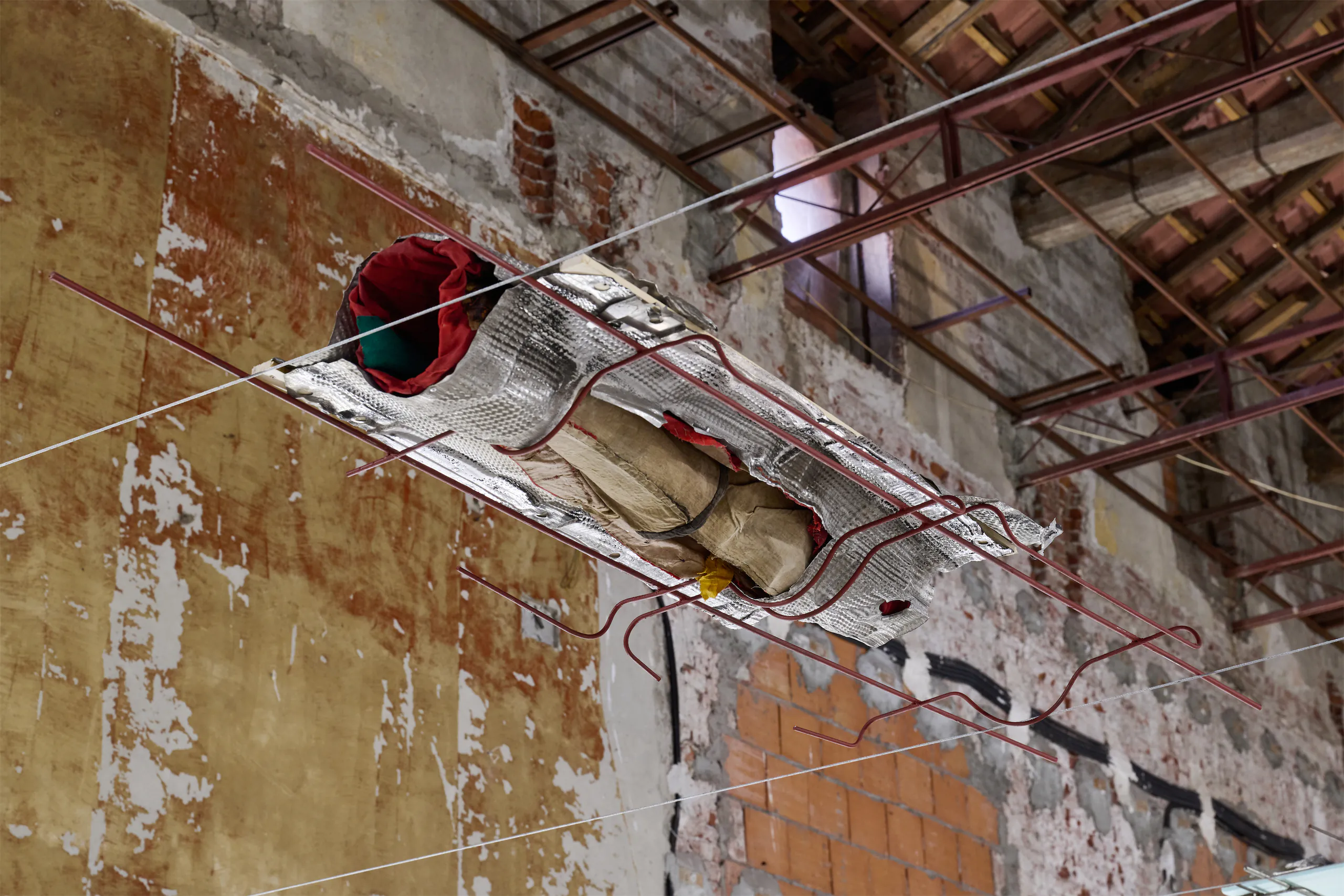
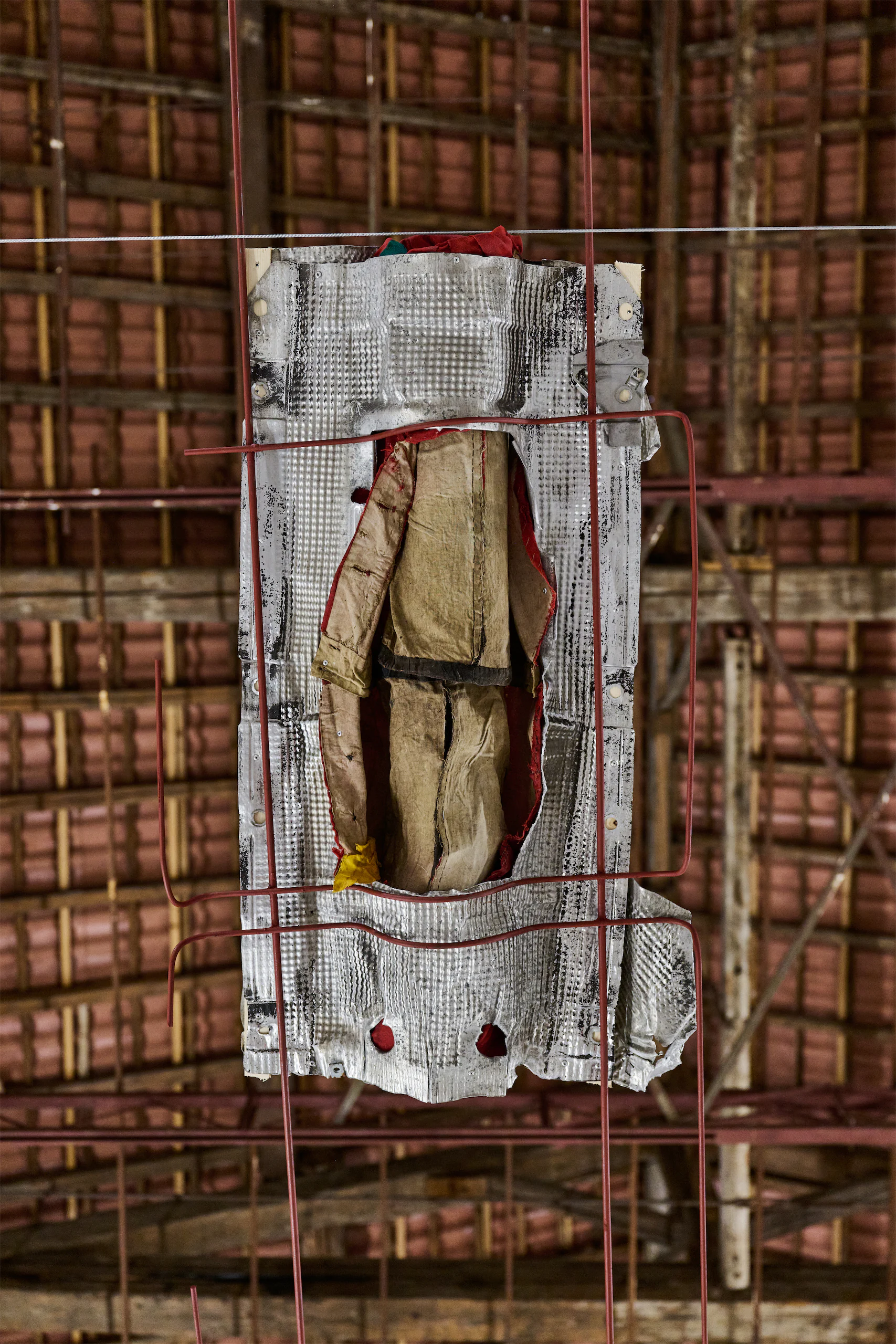
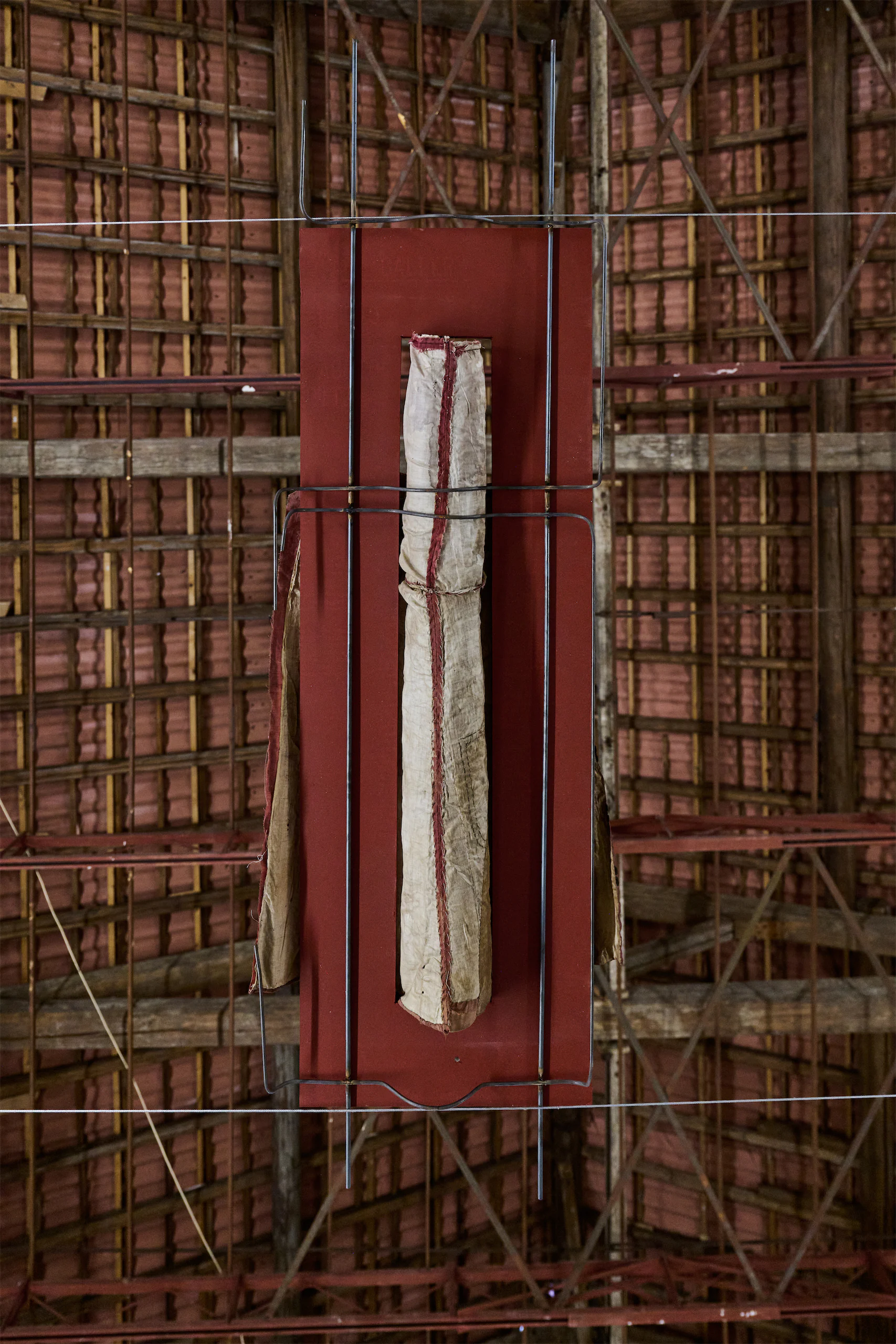
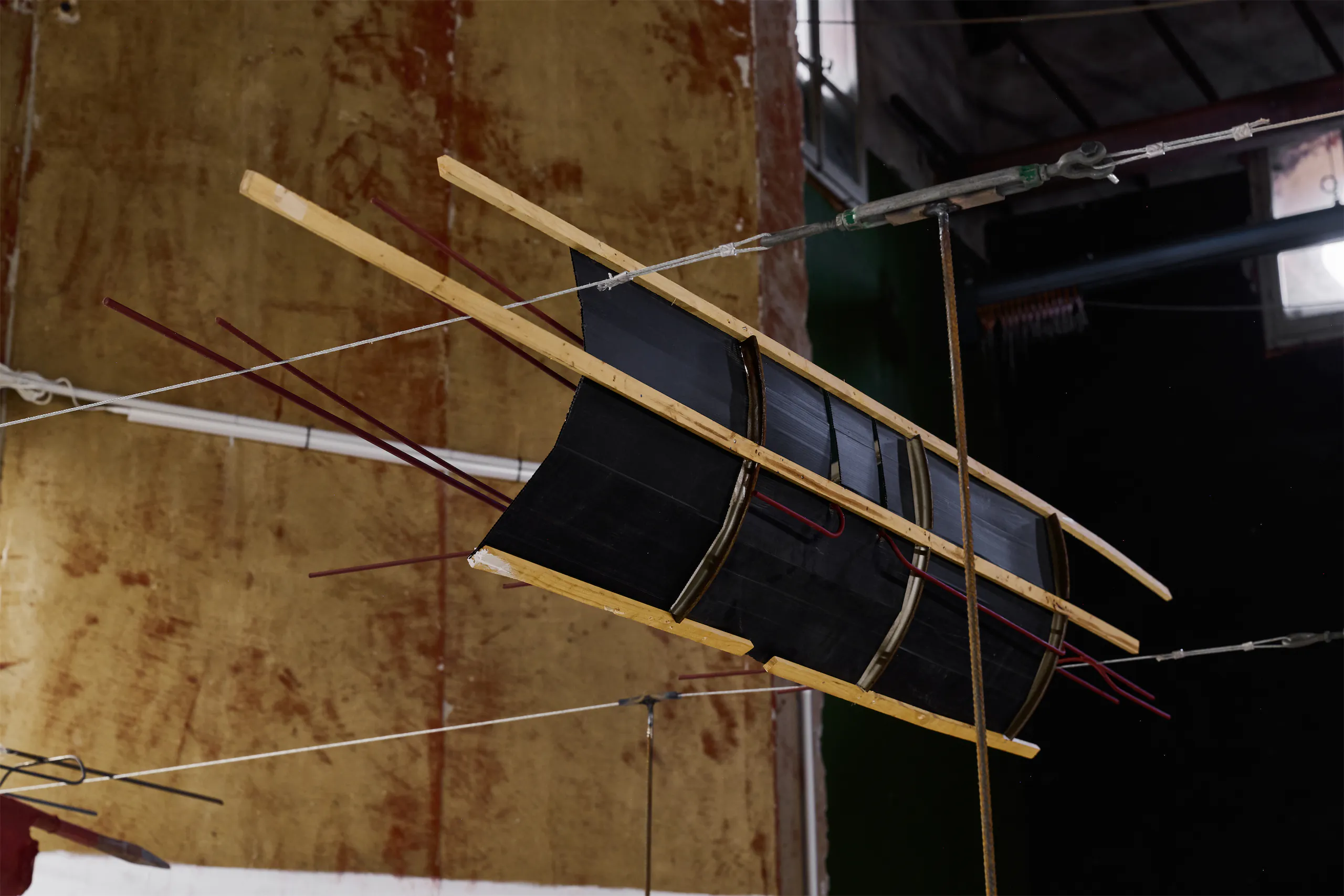
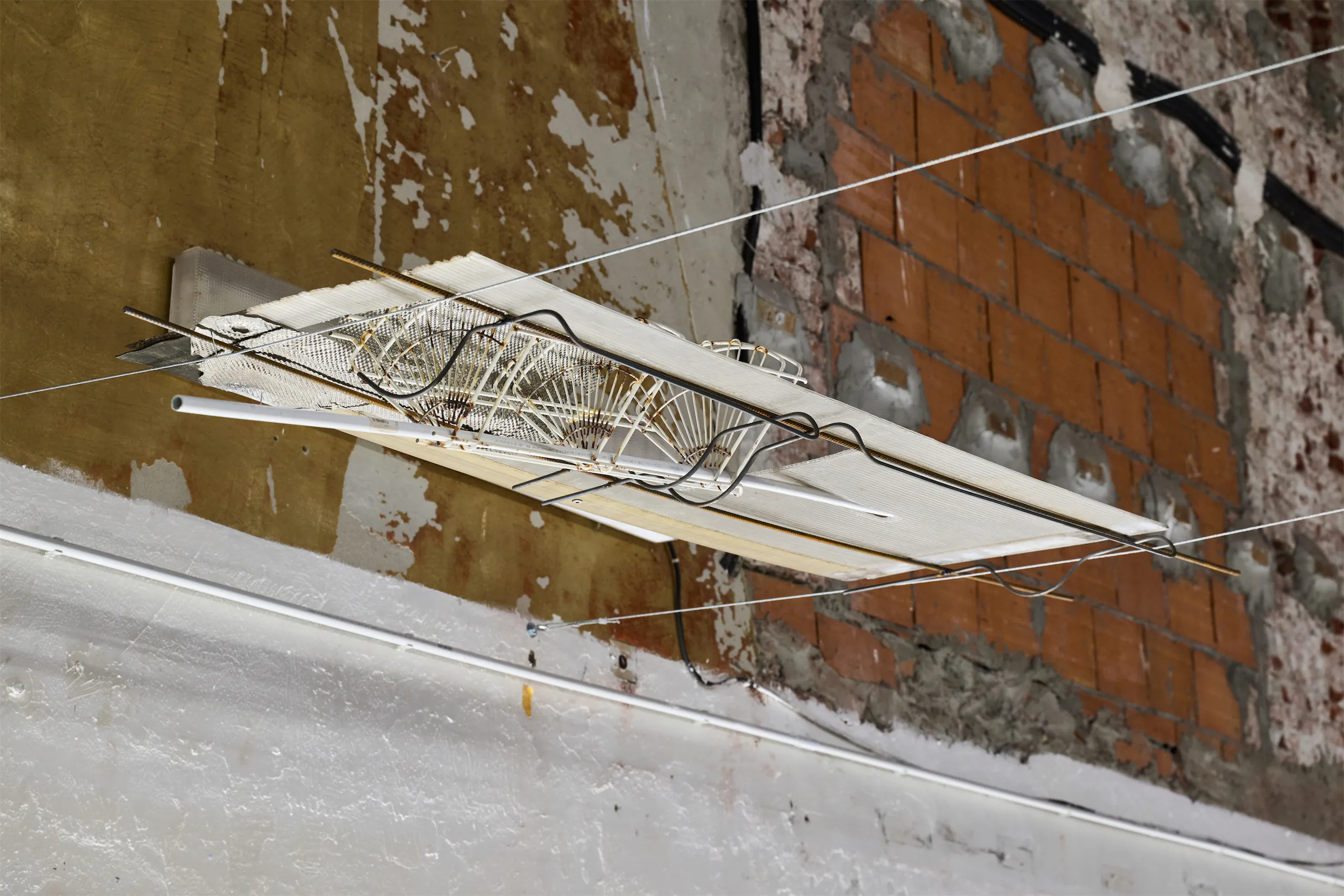
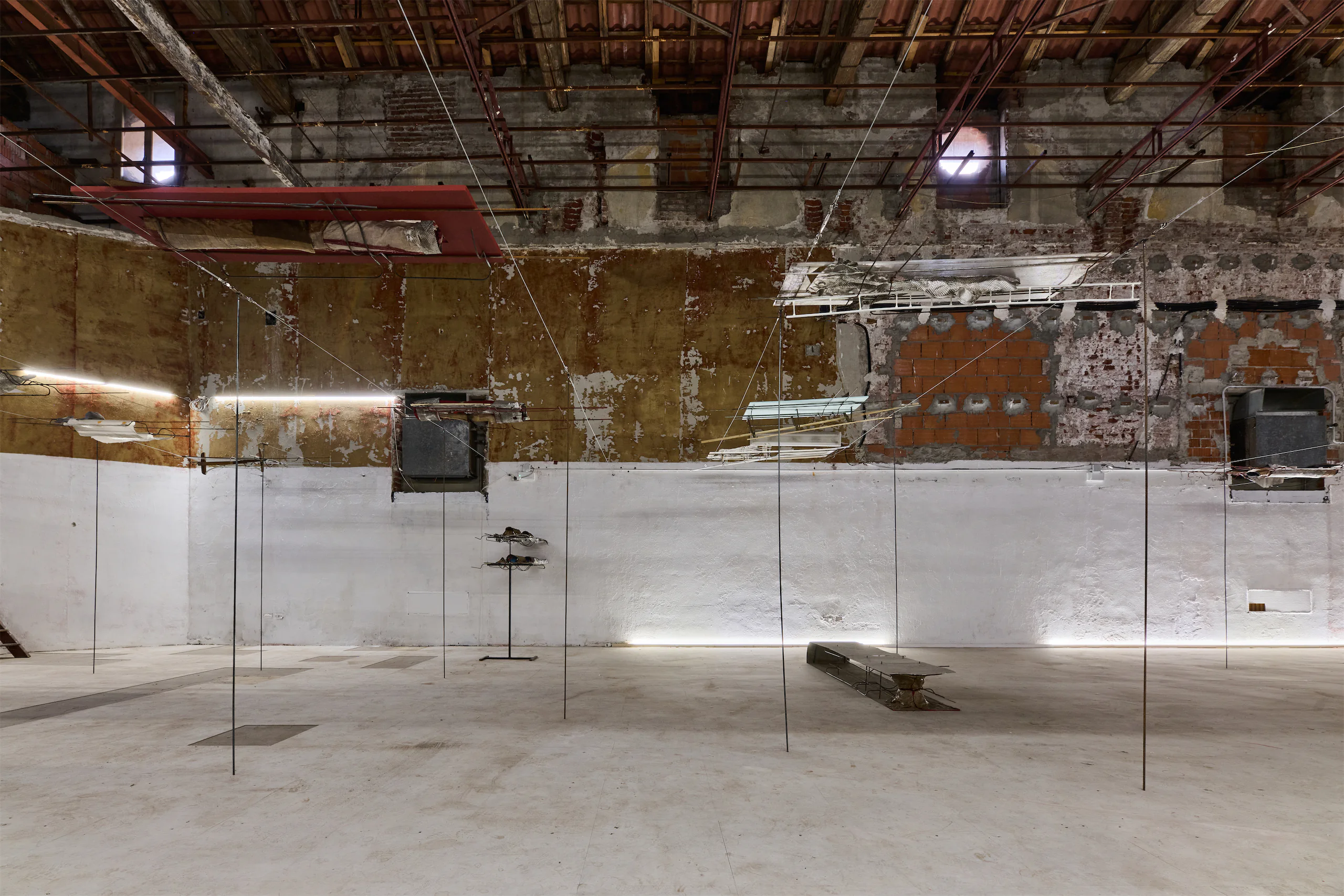
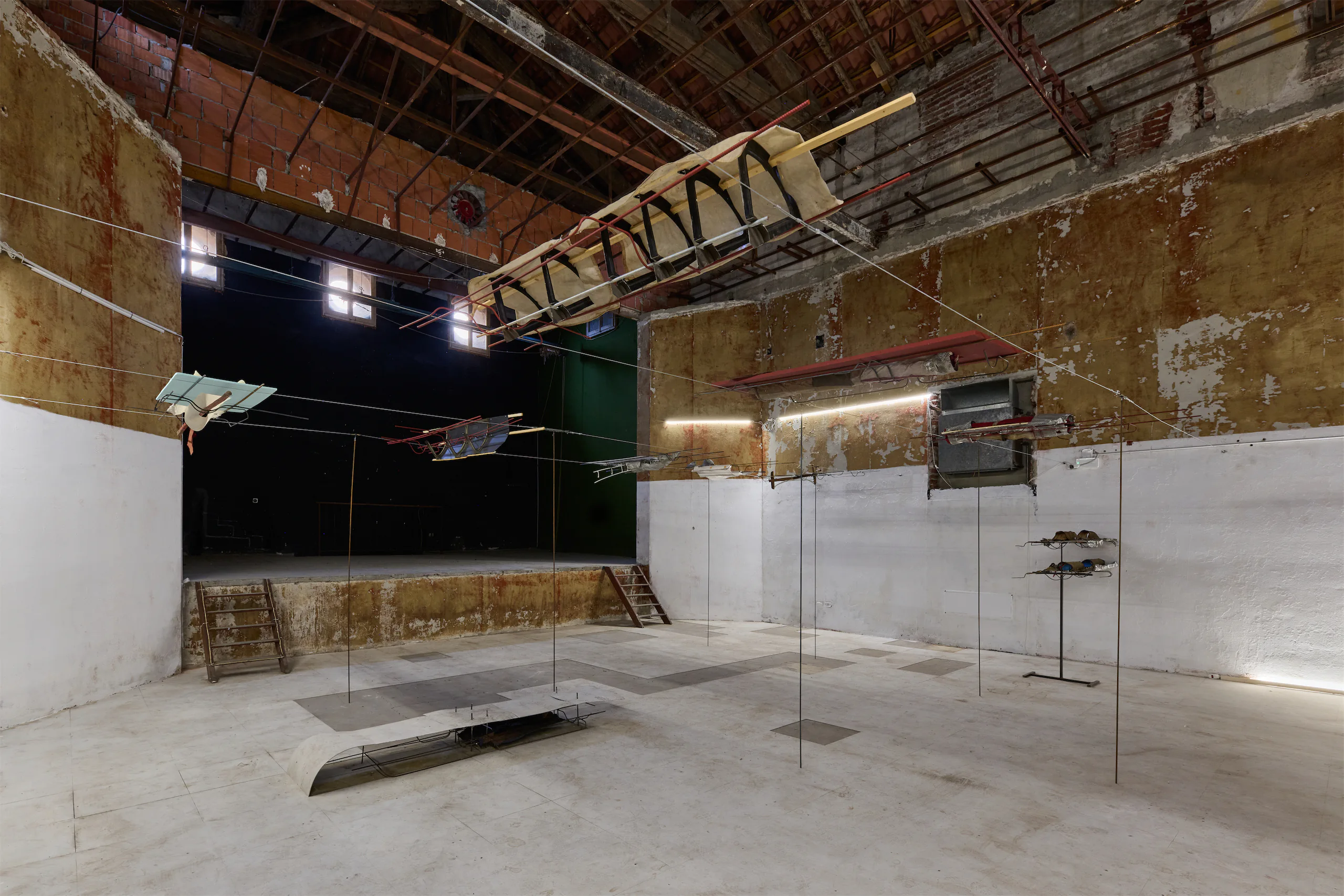
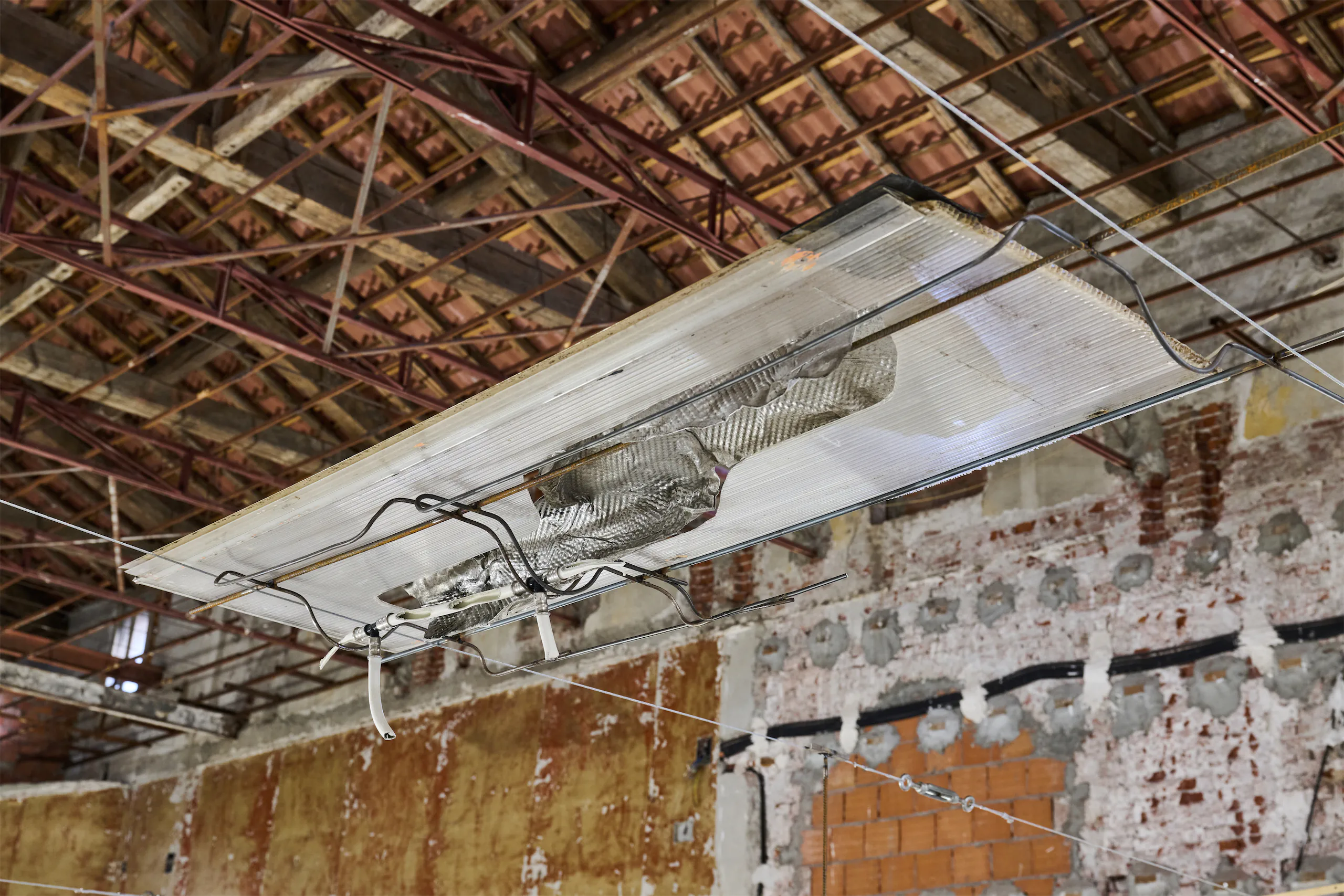
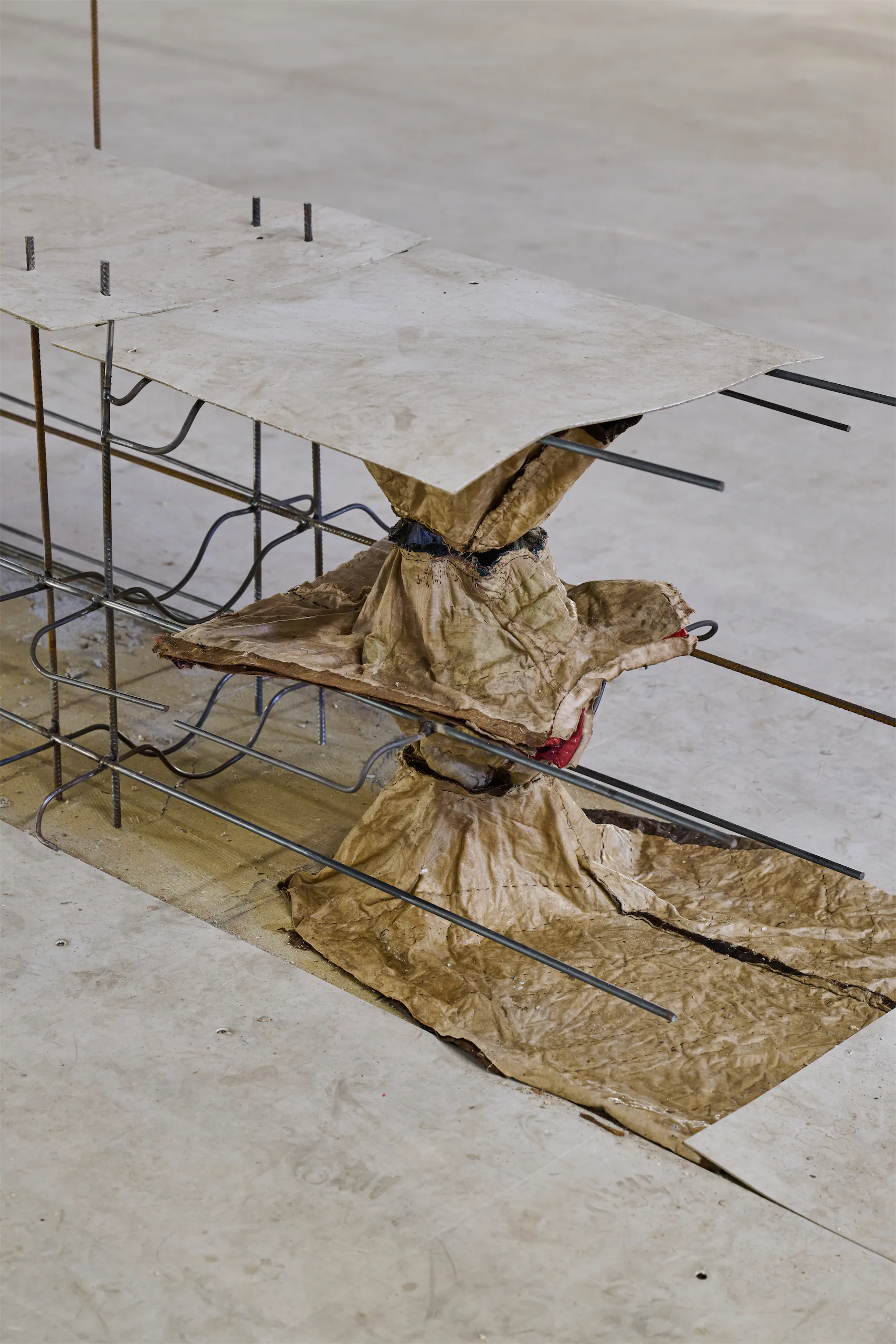
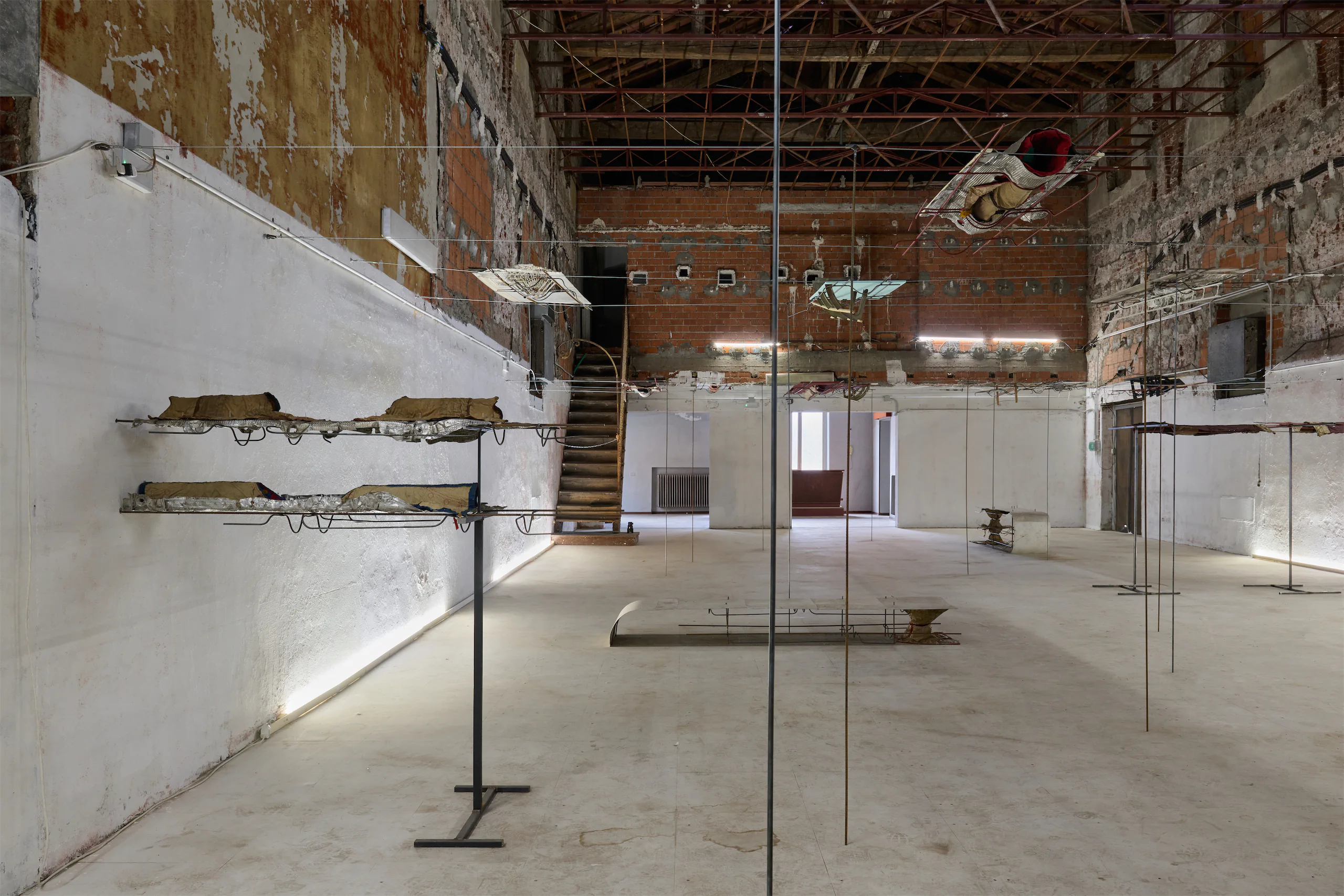
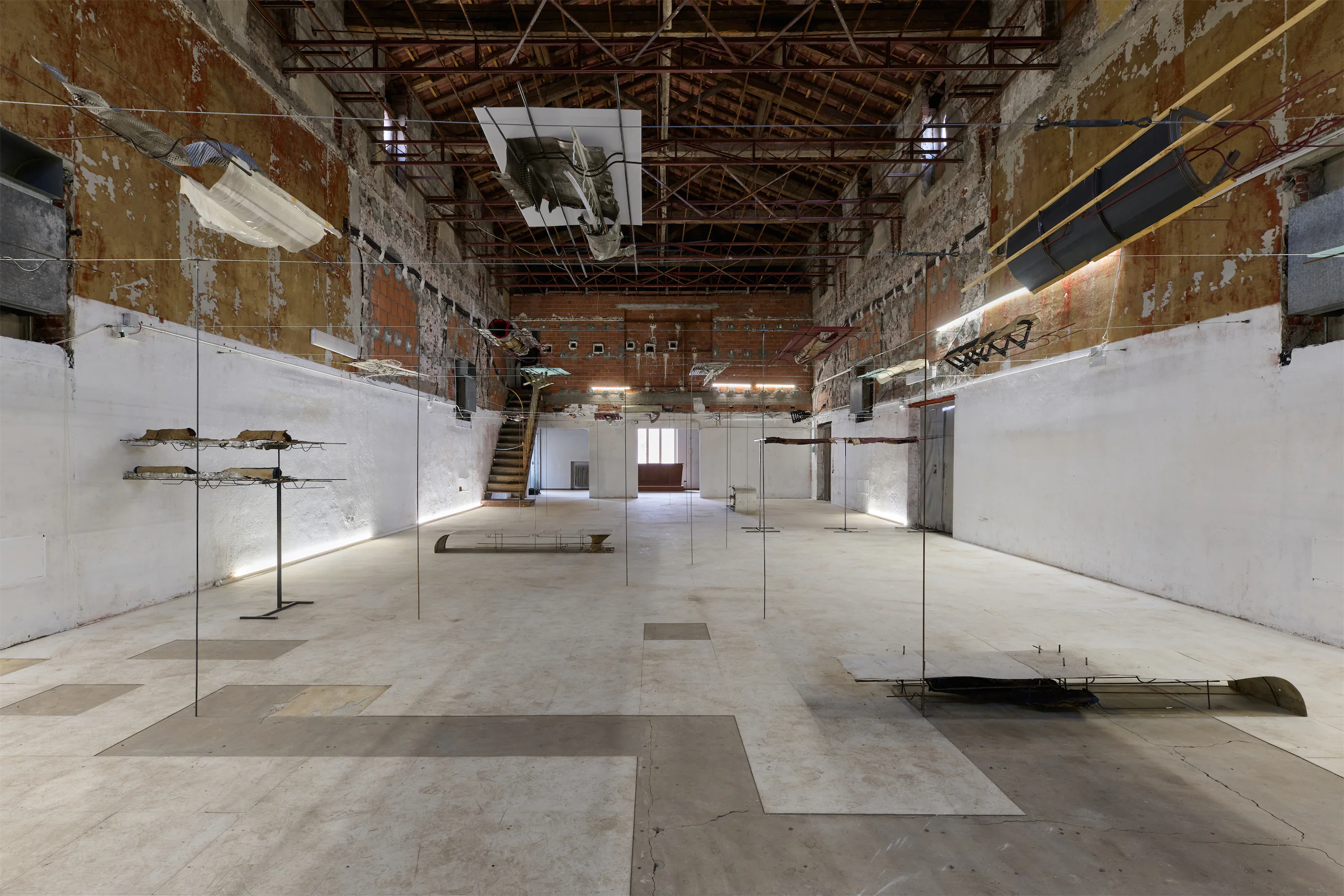
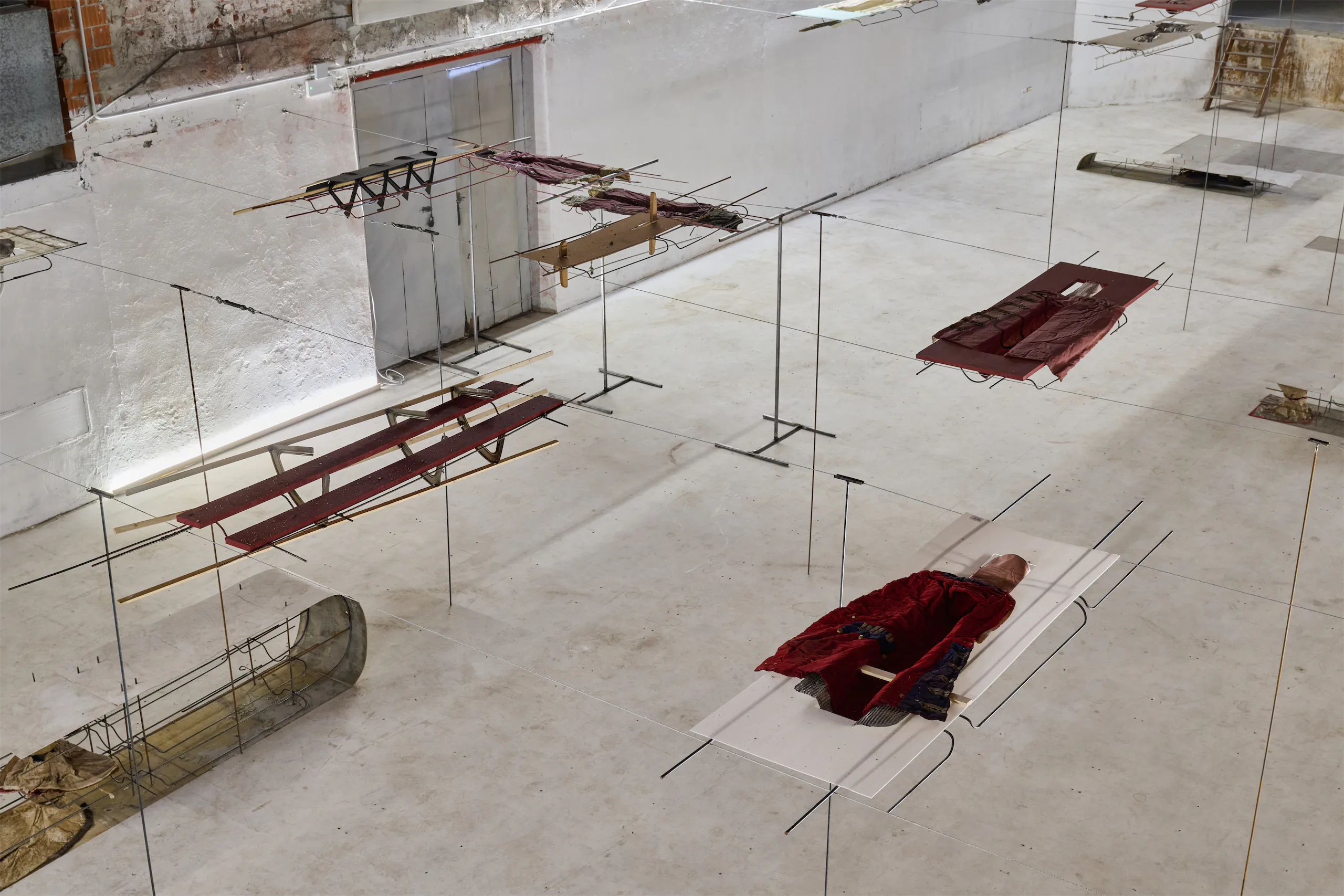
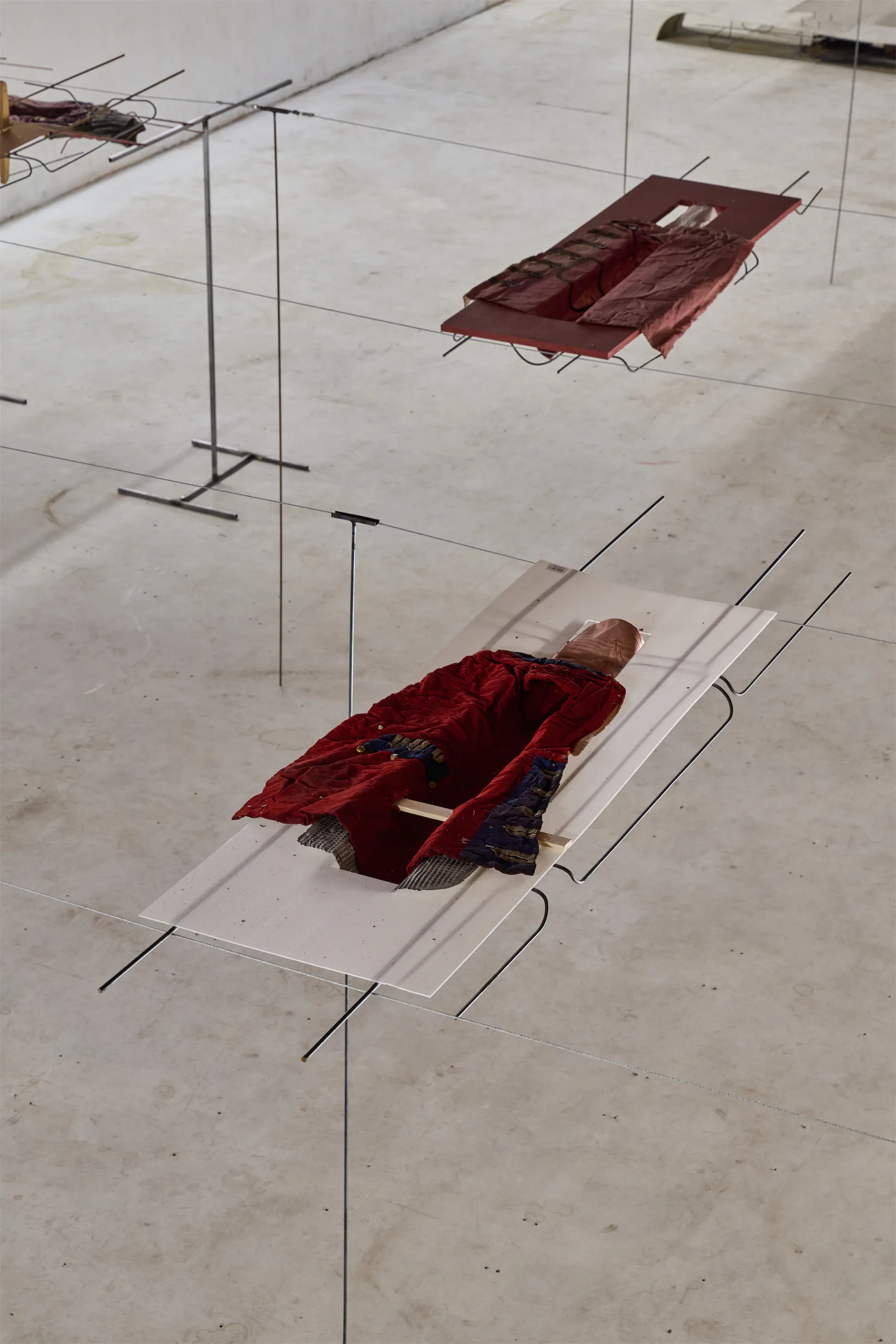
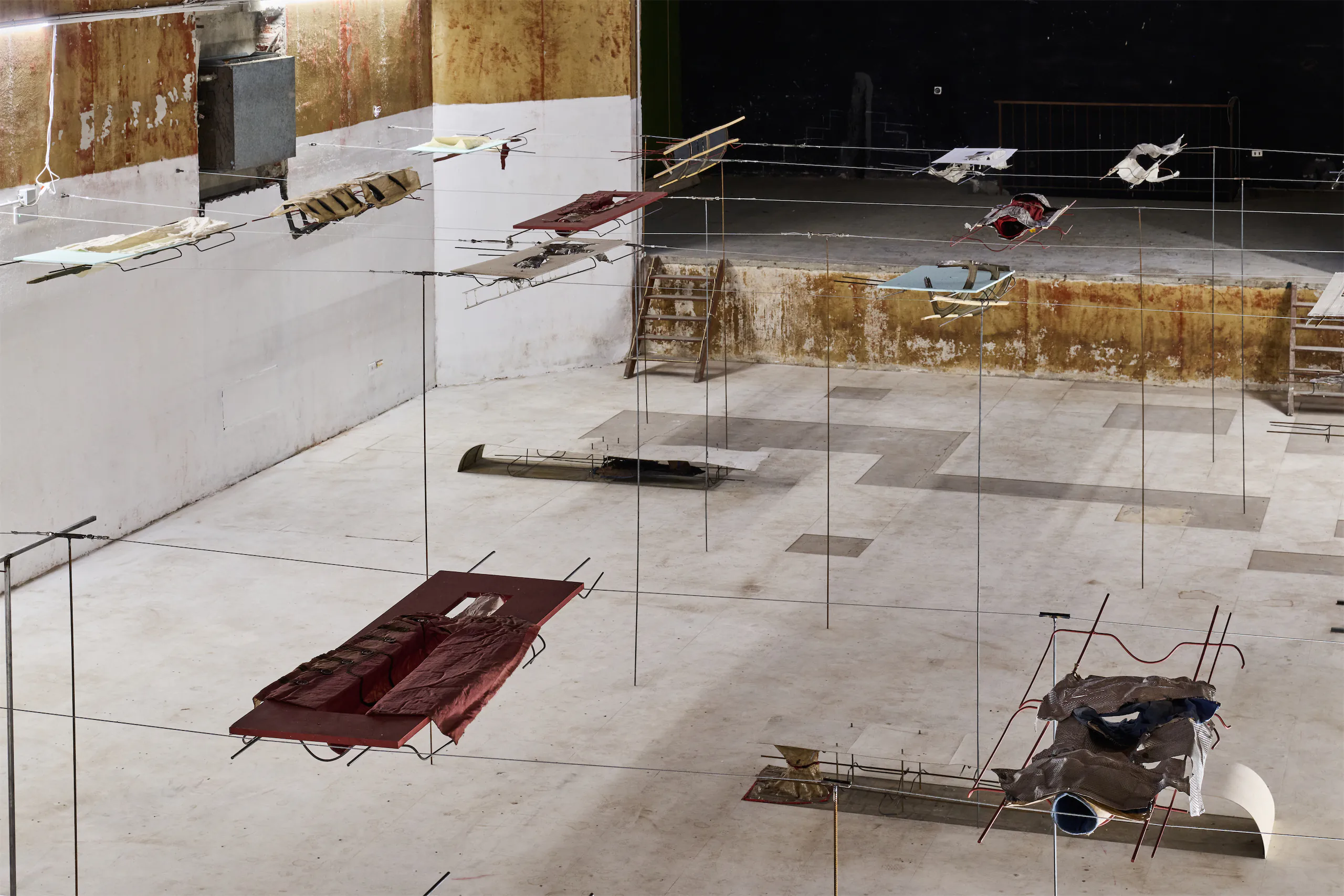
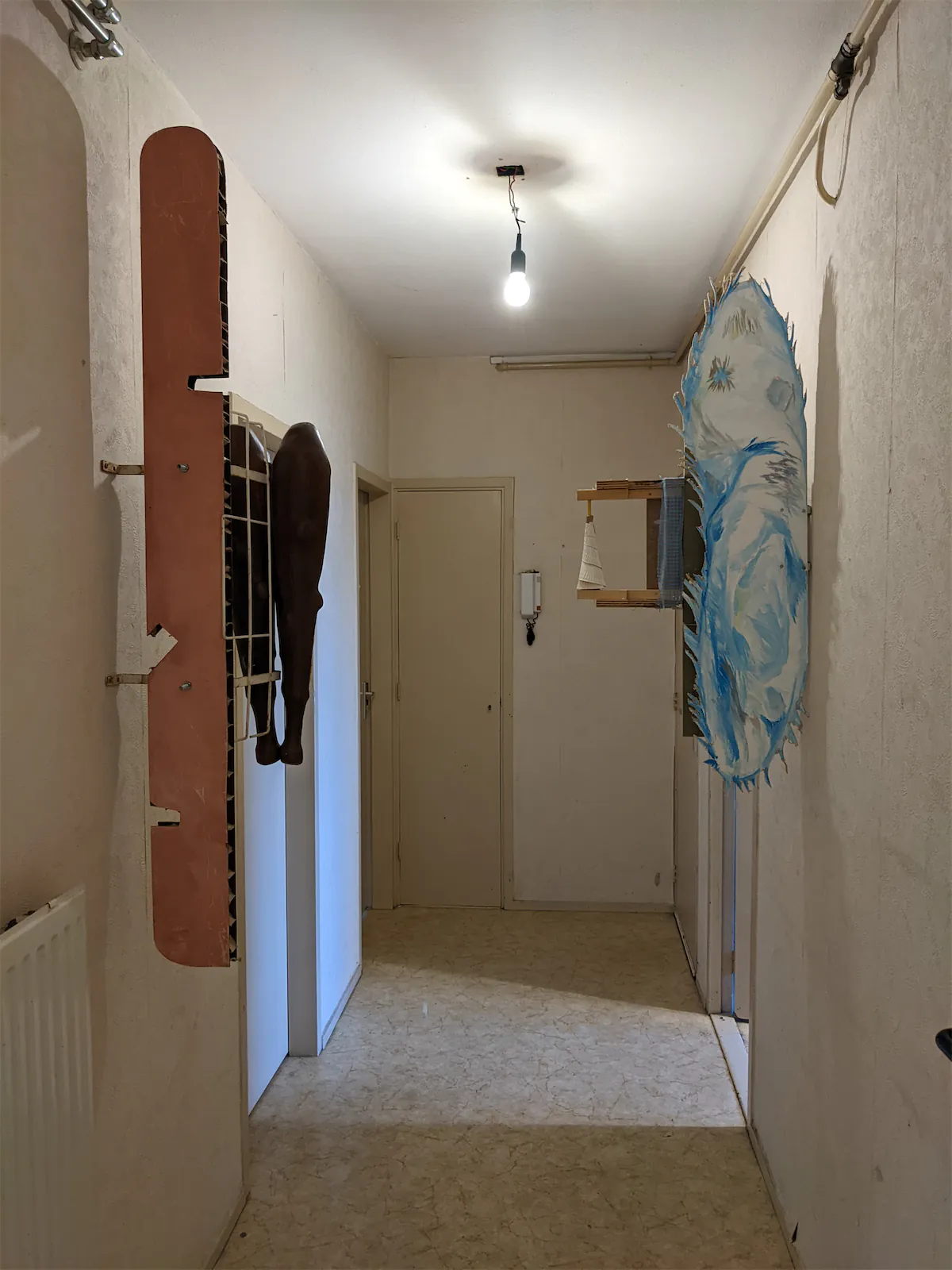
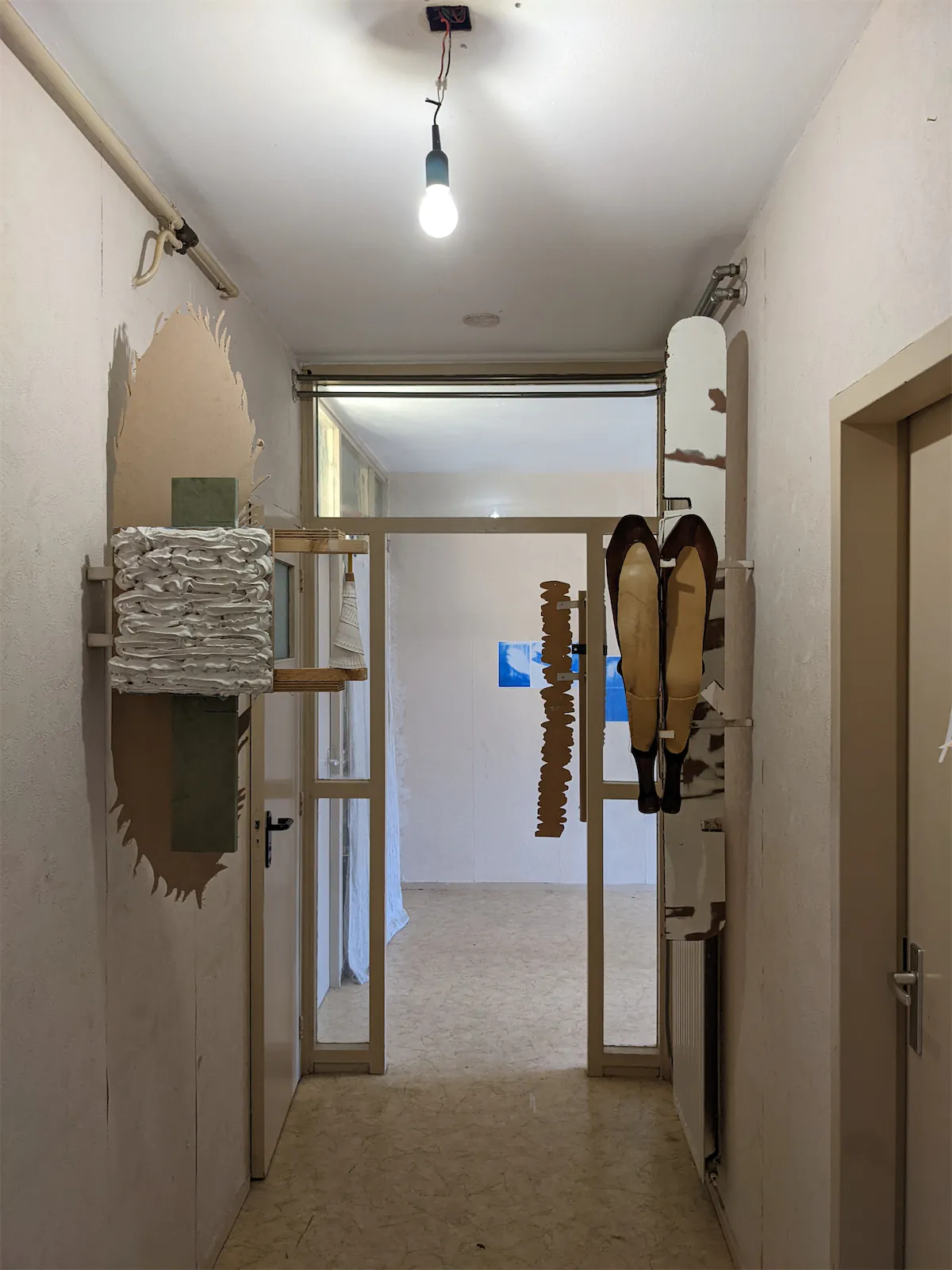
Aluminium, pipe, multilayer pipe, polycarbonate twin-wall sheet, steel, film roll, cinema roll, foamboard, foam, styrofoam, wood, pop rivets, costume, priest garment, corrugated plastic sheet, plastic, asphalt paint, cloth hangers, bolts and nuts, paverpol, arrow, epoxy, cheesecloth, needles, linofloor
Teatro di San Luca, Triangolo, Cremona
2026
Text by Dafne Gotink
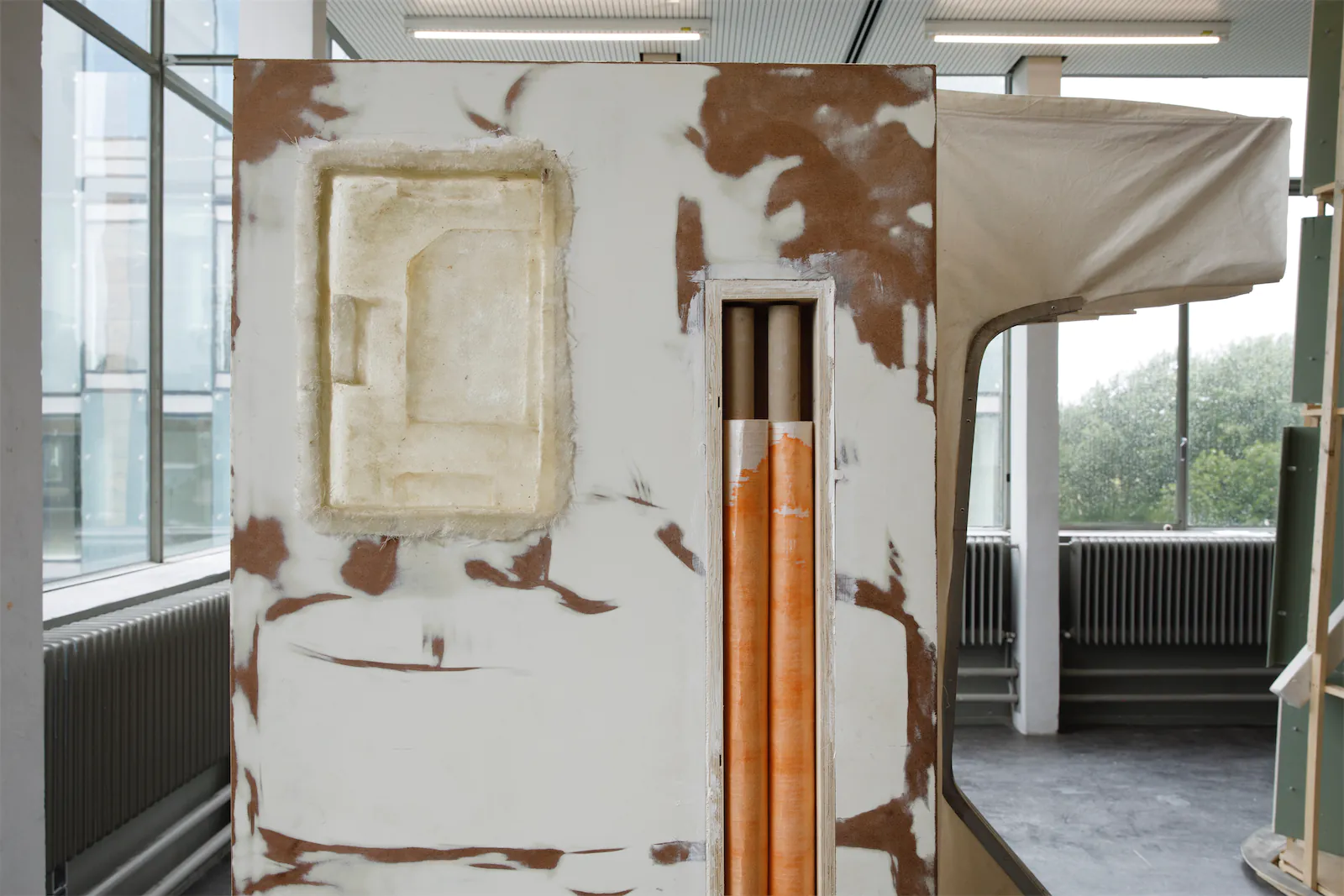
Every space has a certain structure, with a certain logic. The structure of this space has been altered — what was below the floor, is over our heads; what was one, is now many; what was separate, is now united. Suddenly, everything is alive with possibility. What happens next? What kind of animals, beings, machines, are showing their open bellies? What is the meaning of that space inside them and what could it beget?
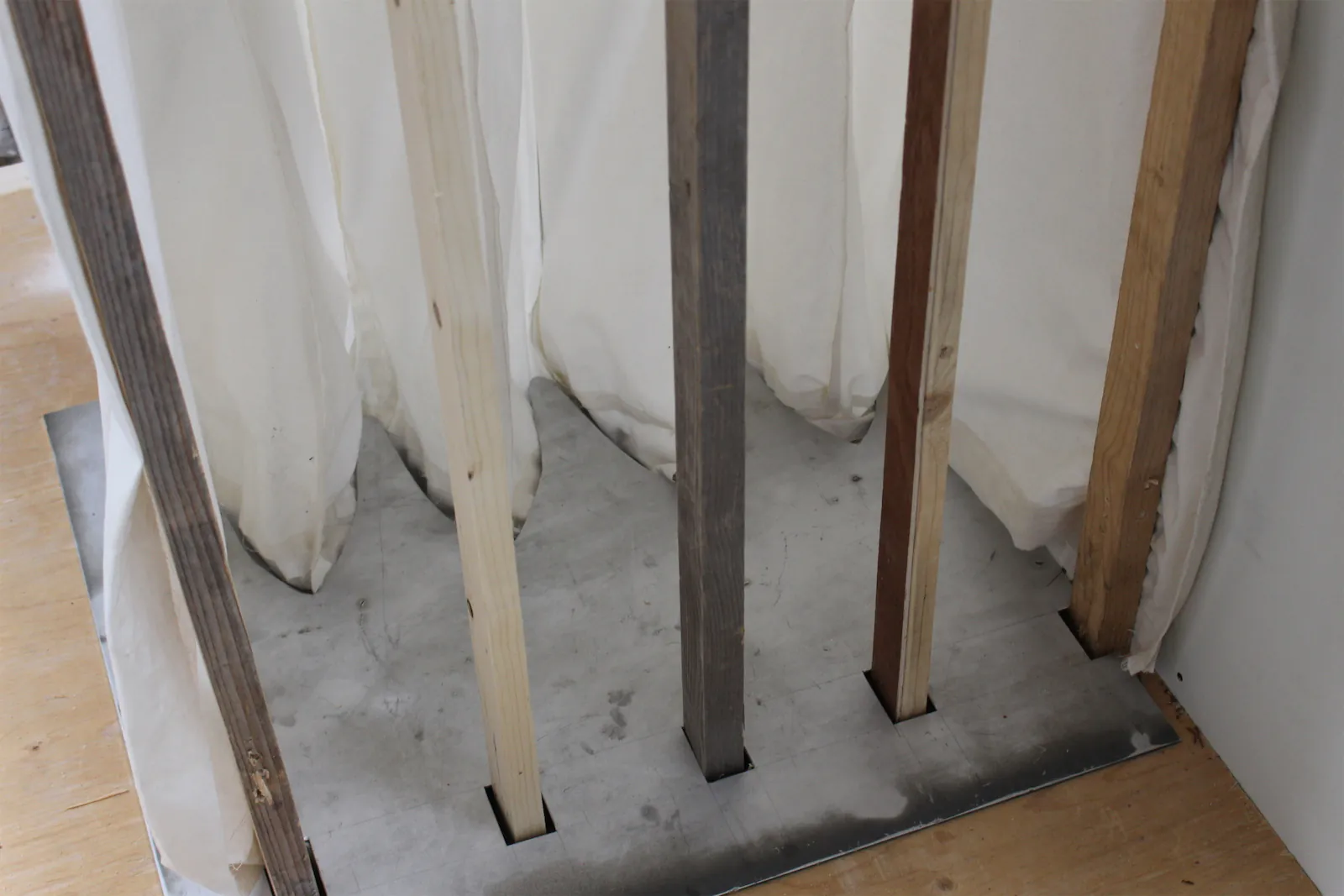
The artist found ten bags of costumes under the floor of an old theatre. Ten groups of costumes, each united in a bag, found an artist from above the ceiling. She undid their stitches and seams, laid the textile on the floor, upside down, inside out. These materials once served the storytellers, mostly by remaining invisible. Seams, film reels and coat hangers live outside of the limelight. That is a necessary part of the magic: not seeing the threads that hold the play together. The audience wants to be fooled for a little while, they paid for the illusion. That is, at least, the story I claim to tell here. Perhaps the costumes below the floor were simply waiting for their true purpose, merging into each other, ascending towards the ceiling. What if no one knows their story, except for them? Perhaps those actors wearing the costumes, impregnating the garment with the special chemical composition of nervous sweat in the darkness of the side wings, waiting for their cue, perhaps they were simply extras in the life of the garment, who would outlast them all. Would the materials still remember their lines?
Now we are below the fundament ourselves, and look up to these assemblies, these beings. To their insides, the seams, the open bellies of creatures made of found materials. The enablers of other people's storytelling, fertile and endowed with all that narrative potential, lifted to a new height. Ashes to ashes, dust to dust — in the old churches of the Netherlands, only the rich could afford to be buried inside the building, filling the floor with their tombstones. Perhaps they wanted to look up to God forever, and forgot how the poor would walk on them, looking down on them. What unites us is what we are made of: decaying material.
Grafting is a horticultural technique through which plant tissues can merge and live on as one: a branch of one plant will grow on an entirely different species, their vascular tissues united. Here we see that materials and stories can also graft unto one another, and live on as one — if you allow them to.
Mother Nature is said to abhor a vacuum. Wherever she senses an empty spot, something new shall grow. A plant, a nest full of young foxes, a network of fungi. Emptiness, in a sense, is full of life.
As you think of places emerging, you might also think of tunnels. Transitions from one place to another. You might think of the pupa, covering the caterpillar and uncovering the butterfly. The moment in between the one and the other; the unknown between two clearly defined stages. In the tunnel, it's dark. The entire known world falls away and you will come out different. Born anew. If we consider the story as continuous, the cavity becomes a place of options. All the maybe's and imagined futures. In some ways, the cavity is the story, as it holds all possible stories. Creating cavities is creating life.
Deklination der Substantiva
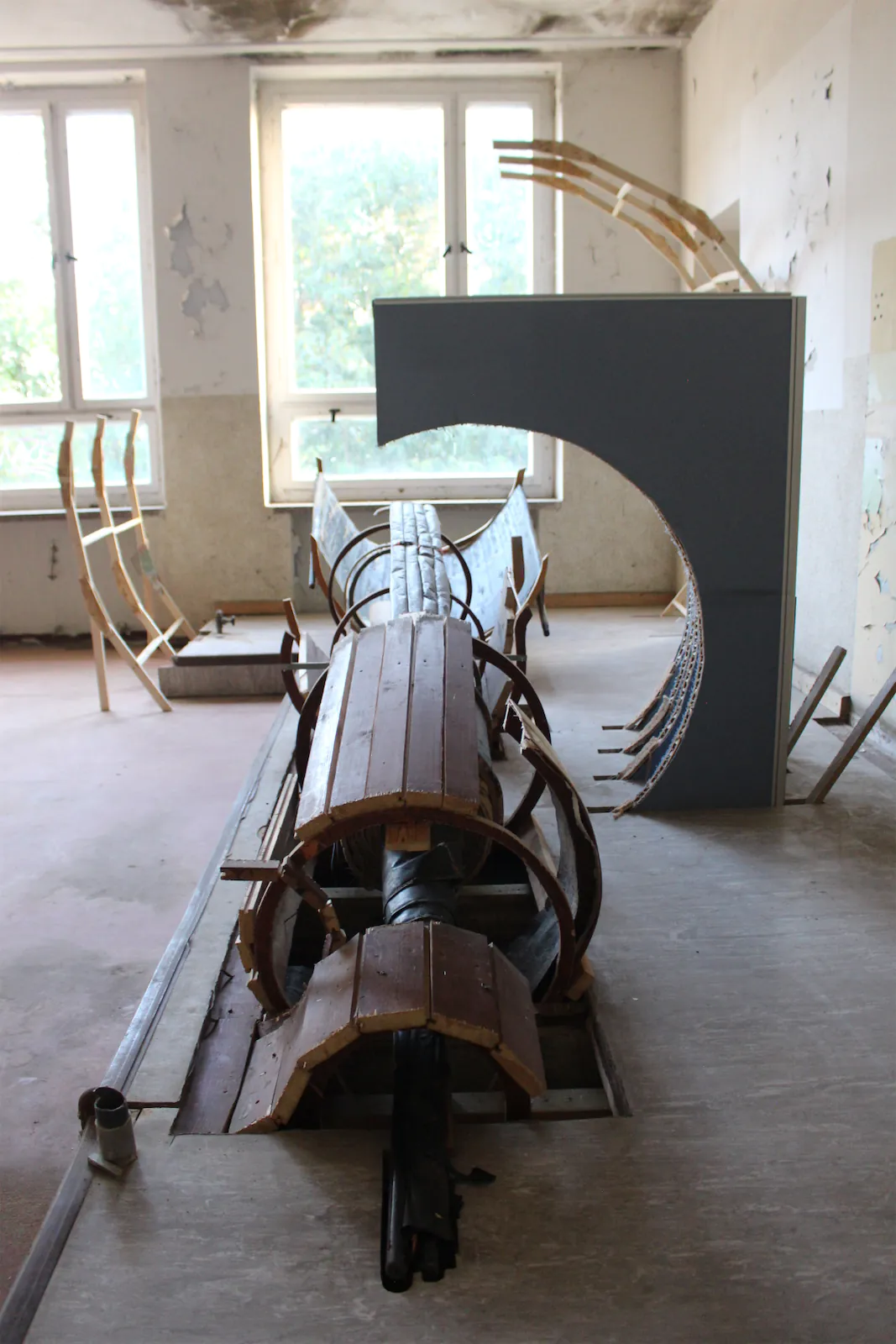
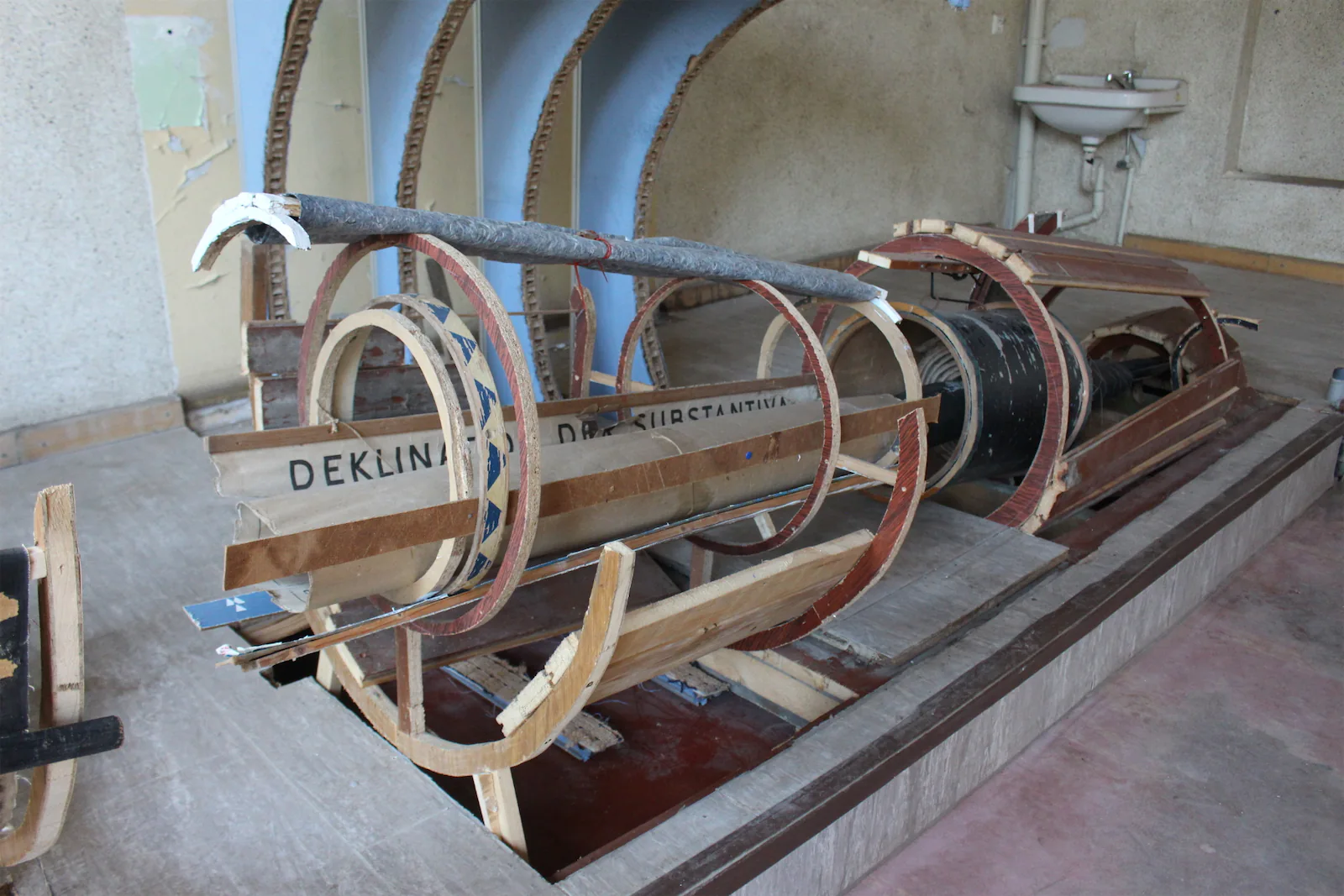
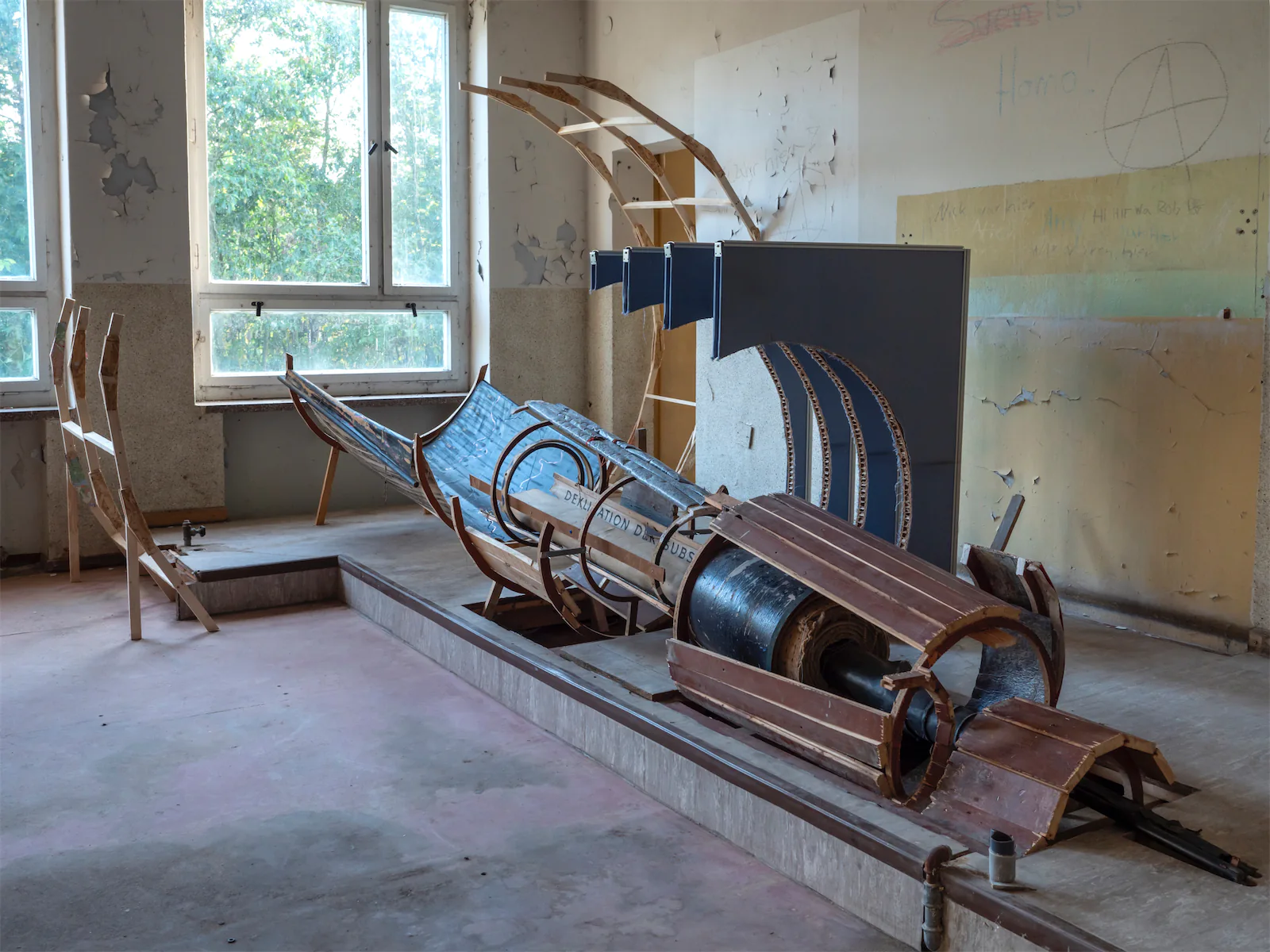
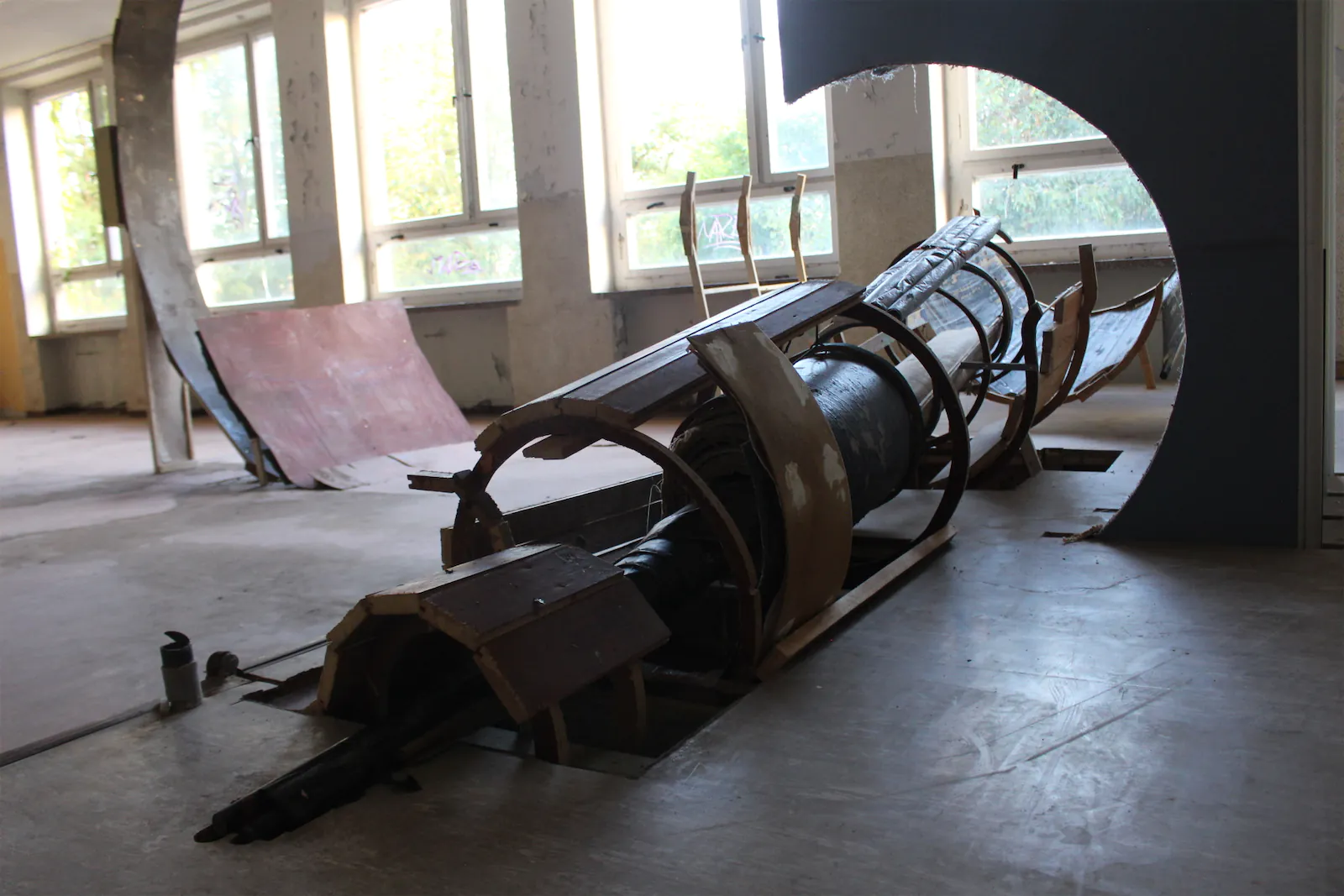
Deklination der Substantiva
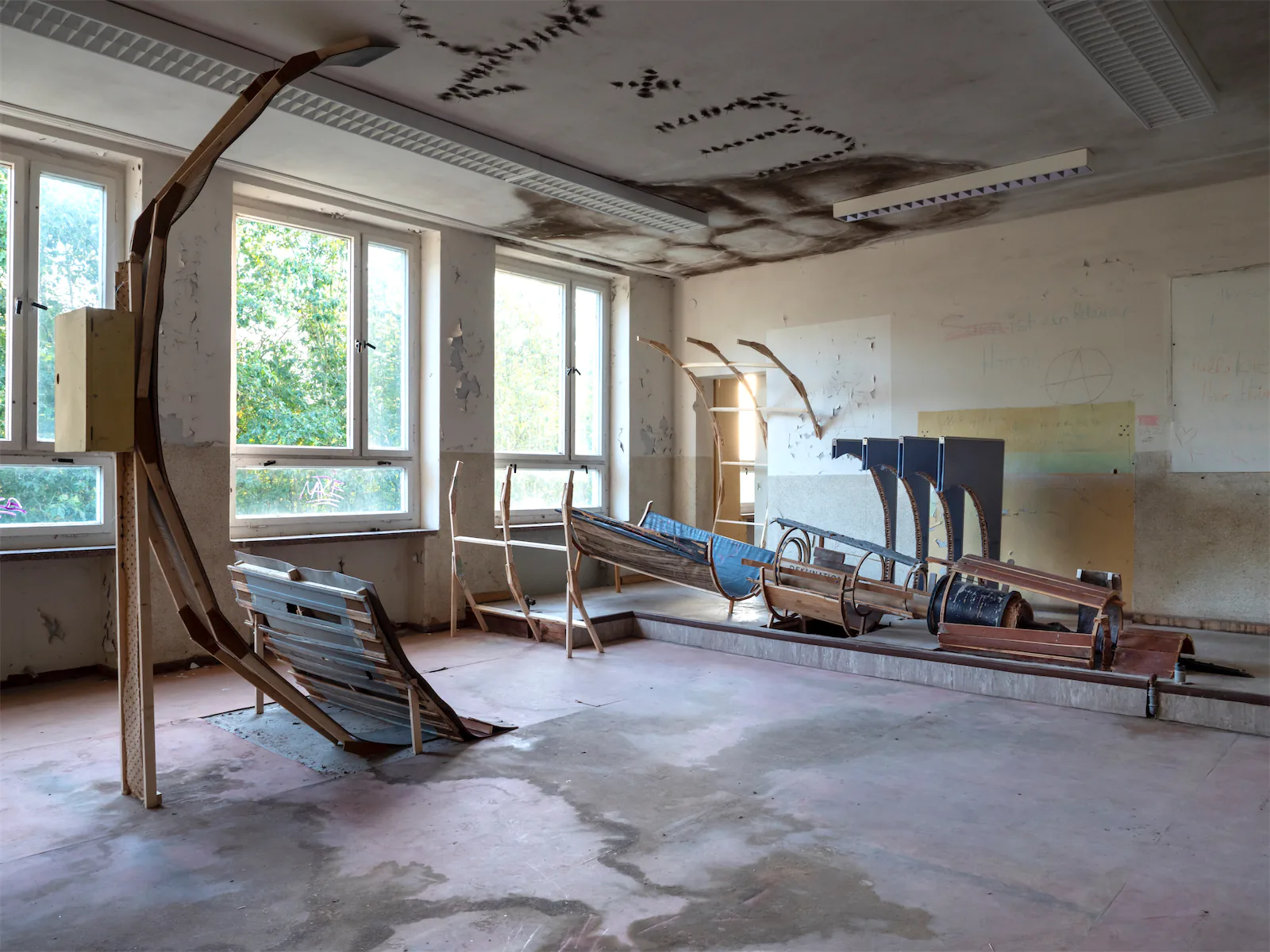
Cards, Grammar card, JP drum, wood, lino, carpet, notice boards, two small cabinets, insulating fabric and carpet
If paradise is half beautiful, Wartenburg
2024
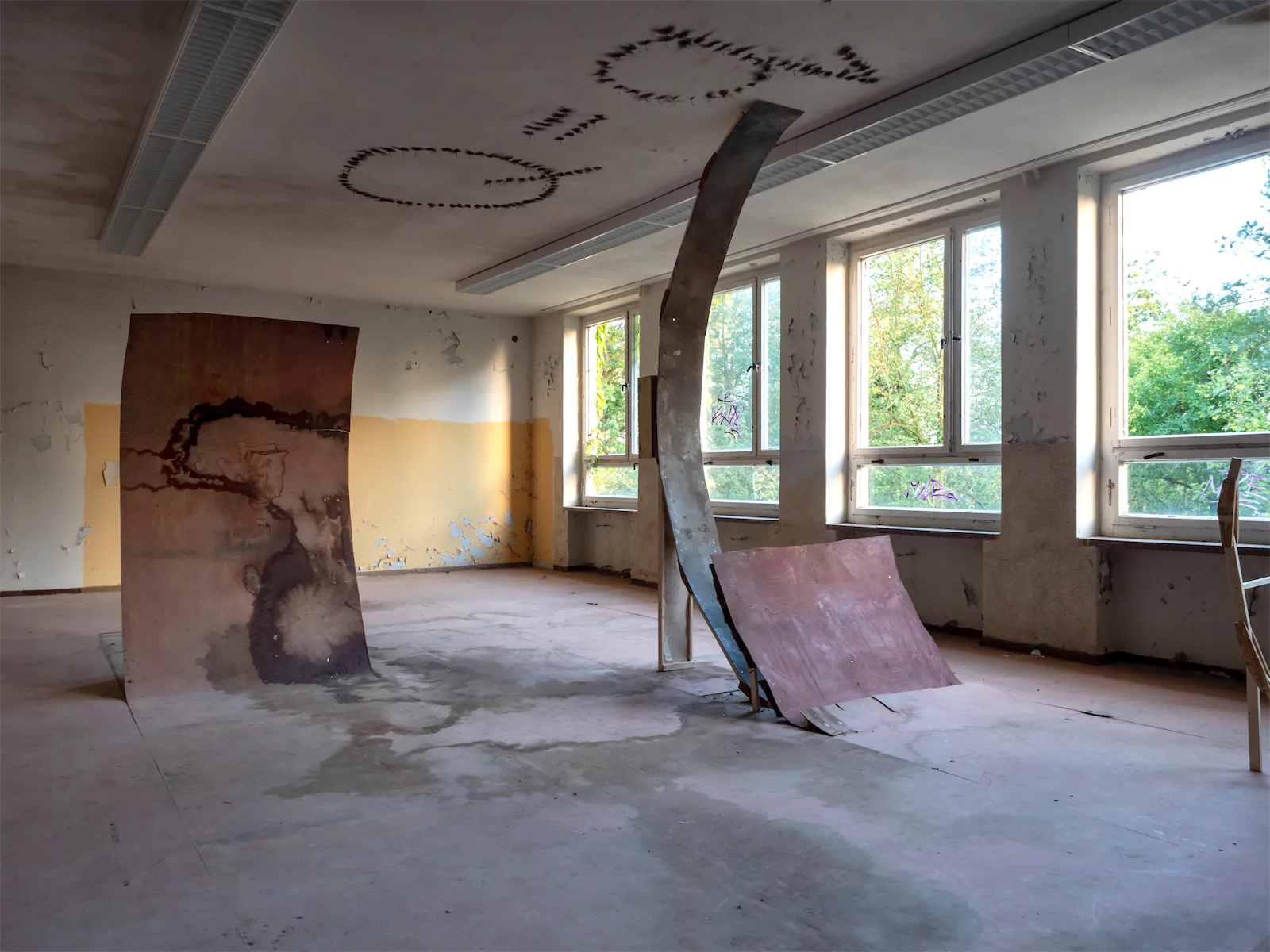
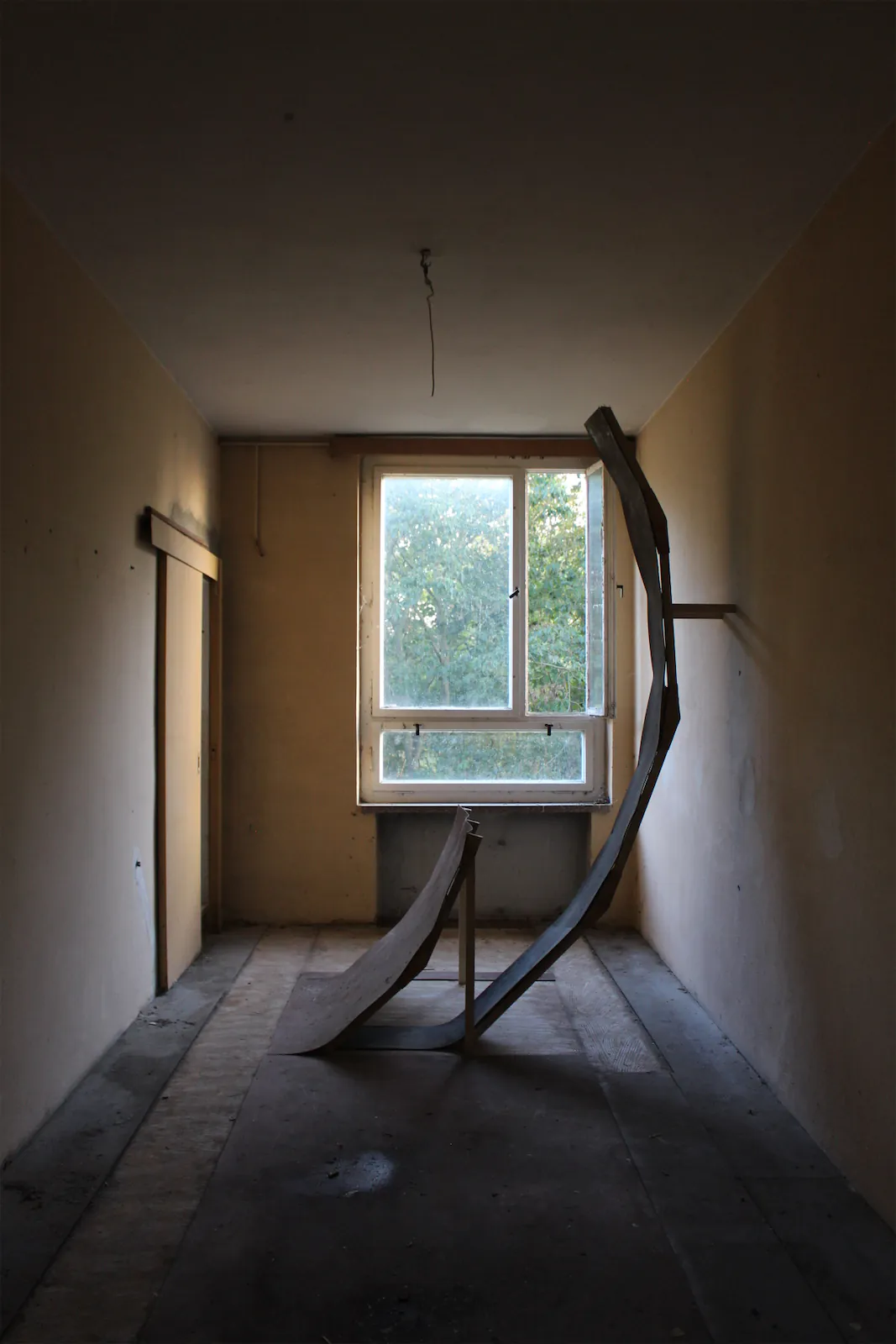
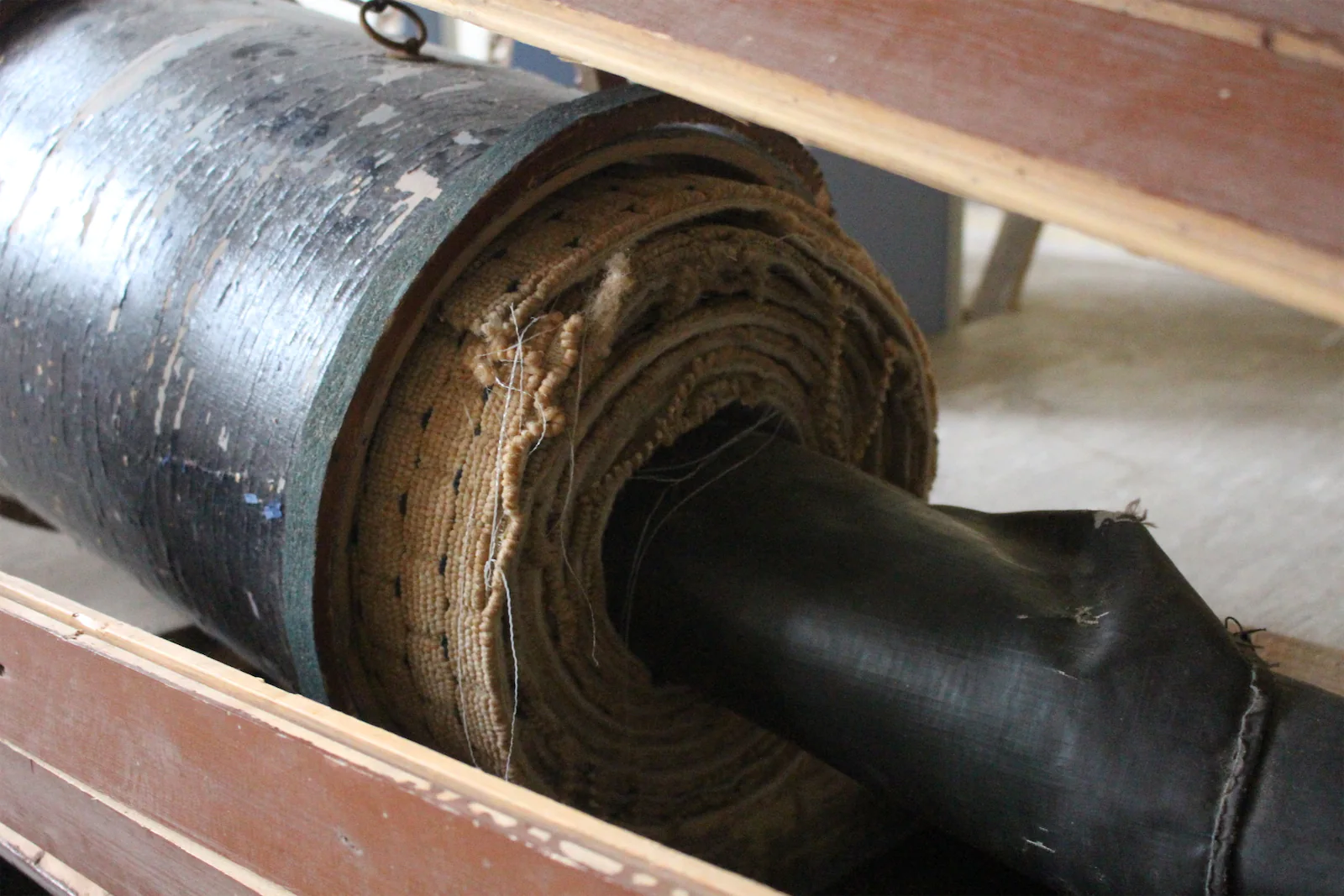
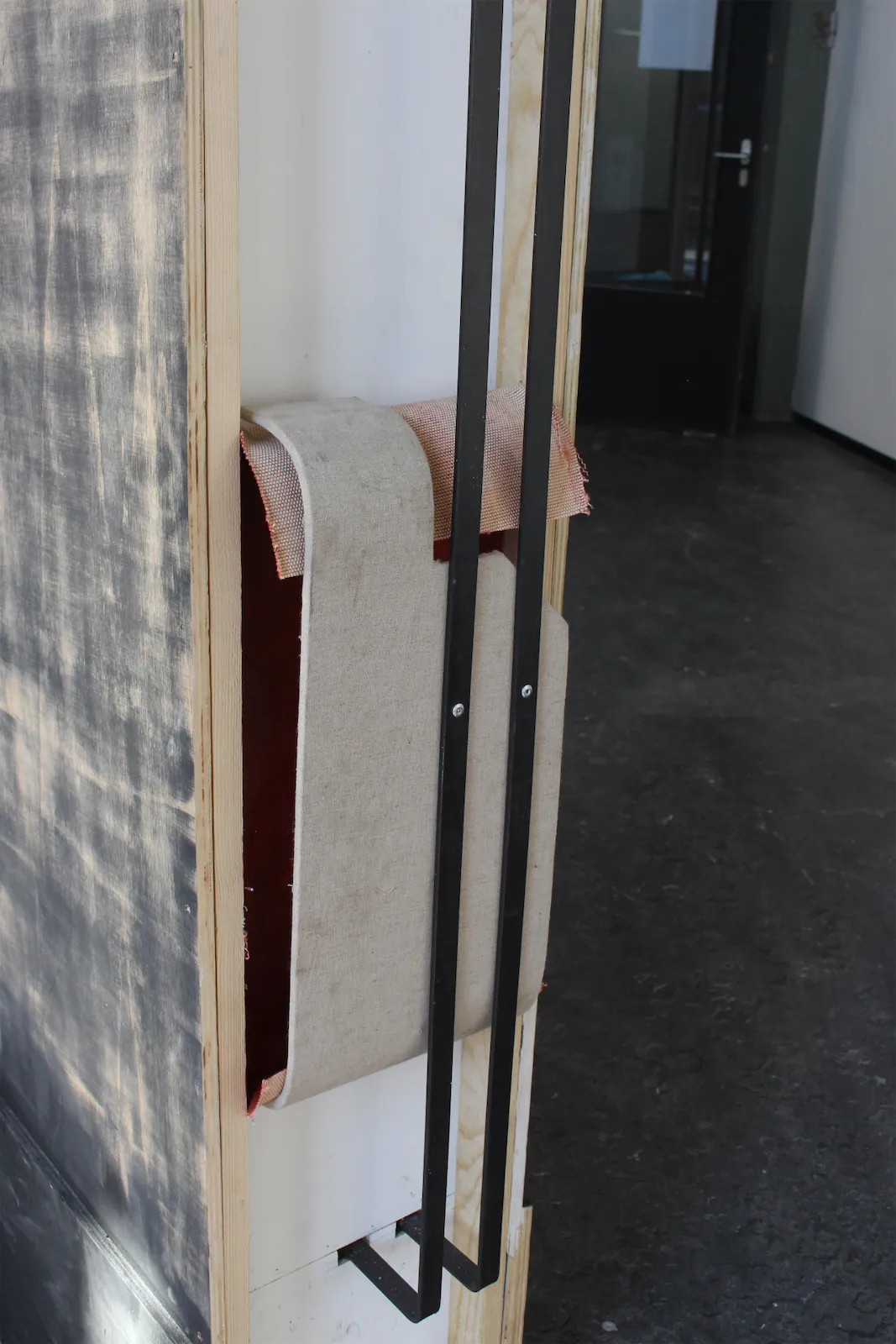
During a residency with IPIHAN in Wartenburg this summer, I worked in an old school that had been abandoned for more than 20 years. In the school, I found old school maps, almost impossible to unfold, along with German-Russian grammar cards and an old drum of the Young Communists. This raised the question: what does a building reveal or hide about its history? On the back of these cards, a kind of timeline began to emerge. I wondered if the whole building could become a rolled-up time card, all rolled up around an axis, with the different materials representing different layers of time, like the annual rings of a tree.
A monument for failure / In case of emergency / Untitled
A monument for failure / In case of emergency / Untitled
Fabric, wood, aluminum, epoxy, dropcloth, cardboard, drywall, foam, rubber, wood, clamps, concrete, bitumen, felt, insulation material, metal, fabric and elastic
Graduation show Rietveld Academie
2023
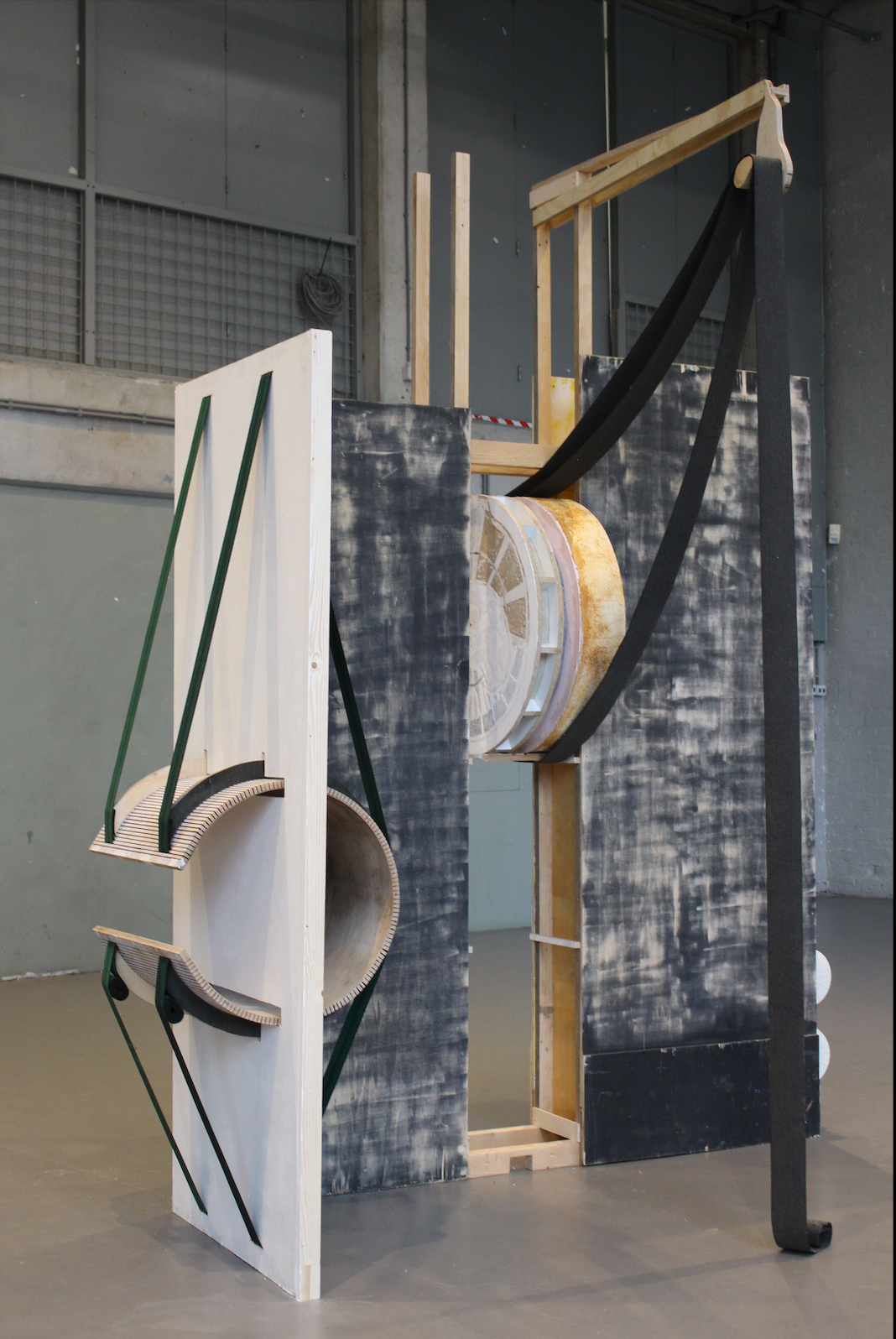
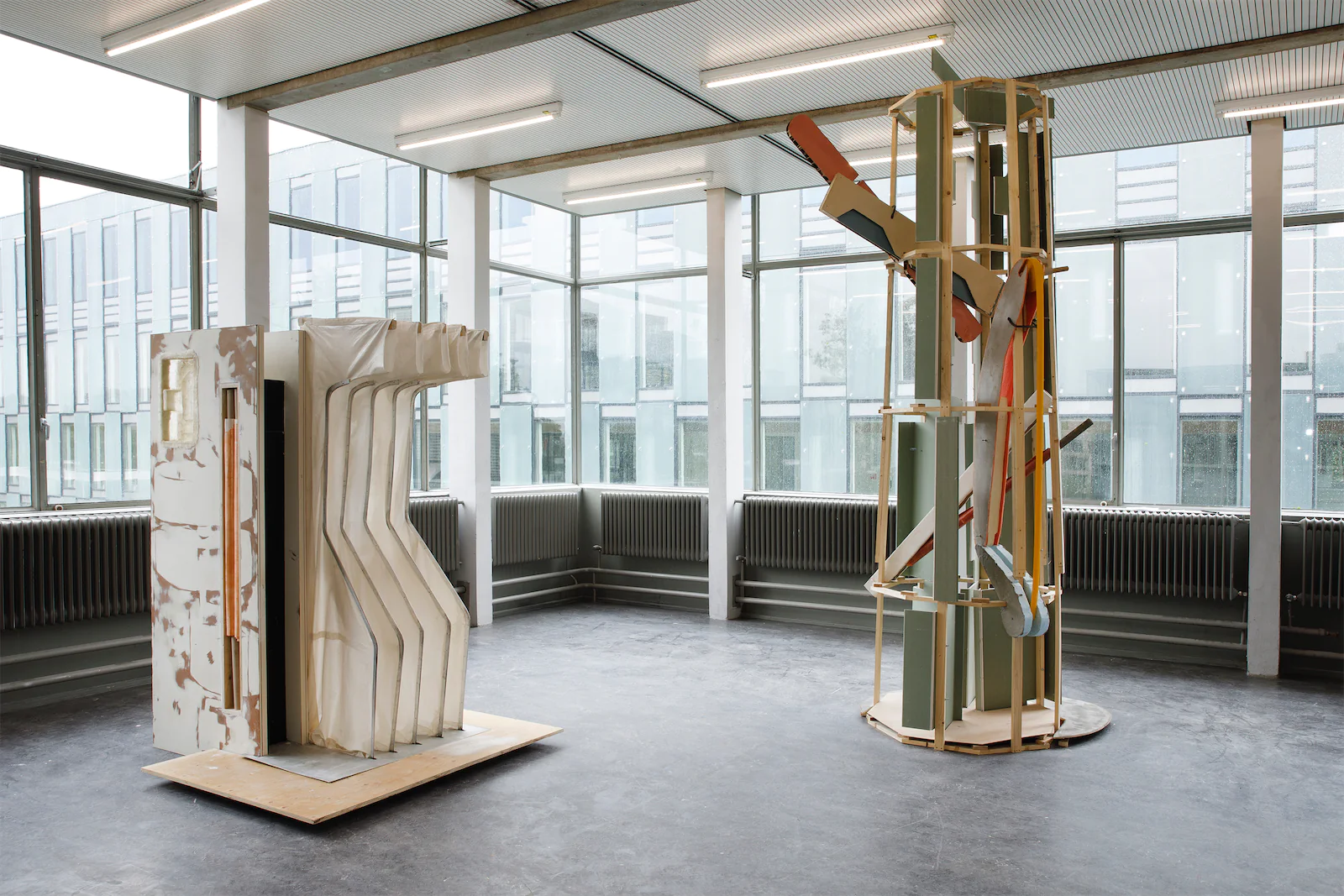
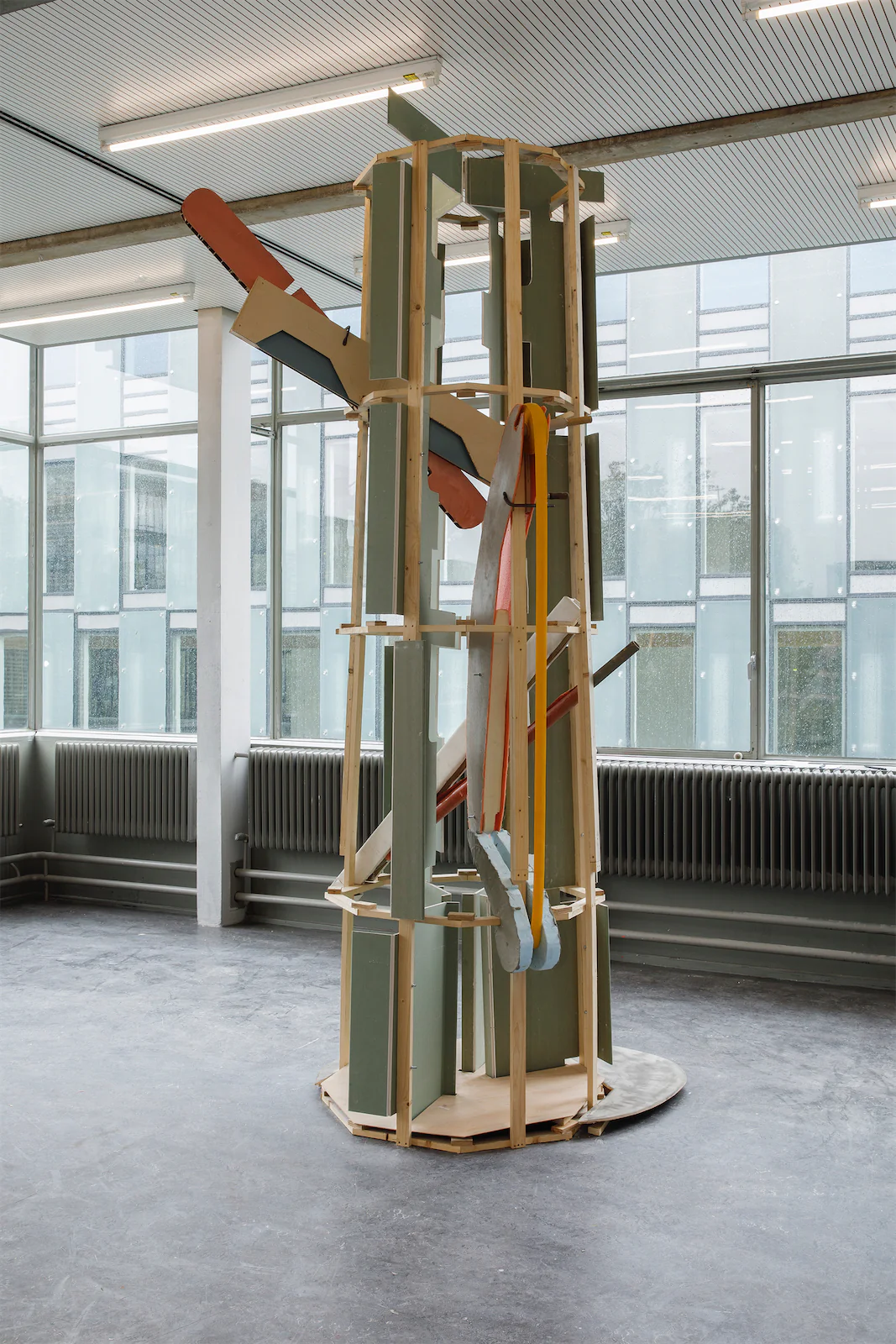
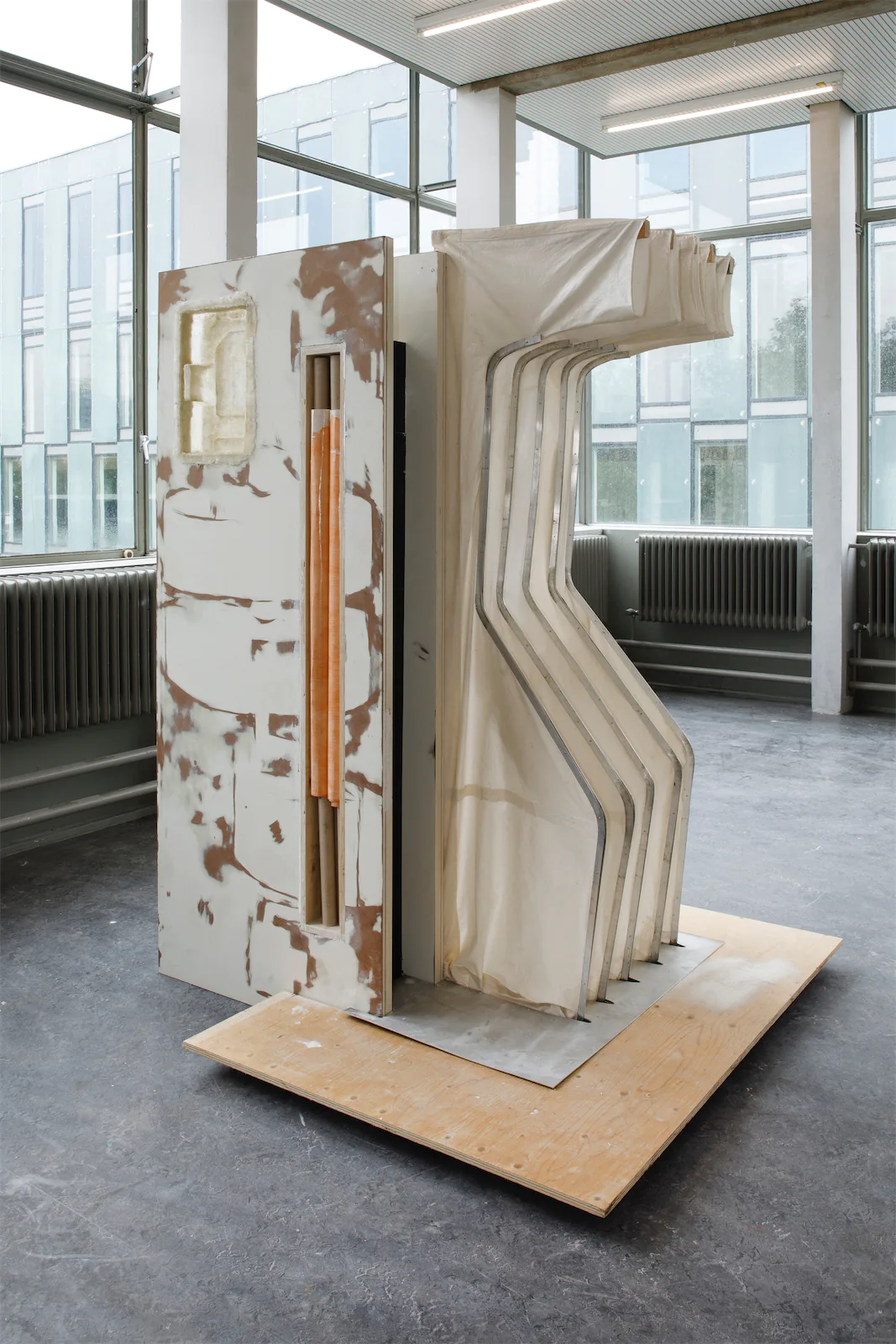
A monument is typically made to praise or remember something or someone. However, this monument is made for failure, in a factory chimney, a deliberate collapse unfolds within its fractions. Towers are traditionally seen as power structures, as they are placed outside of our reach. In this piece, I wanted to create a kind of movement through repetition. The rhythmic motion is disrupted by the falling of the internal components. As if the excess was too much for the tower to hold itself. While the structure itself hasn't collapsed yet, it raises the question if the structure will remain stable. This work raises questions about industrialism, excess, and the fragility of a system. The factory chimney, typically a symbol of industrial progress becomes a metaphor for the balance between stability and a potential downfall.
The recurring question within this sculpture revolves around the concept of safety. Can something be overly protected? Elements like a first aid kit and a fire extinguisher act as signal generators, signaling potential errors. They exist in all spaces, symbolizing a stable state when not in use and a state of chaos when put in use. The inclusion of a technical drawing refers back to an original plan, emphasizing the intended use of an object. Engraved into the wall, it shows the functionality of a space. The subway line or harmonica, despite its stationary nature, embodies a sense of movement. An important part of this piece is the consideration of the front and back, the visible and the hidden spaces in between. In this designed world, where it becomes harder to repair things ourselves, who is in charge of the back? Who can see beyond the concealed parts?
A factory blows out smoke, and heat makes everything move. If you want something to move endlessly, it has to stand still. The movement is created in our heads.
Two Lovers
Two Lovers
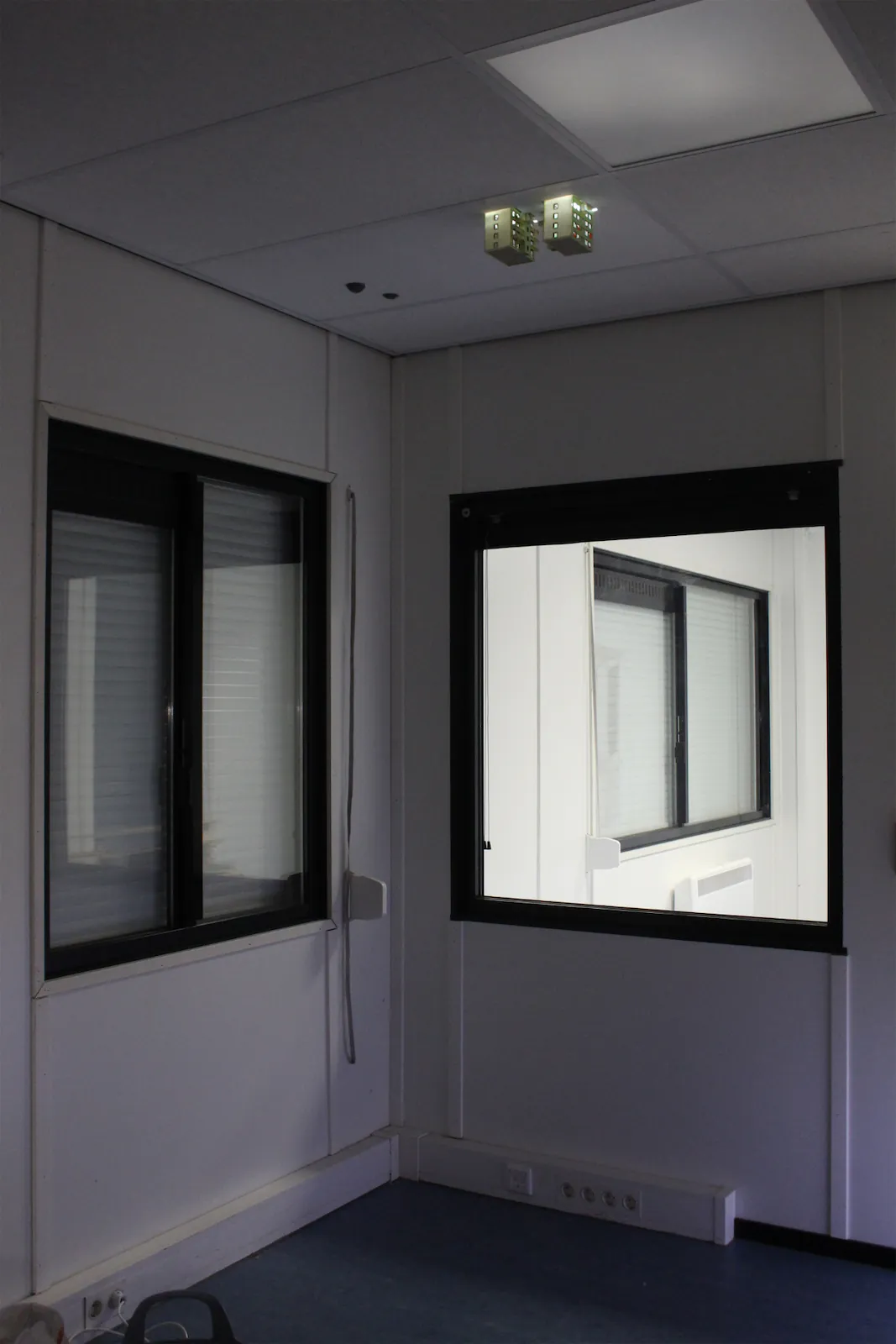
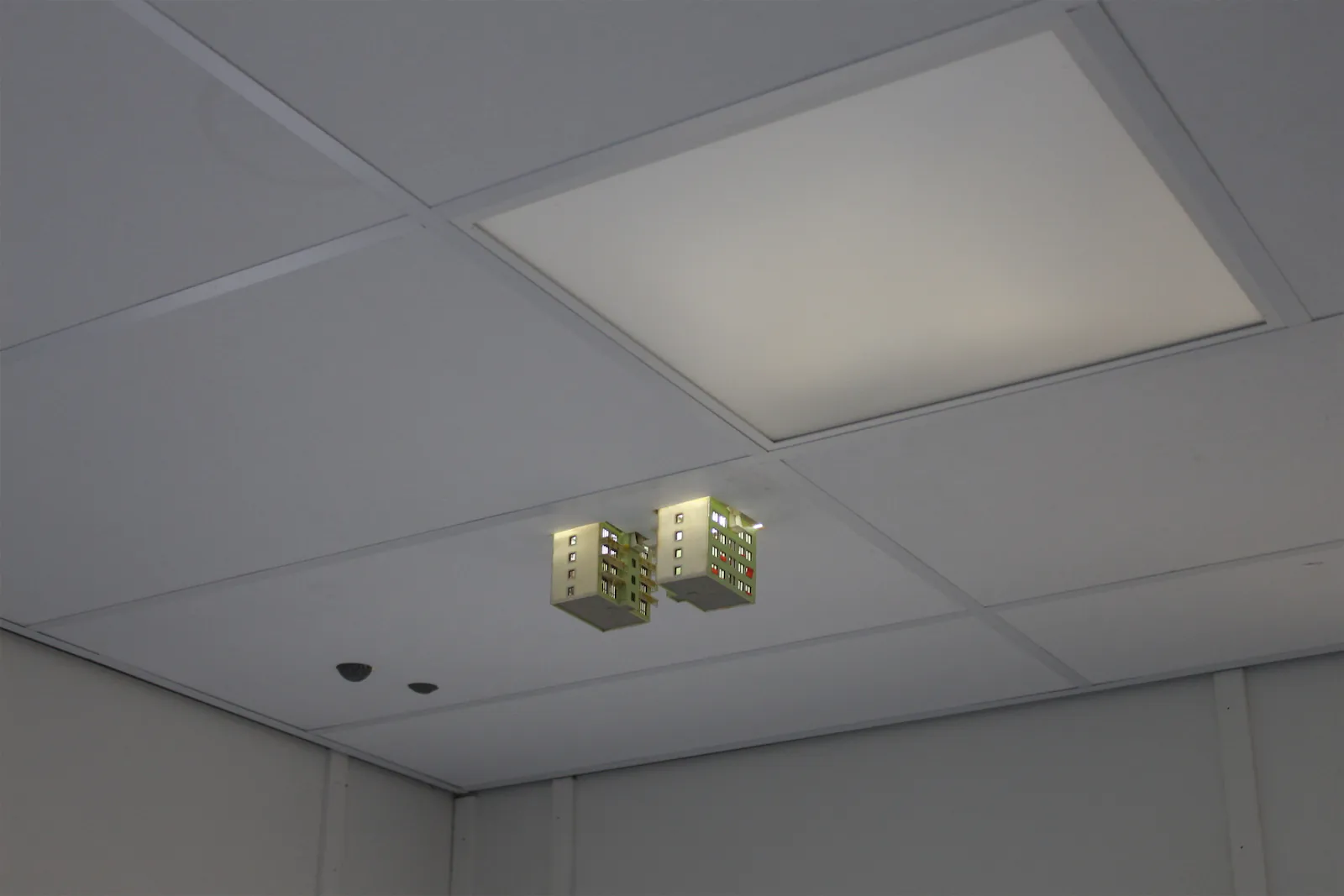
Isolation plat, two stones and two miniatures houses
Corner Inn; act 1
2025
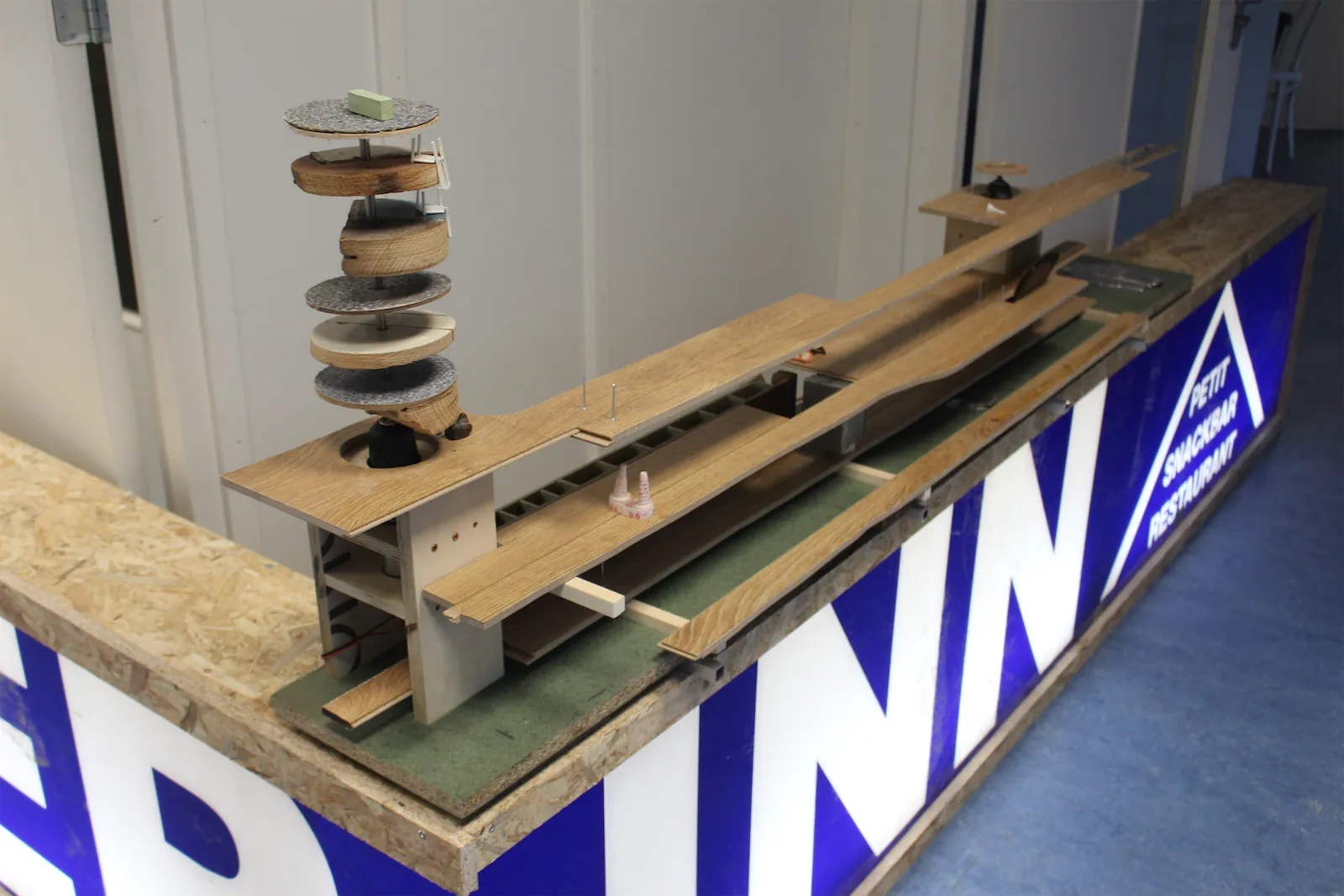
Dictionary of a Basement Condo
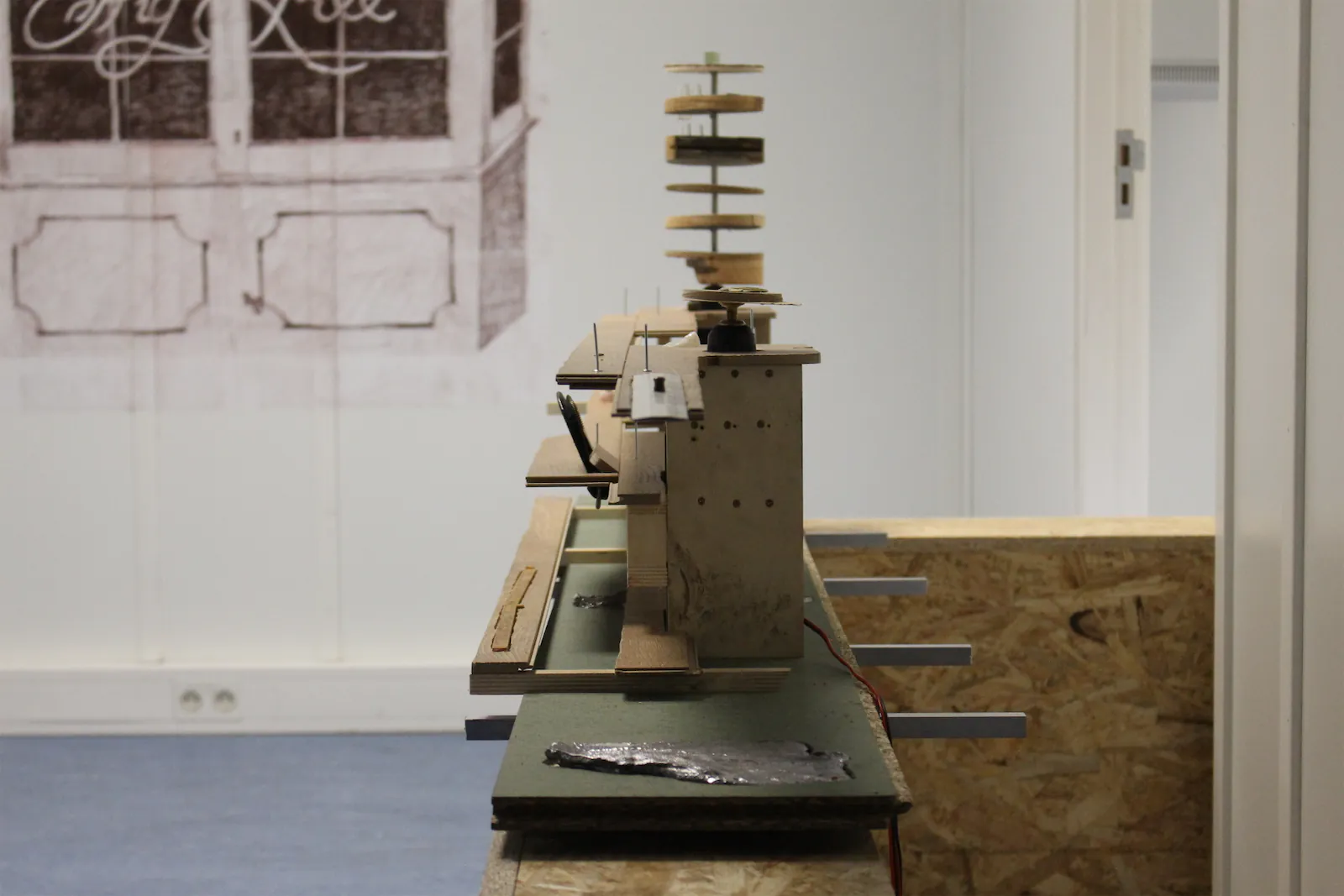
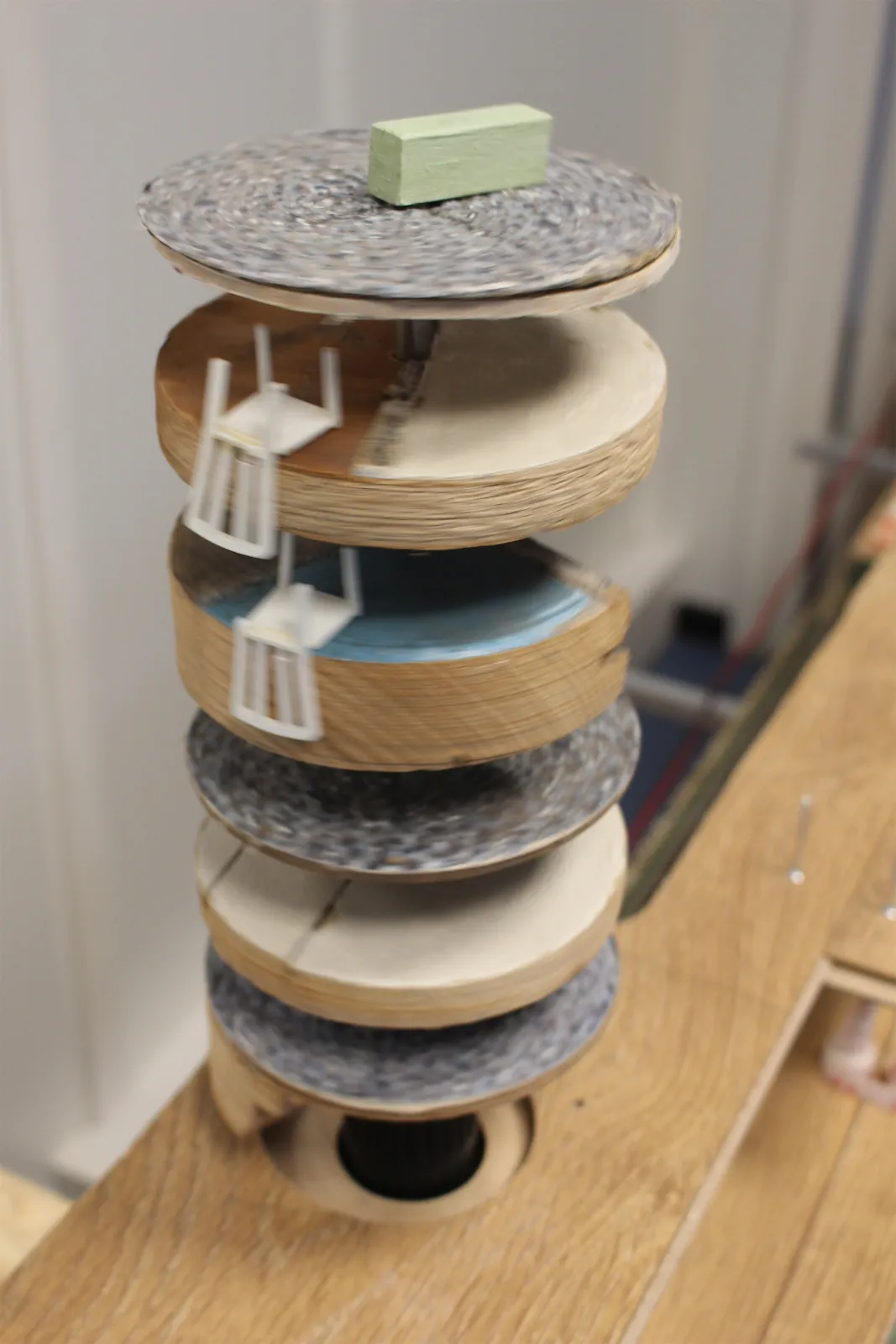
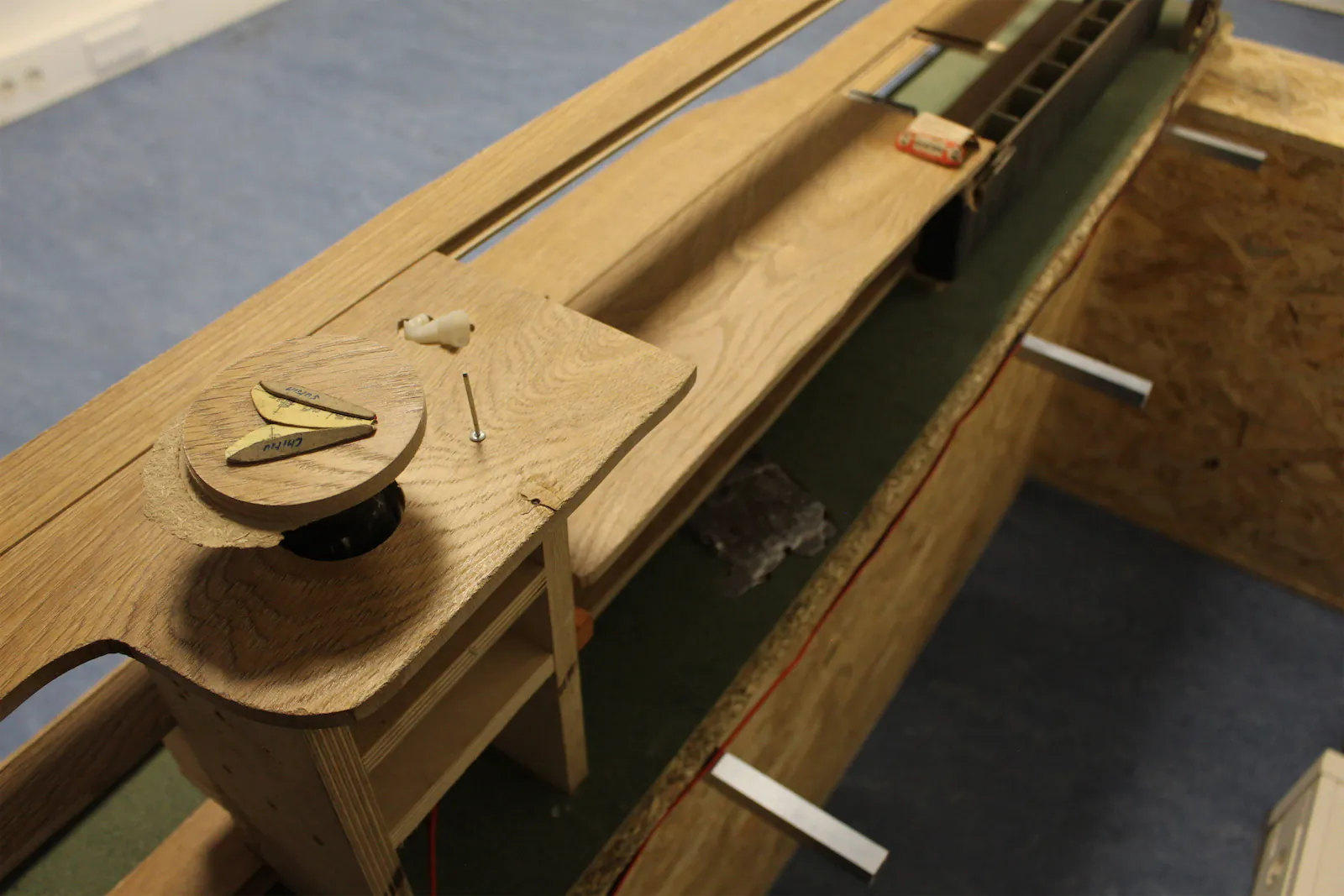
Dictionary of a Basement Condo
Laminate, led, two motors, alumilium, wood, bronze, osb, measuringtape, paper boats, chest horse and tiny chairs
Corner Inn; act 1
2025
Part of group show Corner Inn; act 1. Building a dictionary out of different kind of found floor pieces.
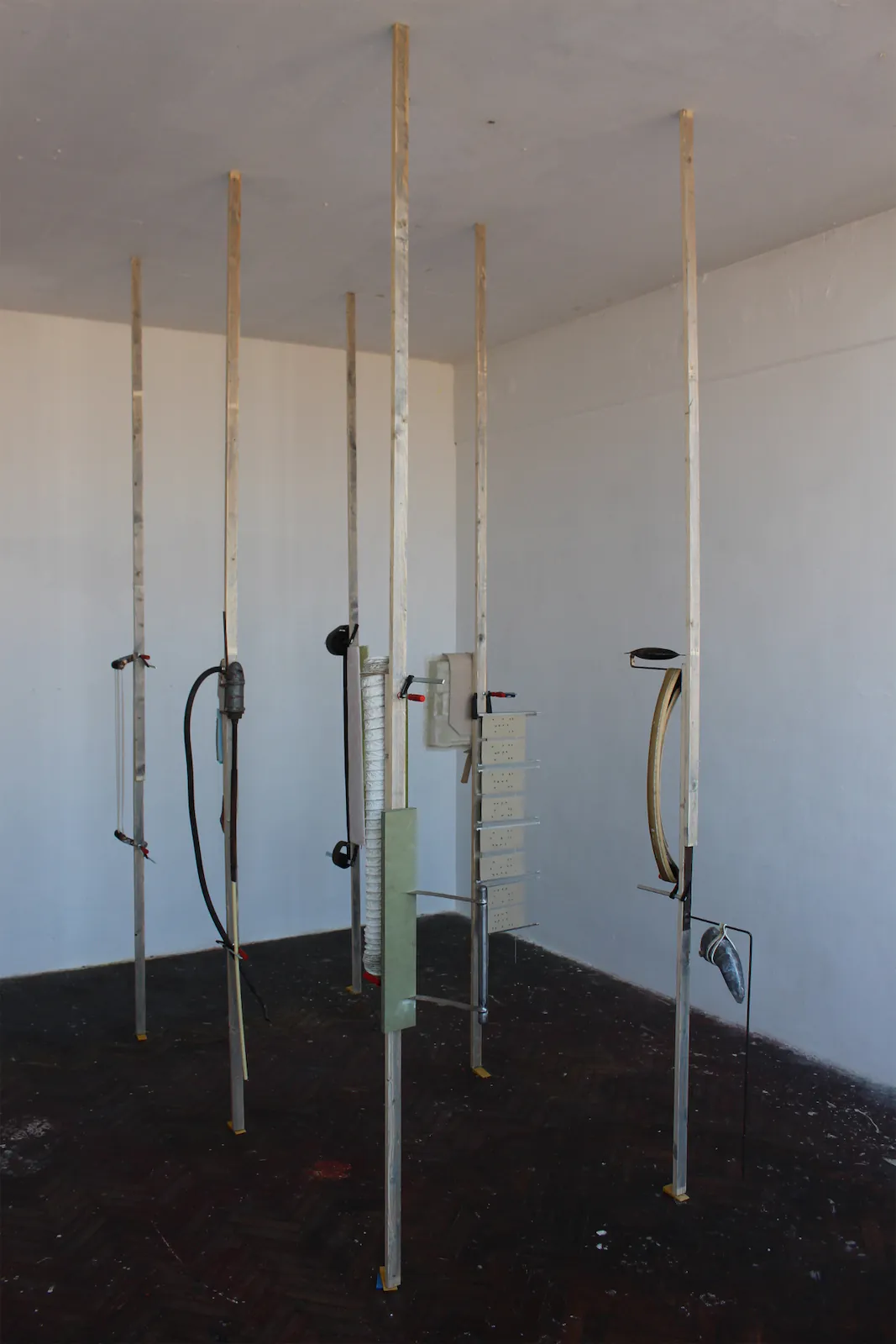
Traffic
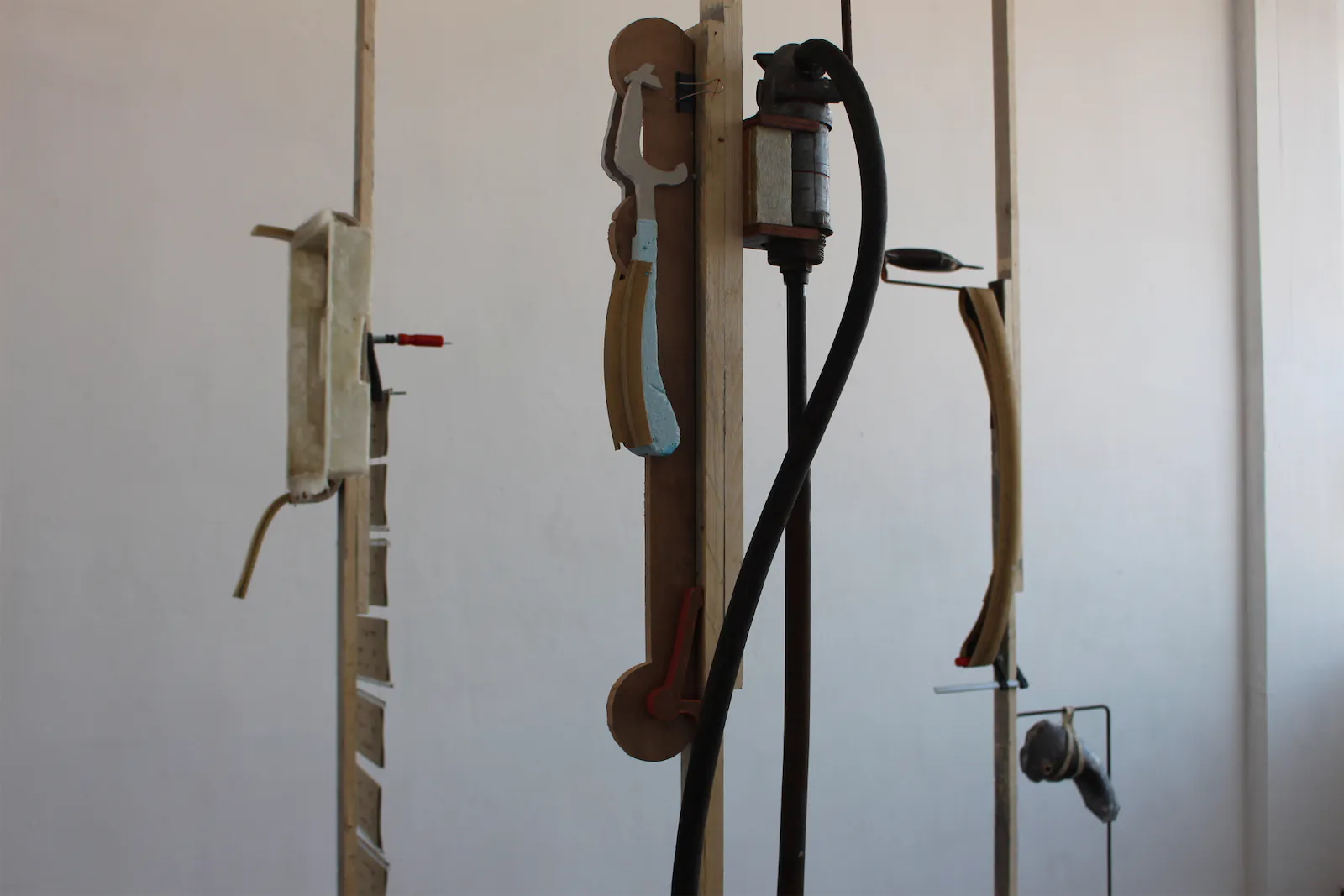
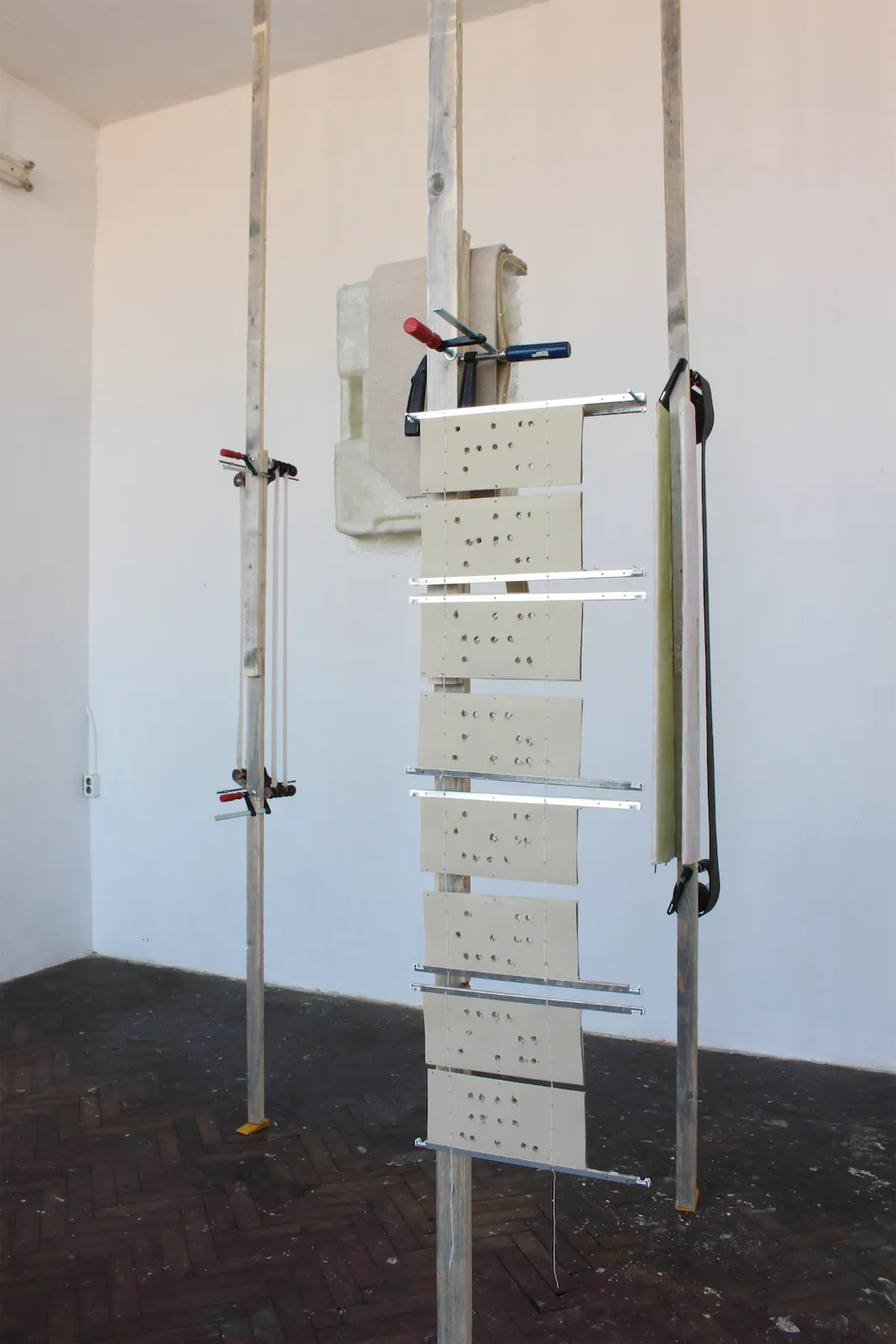
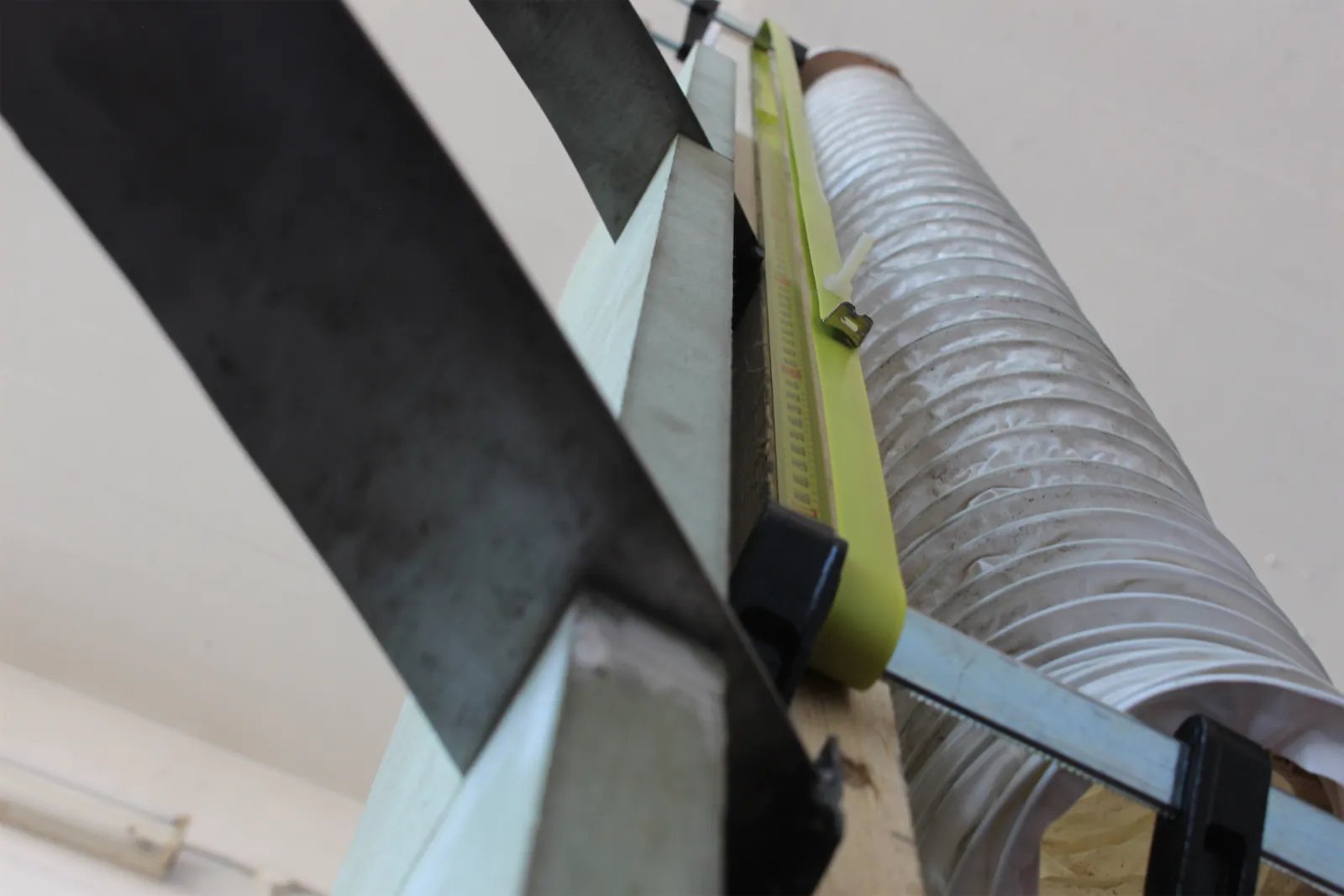
Traffic
Netjes
M4 Tetterode
2023
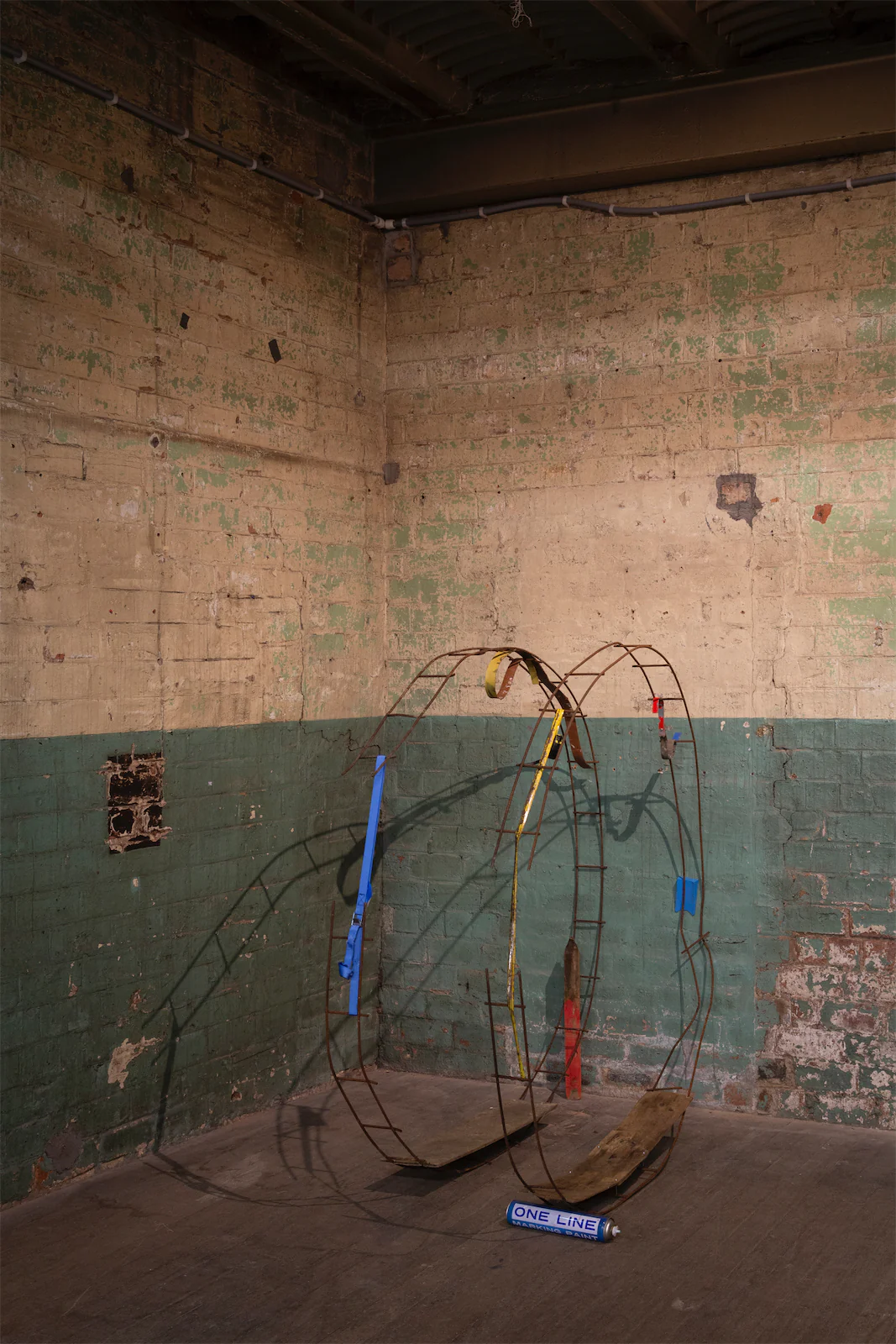
Traffic was a study of traffic sign poles, which are often filled with cameras, signs, measuring equipment, and clocks. Road signs direct our movements and count our speed. From the back, it's just circles and squares that don't tell anyone anything. Vertical lines have always been interesting to me because they are a type of measurement, with the road signs they make also a kind of grid. I wondered whether sculptures could also be used as signs, signal givers, or direction indicators. From a large collection of materials and sculptures, I tried to make them communicate together. It became a kind of poem that could be understood as a kind of broken machine that would only show the individual components. Traffic signs themselves also belong to a large machine in which they function as switches.
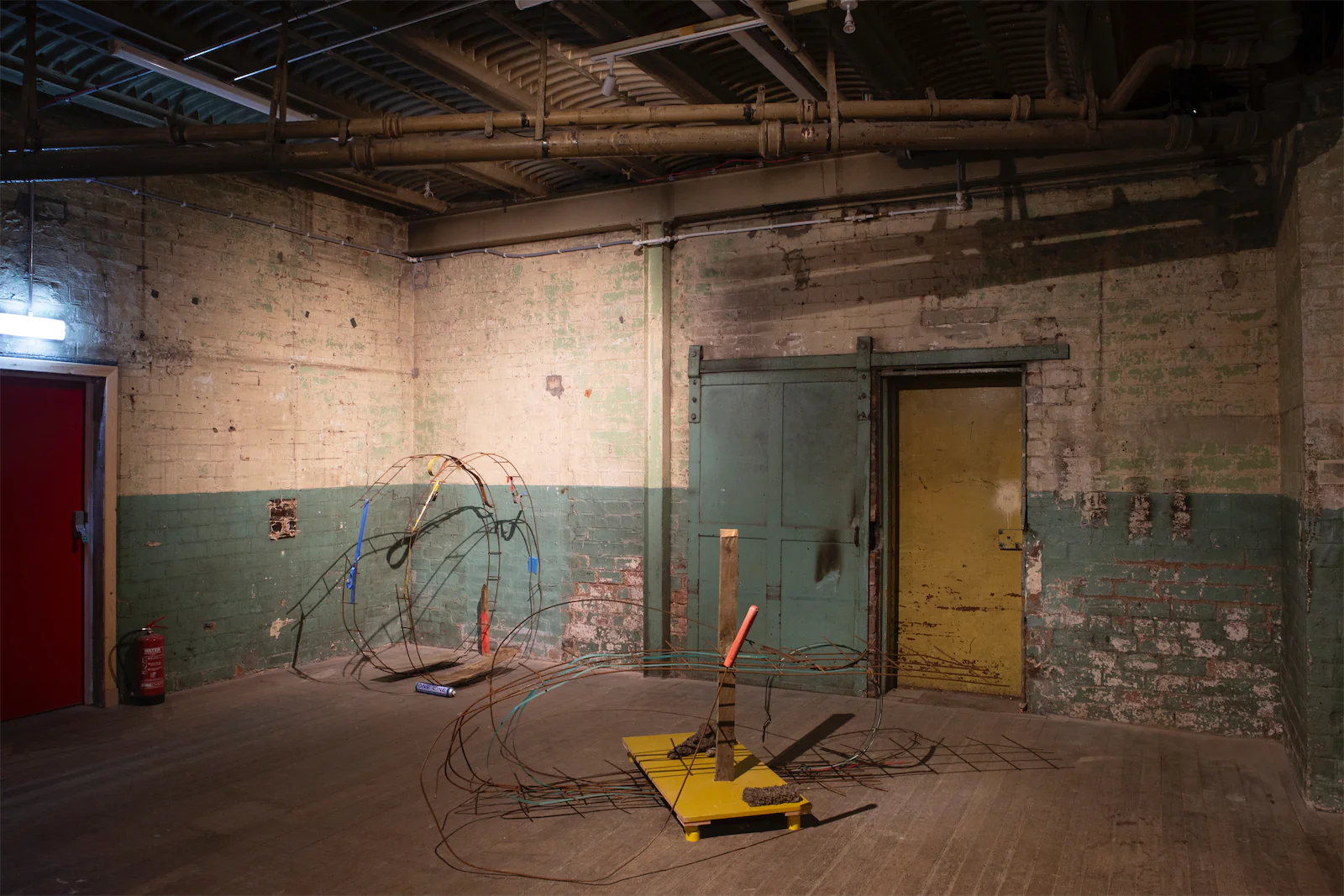
Italo, Olinda, Marozia
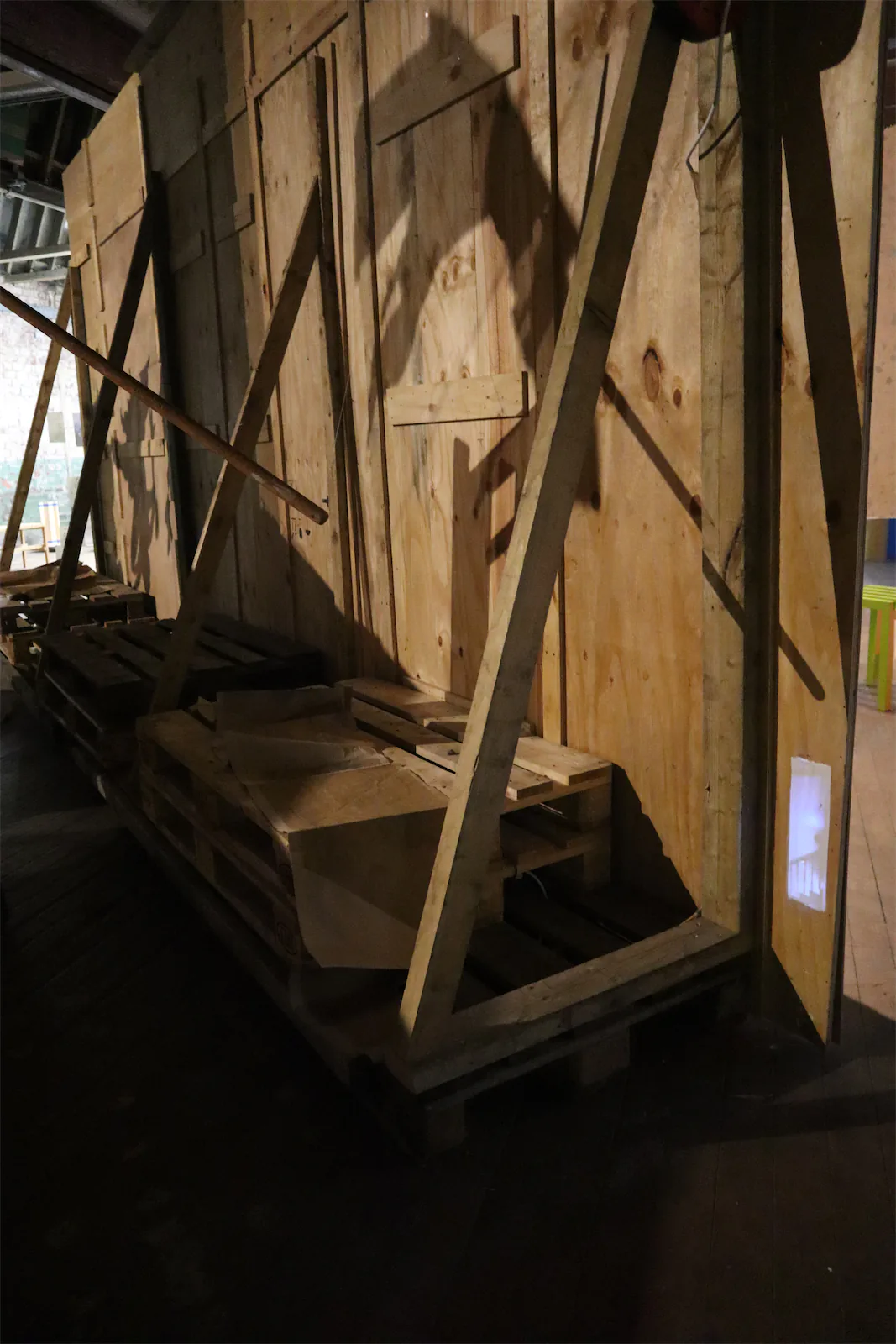
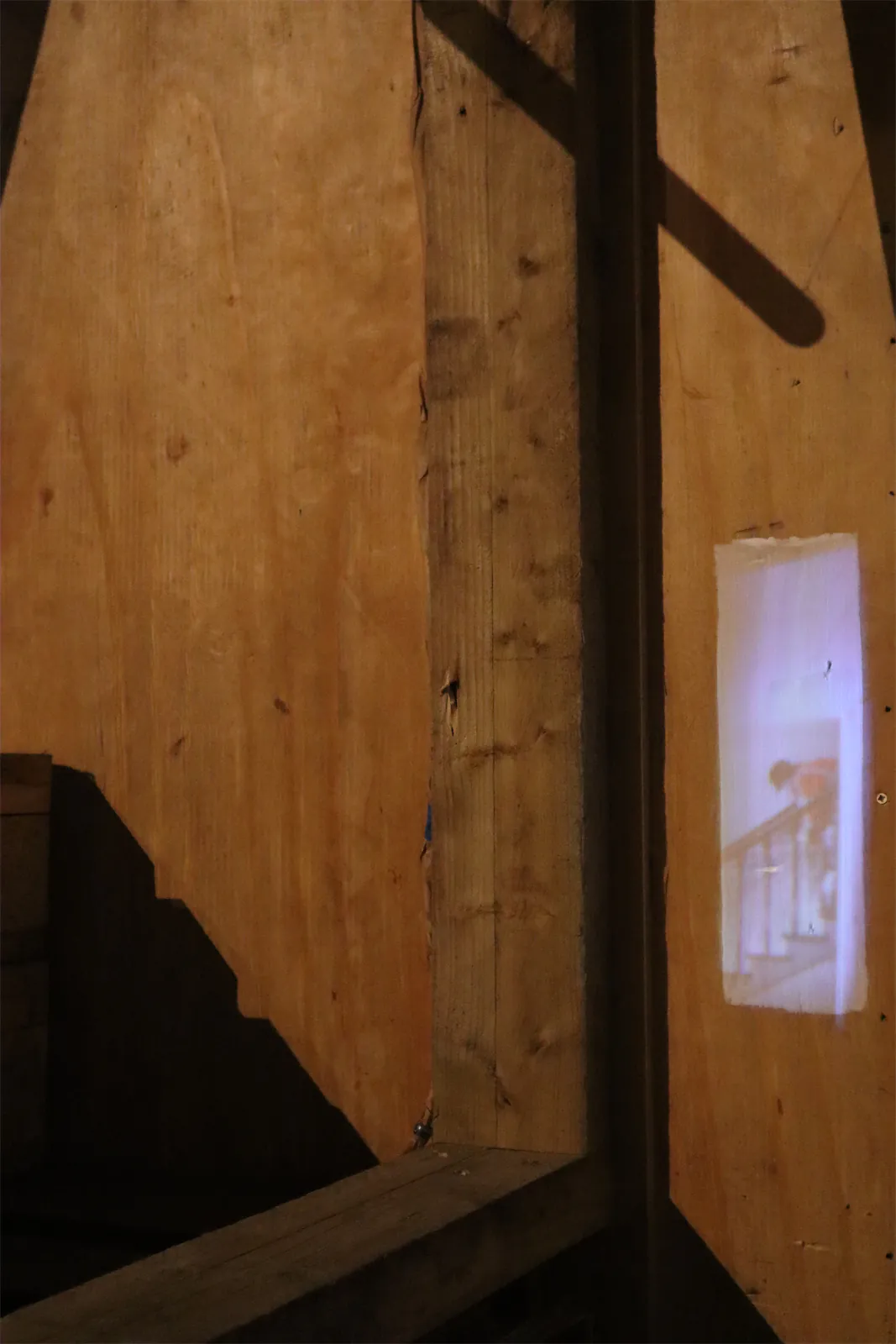
Italo, Olinda, Marozia
Concrete iron, wood, spray can, tension belt, widget, measuring tape, wrapping tape and soil
Sense of urgency
2024
Somewhere on the outskirts of Glasgow, there is an old weaving factory that now functions as a studio and presentation space for artists. I spent a week in the building, in the other side of the building were construction workers, who I could follow through a keyhole. I started fictionizing that one of them was the secret writer of the place, crossing out and rewriting with his broom, the things to come. Across the street; wasteland, which was filled with unwanted objects. By weaving them through the structures, they got back a place in the story. On the yellow platform; a brick and a pawn, created out of the soil of the wasteland.
Ze sluipen zo naar binnen
Ze sluipen zo naar binnen
Plastic, rubber, steel, wood, paint, plaster and paper
What can I say I miss my friends
2024
They are shouting, screaming for your attention. Catching your eyes from both sides. They attract your attention and lure you inside.
A cat always lands on its feet


A cat always lands on its feet
Plasterboard, tarpaulin, plastic, bitumen, TL light, whing, paperboards, trestles, wood and paint
Good day, big Miss Steak
2023
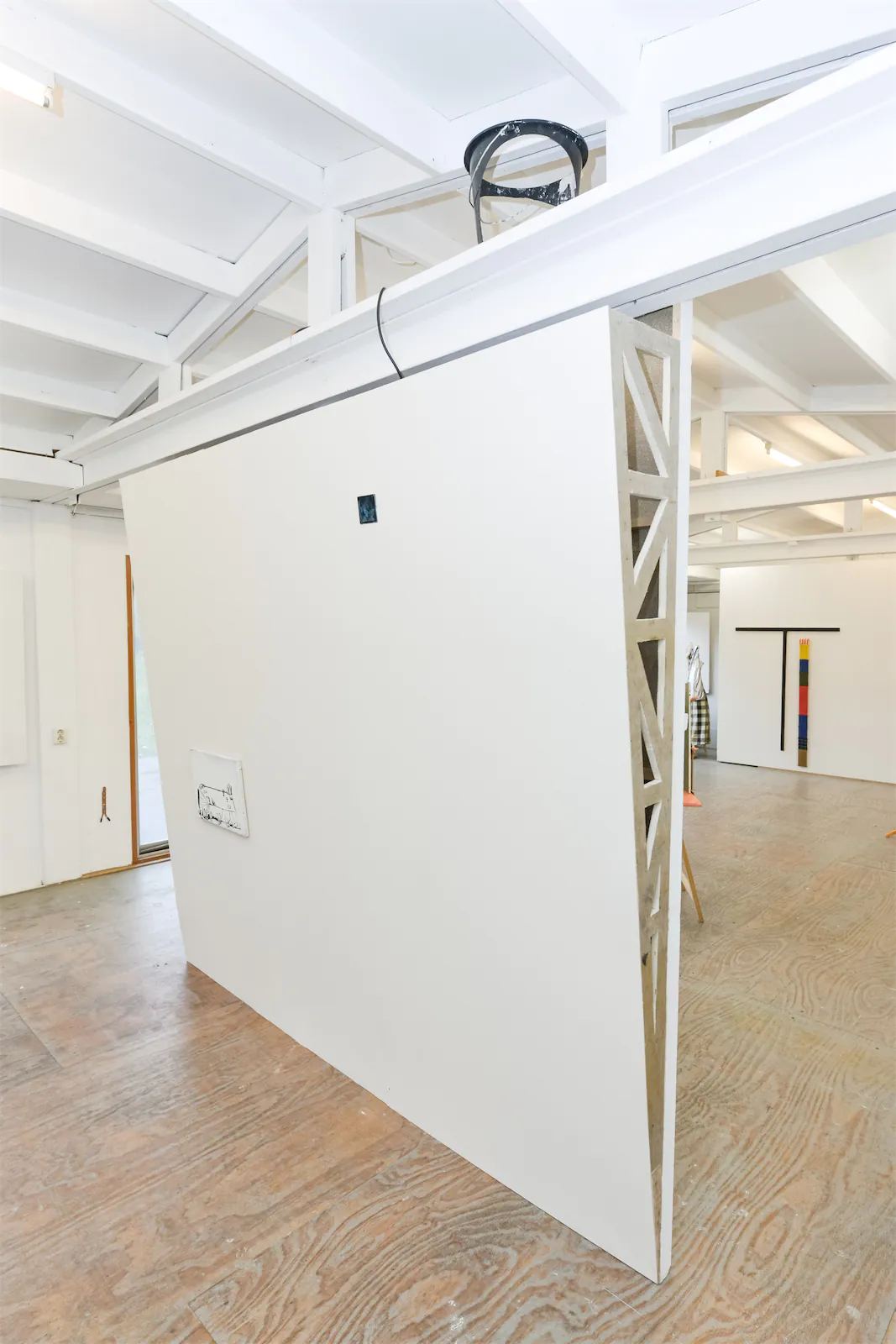
I want to peek over the wall hanging on my fingers tipping on my toes, peek at what's coming. Sometimes I think that the wall secretly wants that too, but that I am too heavy. In the moment we fell it froze. This work was part of the show Good Day, Big Miss Steak in Kate. The wall is also a service for the pieces by Luca Fedele and Bert Mclean
The model serves as a representation of a place that never needs to come into physical existence. Its scale exists in a unique realm, positioned between a test and a finalized outcome. The model, in a sense, foretells what is to come, offering a glimpse into a future that is already here. I had some conversations with Constant Nieuwenhuys and Thomas Shutte.
A9
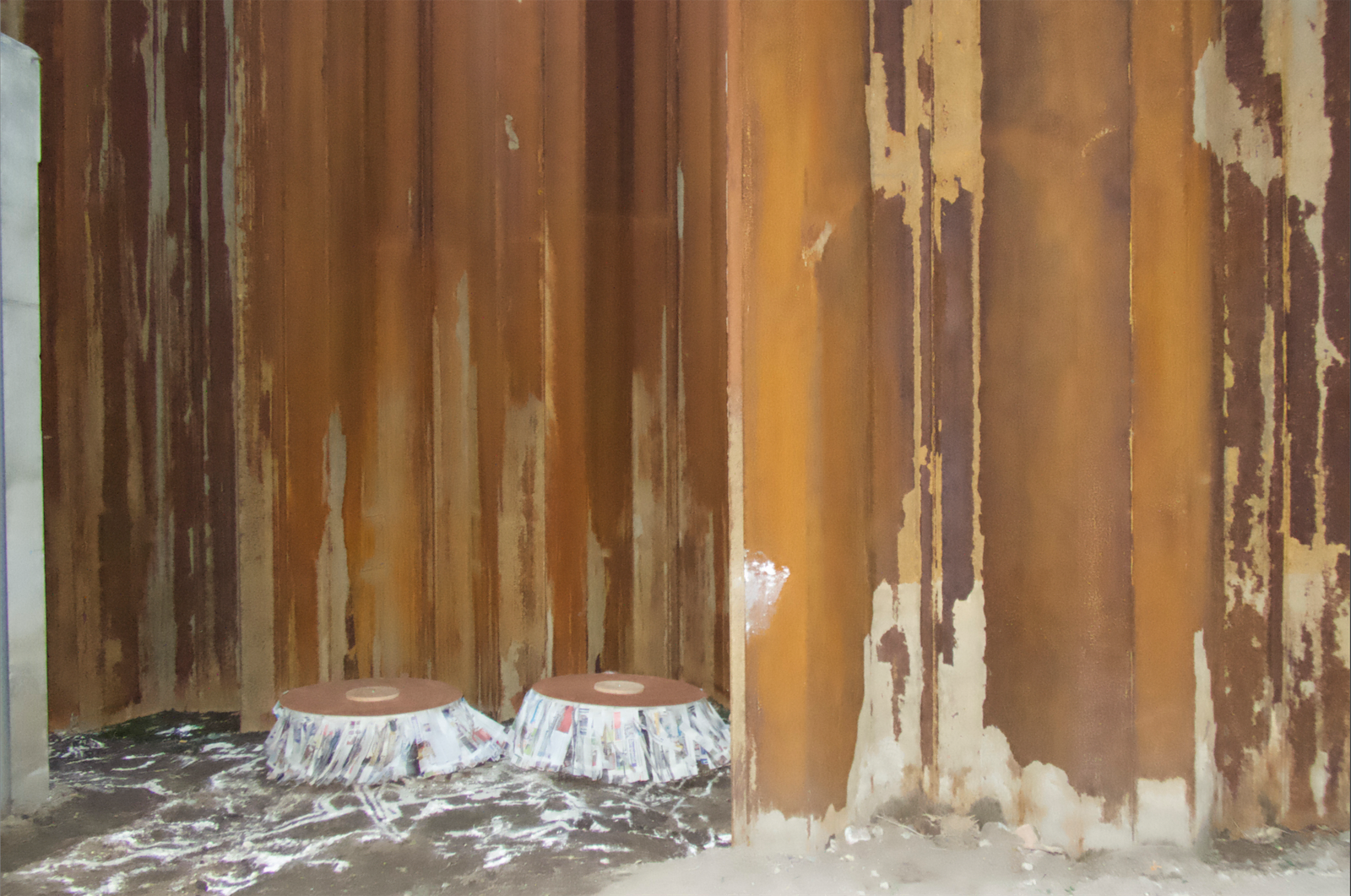
A9
Plaster, wood, newspapers and motorcycles
2022
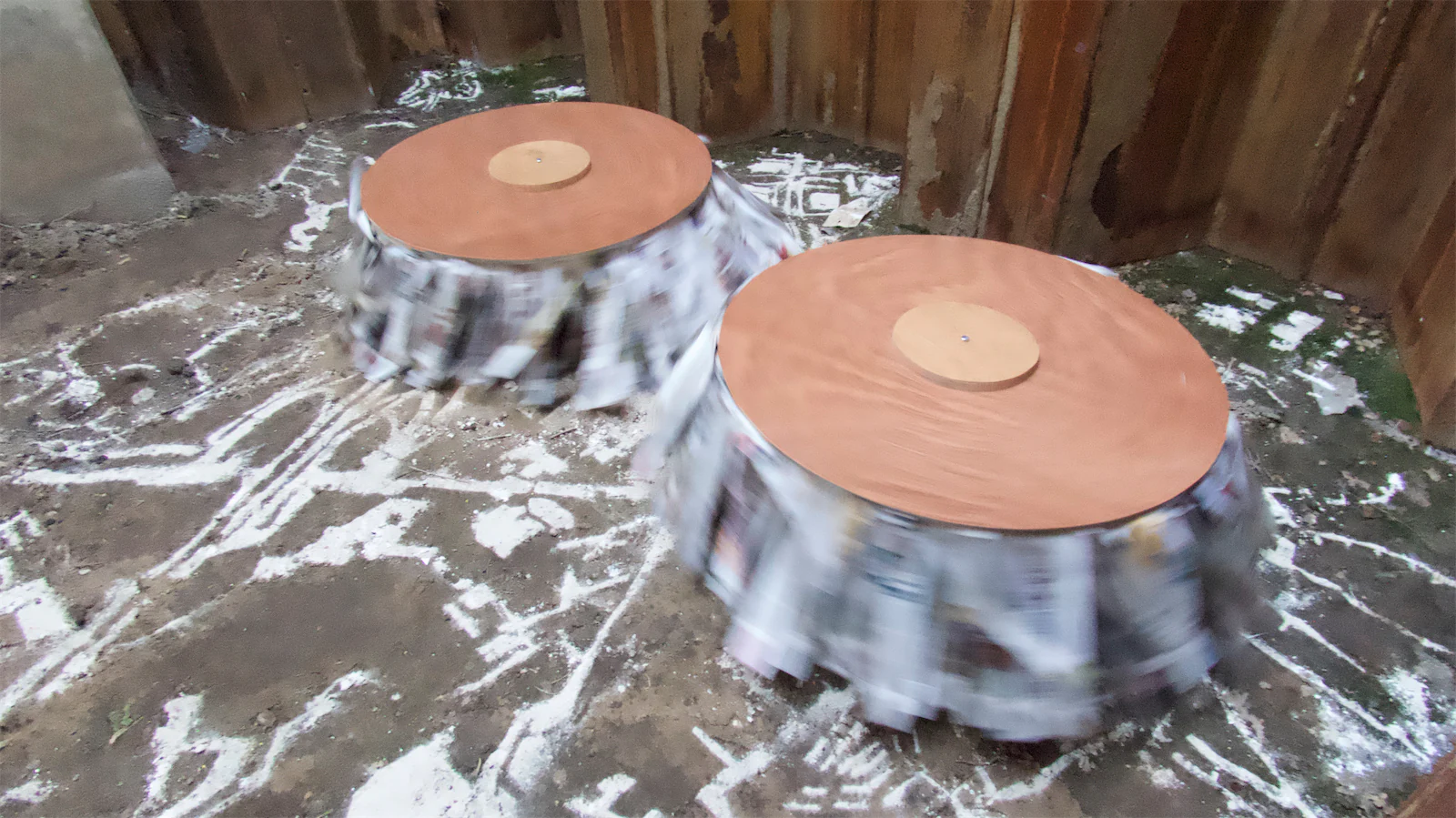
Amsterdam is changing. Amsterdam has been changing for some time now. It seems as if a gigantic cleaning truck from the municipality is passing over it, leaving the smell of gentrification behind. As if they continue to polish the streets until there are no autonomous bricks left. Together with Cesare Botti and Max Kessel, I organized an exposition in a big space underneath a bridge next to the A9 in the Bijlmer.The Bijlmer was built as a utopia for modern people in the 1960s and was part of the Dutch architectural movement structuralism. The high-rise apartment buildings shared a communal garden and people would meet on the lawns. However, when it was offered, people stayed away, so it was squatted by the Surinamese community who were kept out of homes elsewhere.
The Bijlmer is a neighborhood that is currently undergoingmajor changes due to gentrification. Under the two rotating elements of the cleaning truck, I drew a fictional map of the Bijlmer with plaster. Which could not be wiped clean by the rapid change of time. In the gaps of the unplanned, a new kind of way of life emerges.
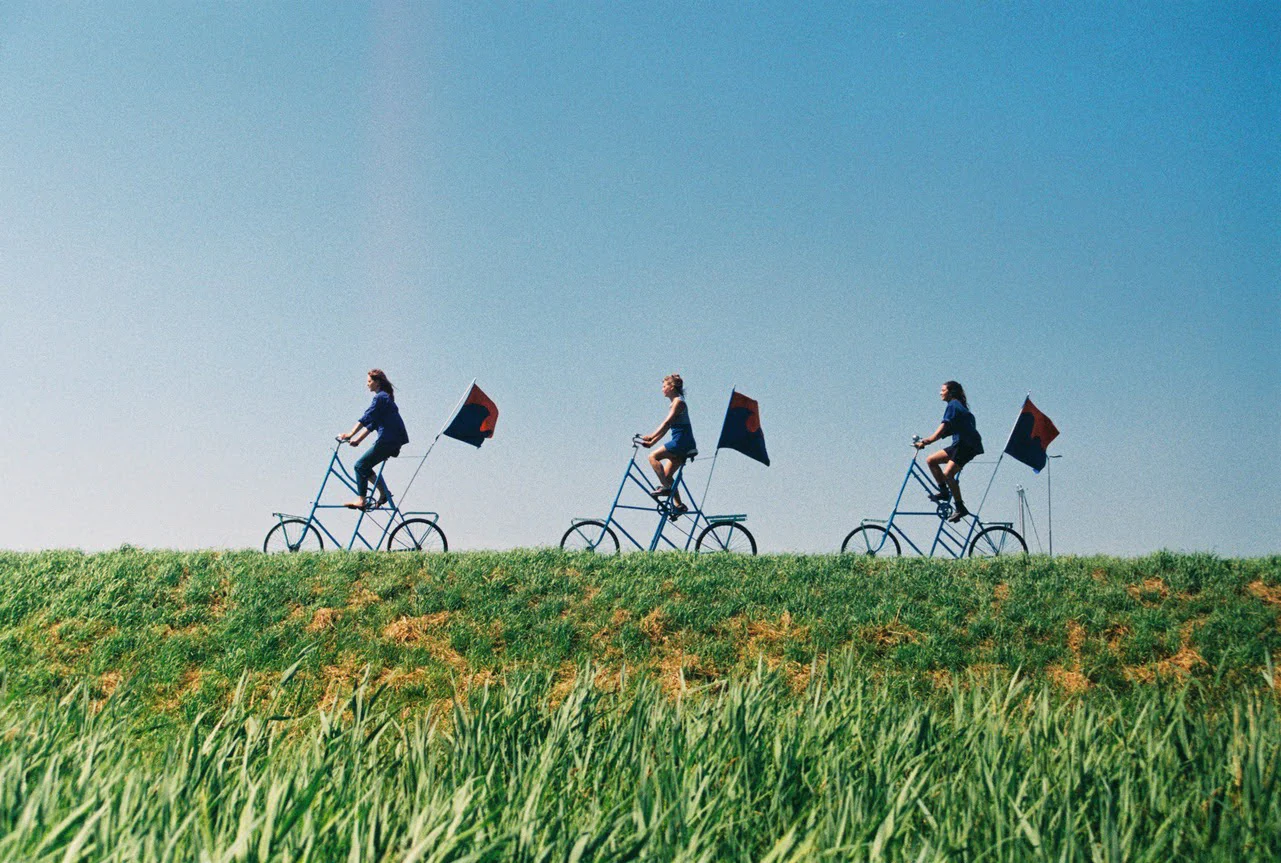
Nieuw Nederland
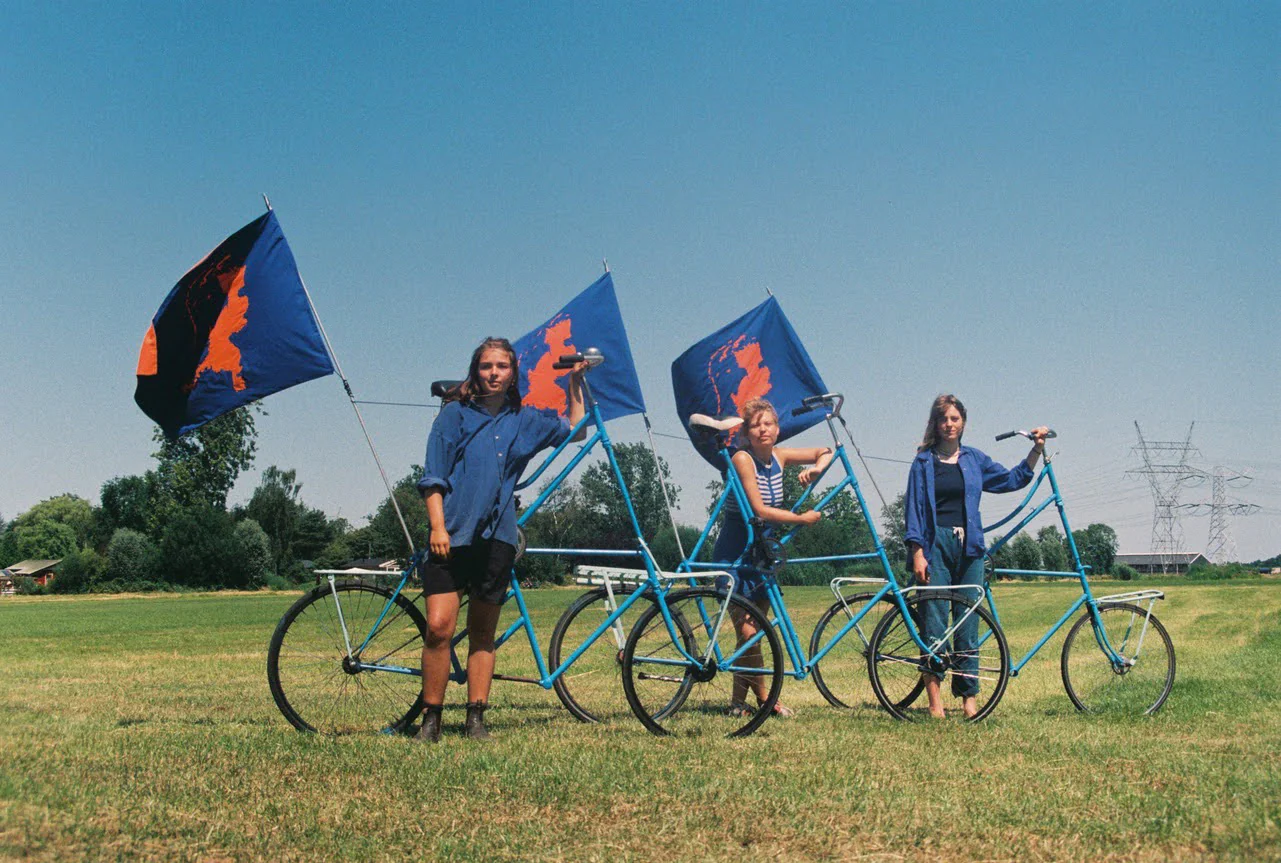
Nieuw Nederland
Podcast and bike tour with Collective Tij
2020
With collective 'Tij I work together with Pam Sikkink and Talisa Harjono. In our project 'Nieuw Nederland' we investigated the consequences of climate change. What will the new coastline look like in 75 years? We followed the NAP line (Normal Amsterdam Level), which we saw as a metaphor for how vulnerable our country is if the sea levels continue to rise. To visualize this line we cycled 600 kilometers from Cadzand in Zeeland to Bad-Nieuweschans in Groningen on so called tall bikes along the new coastline of the Netherlands. During our route, we talked to the new residents of the coastline like a survivor of the flood disaster in 1956, the organizer of the Elfsteden tour, and many many farmers. We recorded all these conversations and turned them into a podcast consisting of 6 episodes. We also hoisted 14 flags to mark the new coastline.
Listen to it on Spotify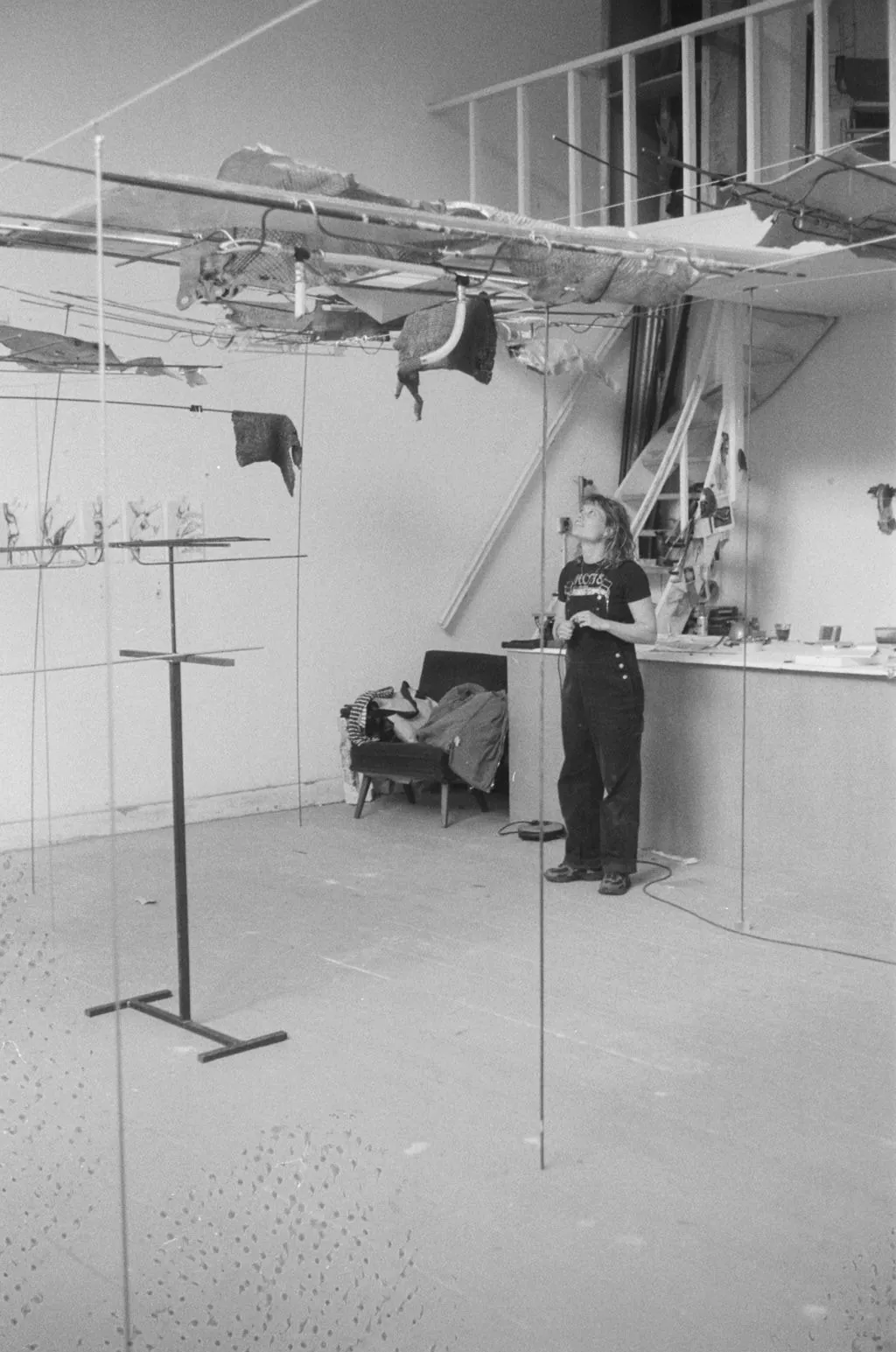
Credits
Site by Pablo Moreno
Titles set in Anthony, thanks Velvetyne
All rights reserved. © Jette Kelholt, 2026
Jette Kelholt
Amsterdam, 1999I am a visual artist who uses found materials to form large-scale assemblages. Curious about what lies underneath or in between the surface, I open up objects or spaces. The cavity that arises contains the imagined pasts and futures. In some ways, the cavity is the story, as it holds all possible stories. Quite recently the cavity also made space for a new way of working, grafting. The dynamics between the neat and the clumsy, the temporary and the eternal, and the stable and unstable are important parts of my work.
On view
Seamless, Triangolo, at Theater of San Luca 18 September to 19 December 2026
House of Day, House of Night, de ateliers, at Woonhuis 25 September to 31 October 2026
Upcoming
CUD, Quatair 14 November 2026
Studies and Residencies
2025-2027 De Ateliers, Amsterdam
2024 Sense of urgency, Glasgow
2024 IPIHAN, Wartenburg
2018-2023 Gerrit Rietveld Academie, Amsterdam
Group Exhibitions
2026 Field Jacket, Tramhuis
2025 Corner Inn; act 1, Tramhuis
2024 De Nieuweling, Van Esteren museum
2024 Kunstcorso, Parade door Amsterdam
2024 What can I say, I miss my friend, Osdorp
2023 Big Miss Steak, Kate
2023 Big Art
2023 Graduation Show Gerrit Rietveld Academie
2023 Netjes, Tetterode
2023 Tracking Traces, Tetterode
2022 Missinglinks, When Site Lost the Plot
2022 A9, Bijlmer
2021 House Peace, Hotel Mokum
2021 We are Warming Up, Tolhuistuin
2019 Deep Storage, Bijlmer
2017 All you can art, Kunsthall Rotterdam